The Celtic Cross Explained Through One Complete Example
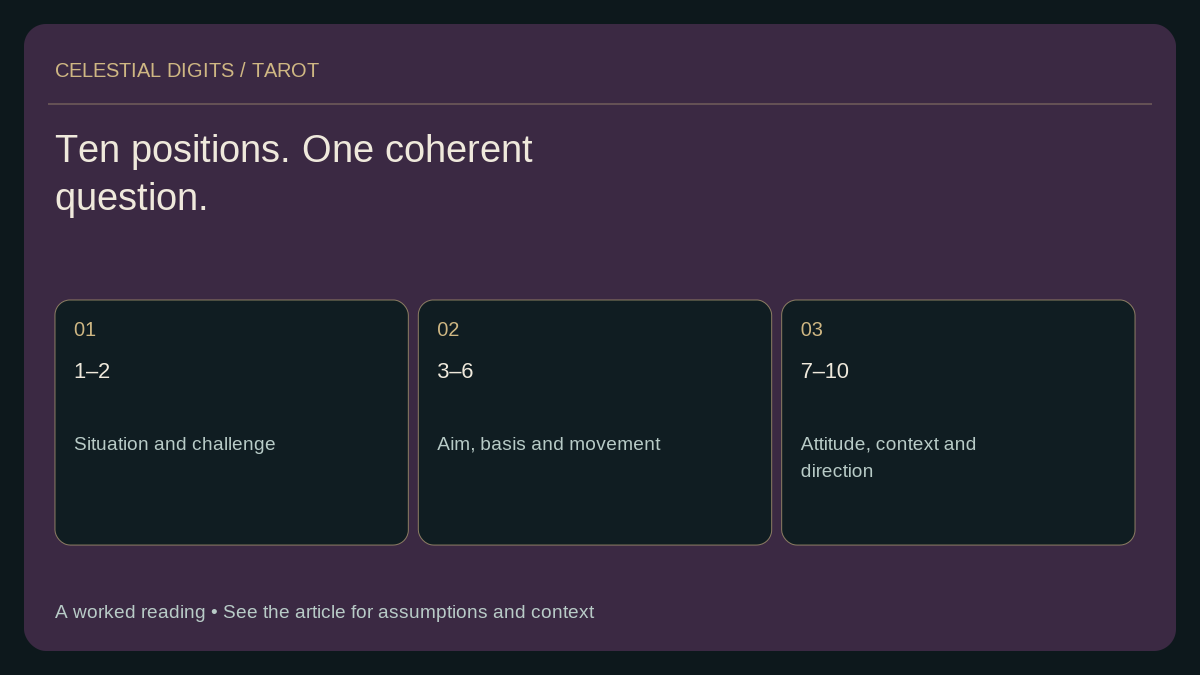
Follow all ten Celtic Cross positions in a fictional creative-project reading, then combine the cards into a practical, conditional interpretation.
Opening your next page…
Celestial DigitsAI chat and AI-generated readings are currently paused. Charts, dashas, transits and numerology remain available.
Discover all our insights and articles about tarot.
Follow all ten Celtic Cross positions in a fictional creative-project reading, then combine the cards into a practical, conditional interpretation.
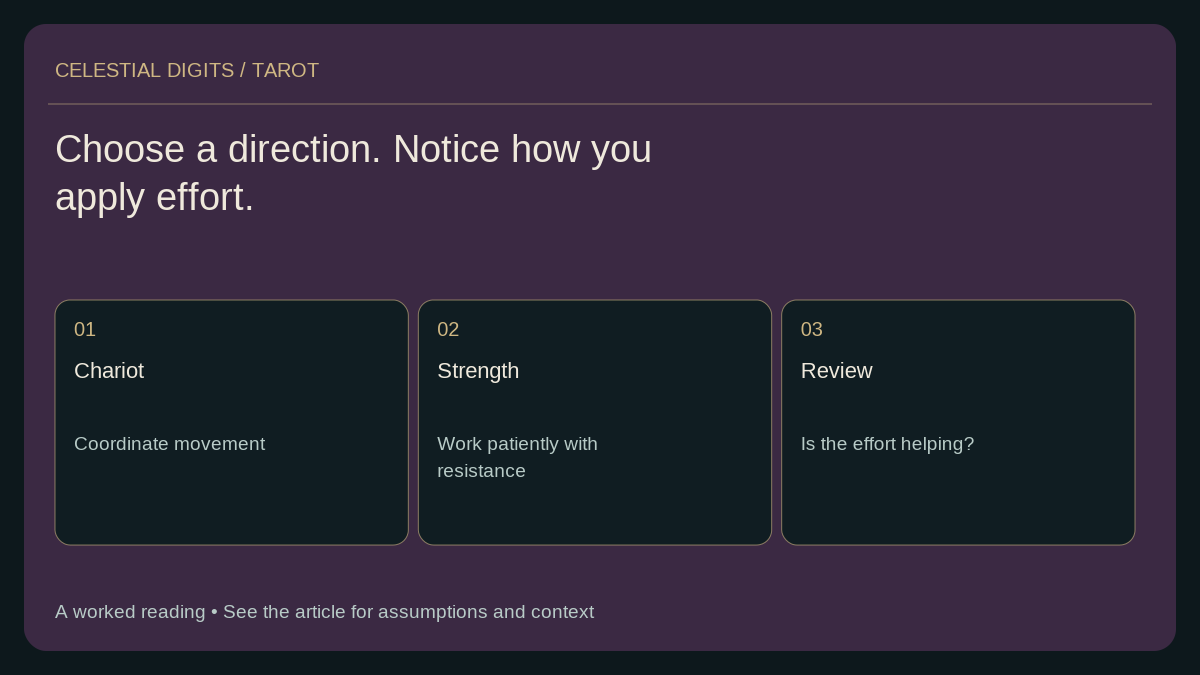
Compare purposeful direction with patient self-regulation through a rehearsal example, without treating either card as a command to push harder.
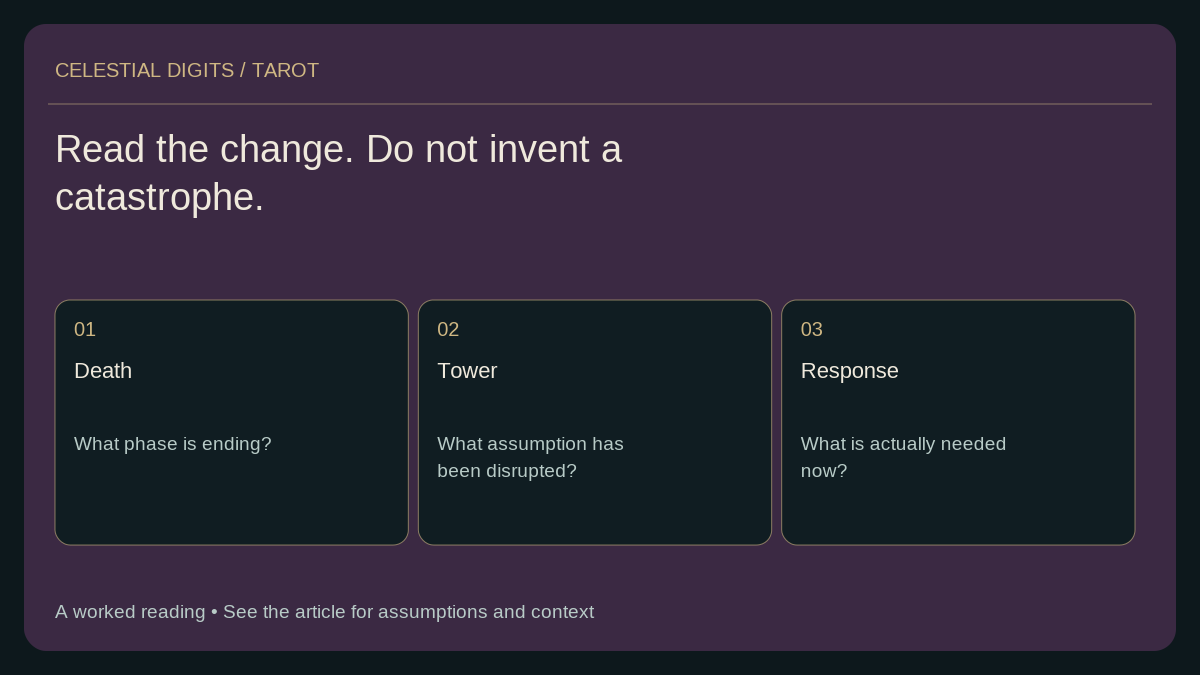
Compare two often-feared tarot cards through project examples, separating symbolic change from literal predictions of disaster.
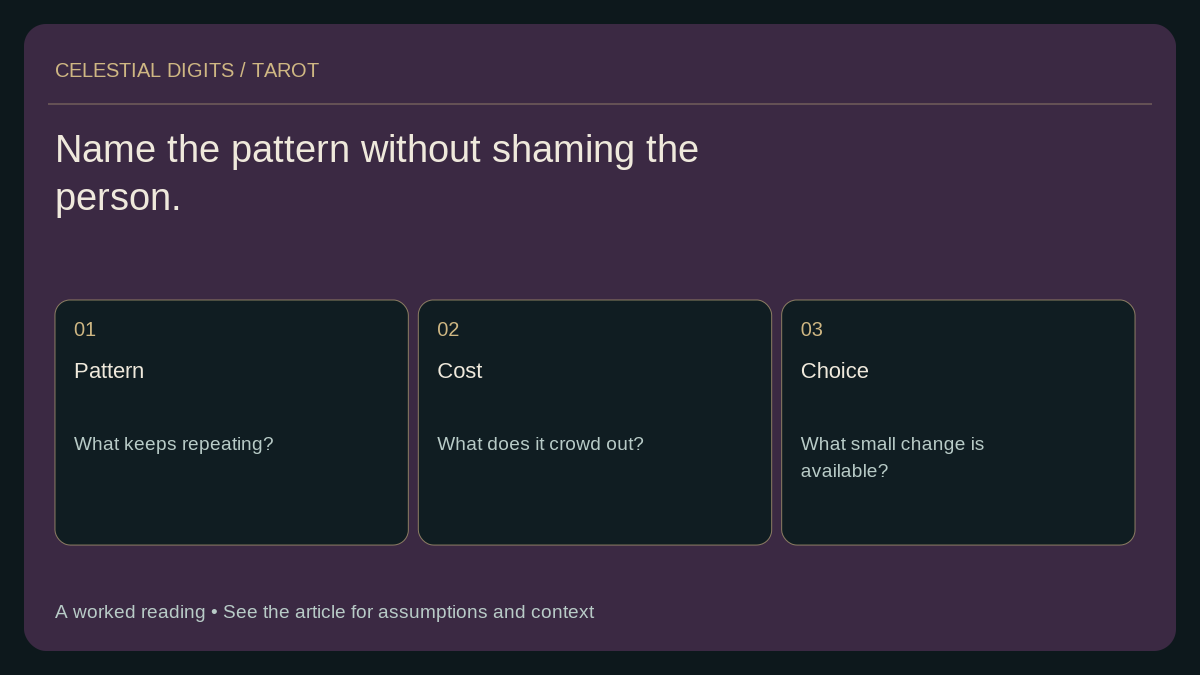
Explore the Devil card through a low-stakes habit example, without treating it as proof of a curse, diagnosis or another person’s character.
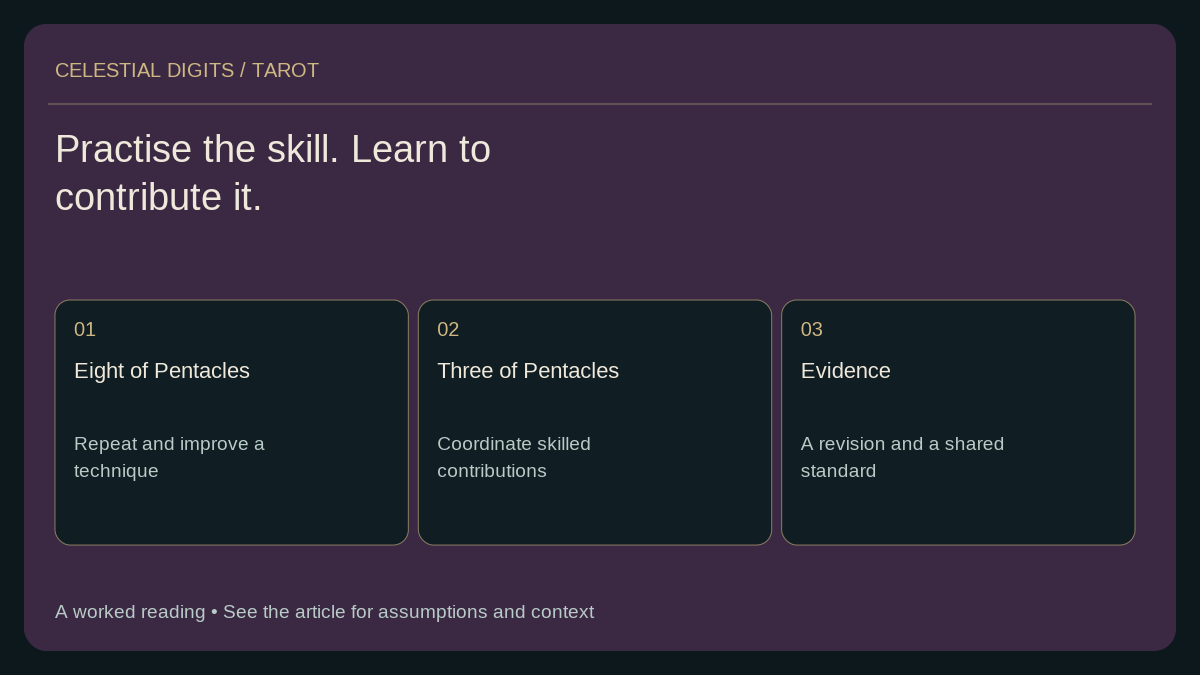
Distinguish focused practice from contributing skilled work with others through a worked project example and concrete questions about feedback.
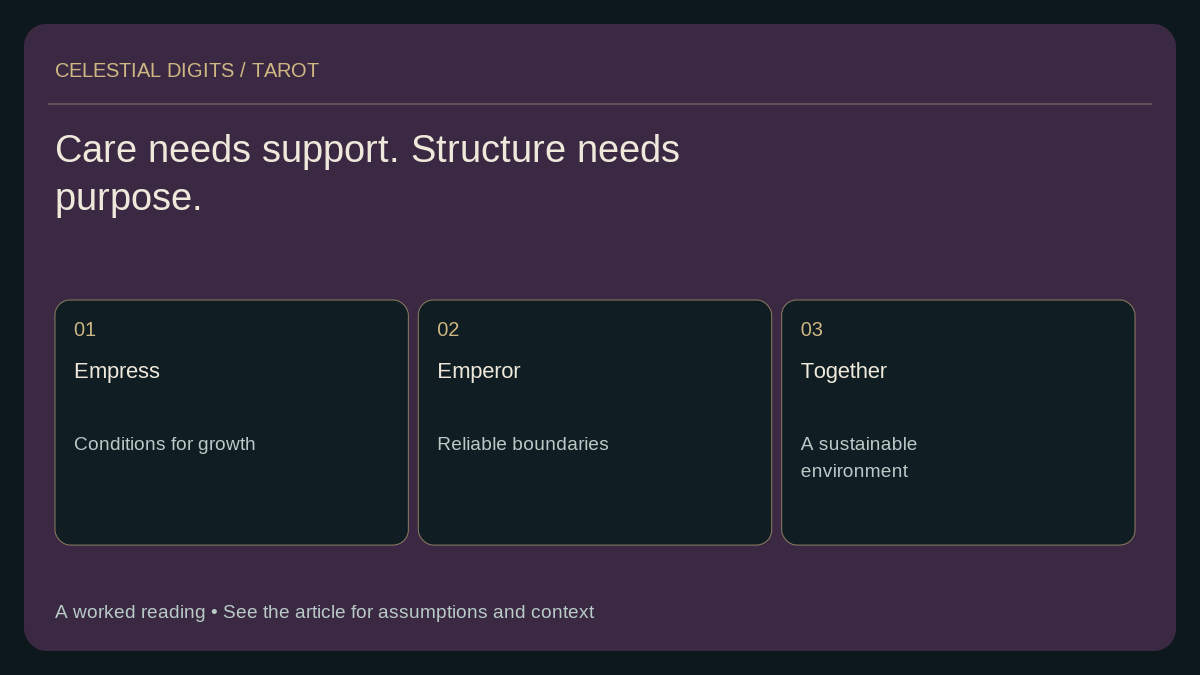
Compare nurture and structure through a community-garden example, with questions for reading both cards beyond gender stereotypes.
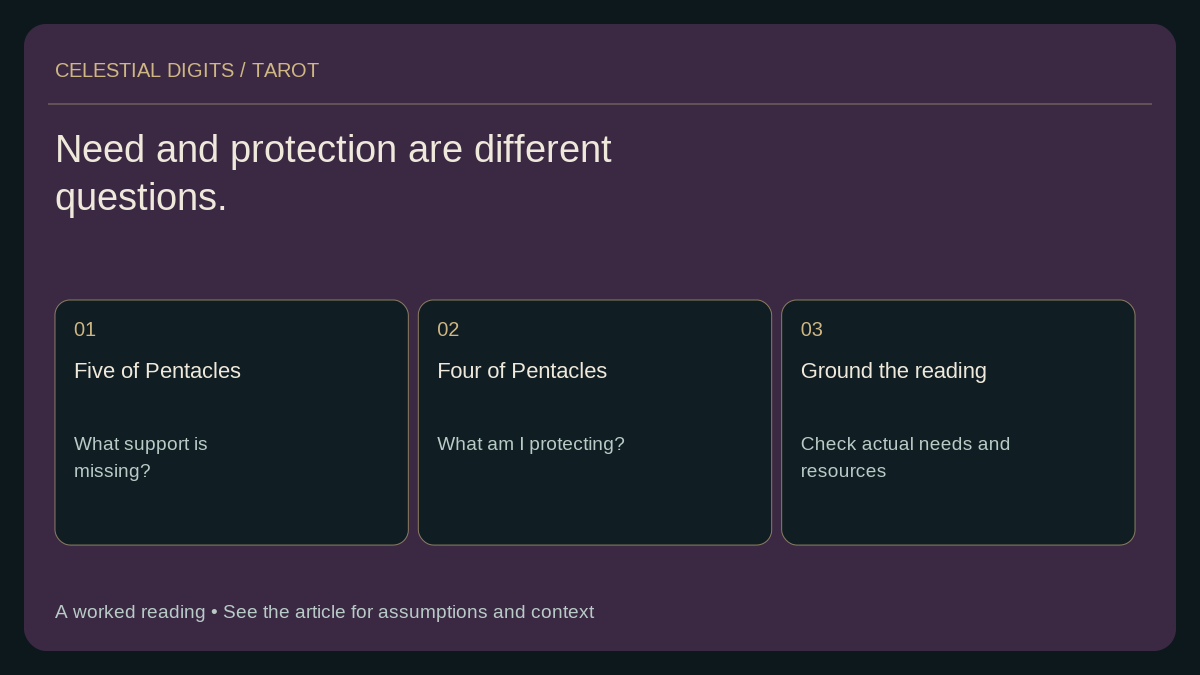
Compare unmet needs with protecting what is held, without treating tarot as a financial forecast or blaming people for difficult circumstances.
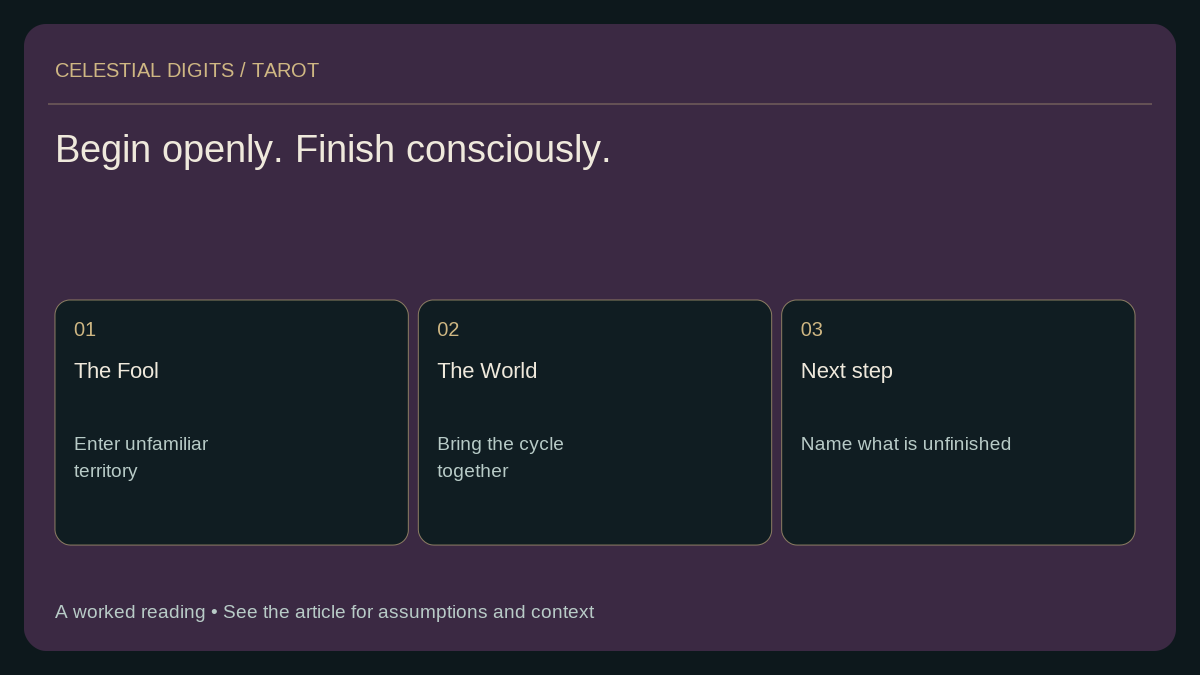
Compare two Major Arcana cards through a practical project example, and learn why openness and completion ask different questions.
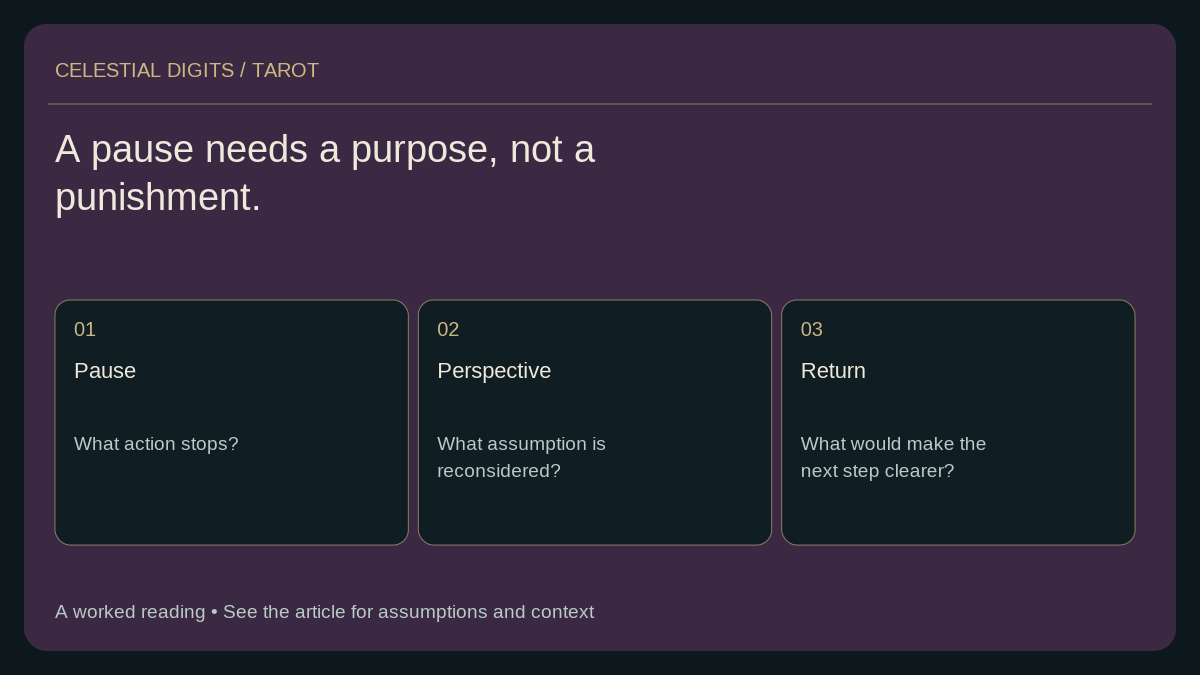
Use a stalled creative-project example to distinguish a purposeful pause, a new perspective and indefinite postponement.
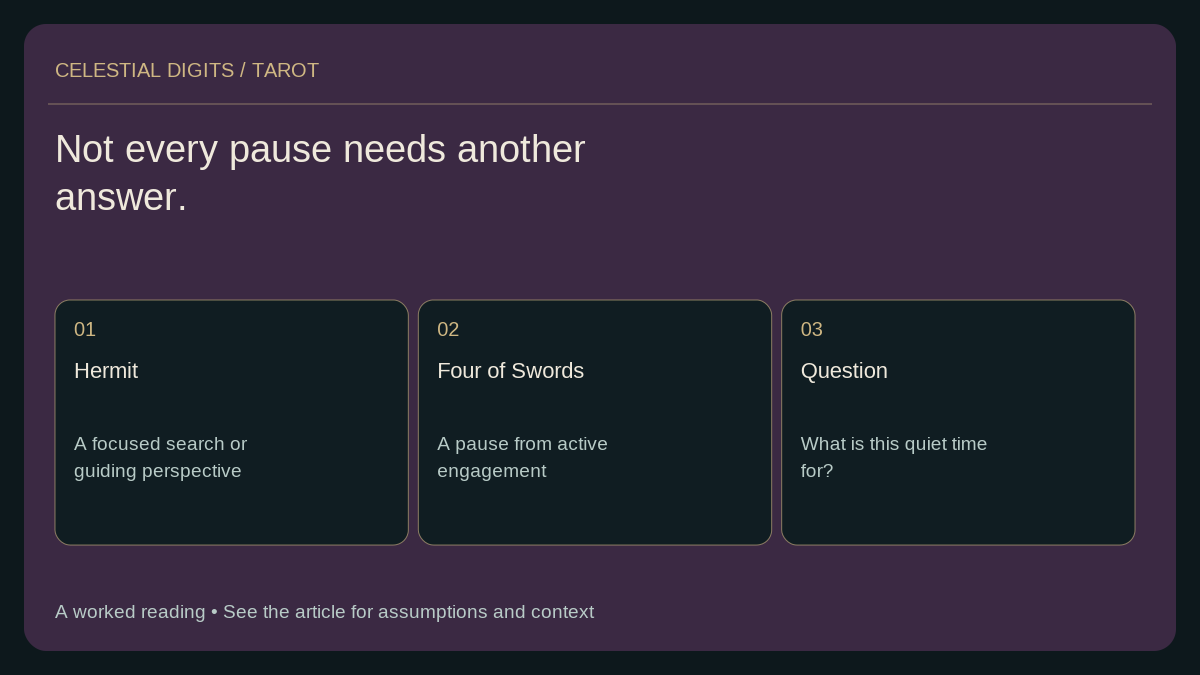
Distinguish purposeful reflection from stepping back, with a worked example that avoids treating every quiet period as a spiritual crisis.
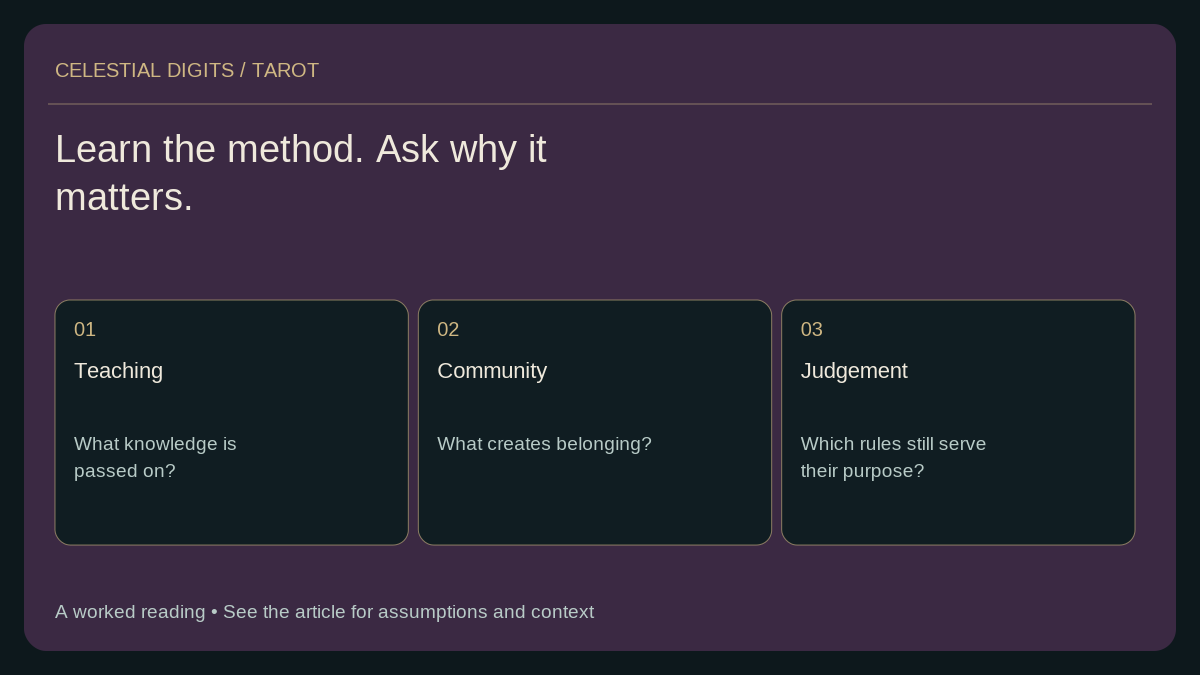
Read the Hierophant through a learning example that distinguishes useful instruction, belonging and rigid authority.
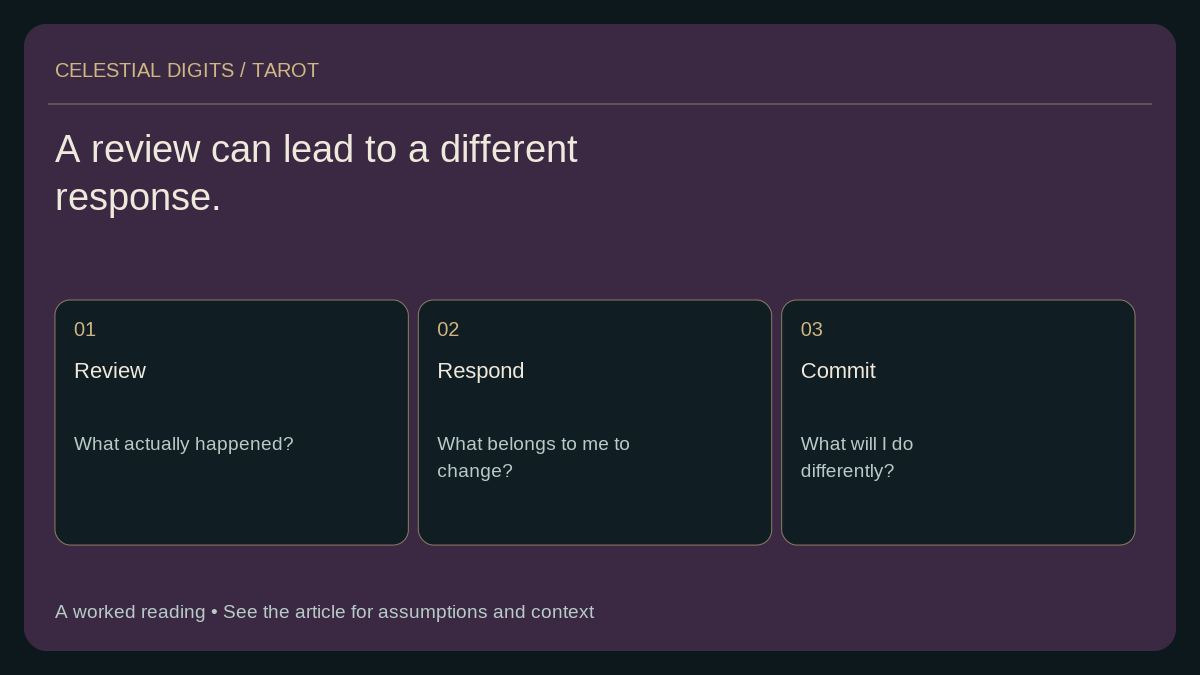
Read the Judgement card through a practical review exercise: evidence, responsibility and a chosen next commitment rather than doom or a verdict.
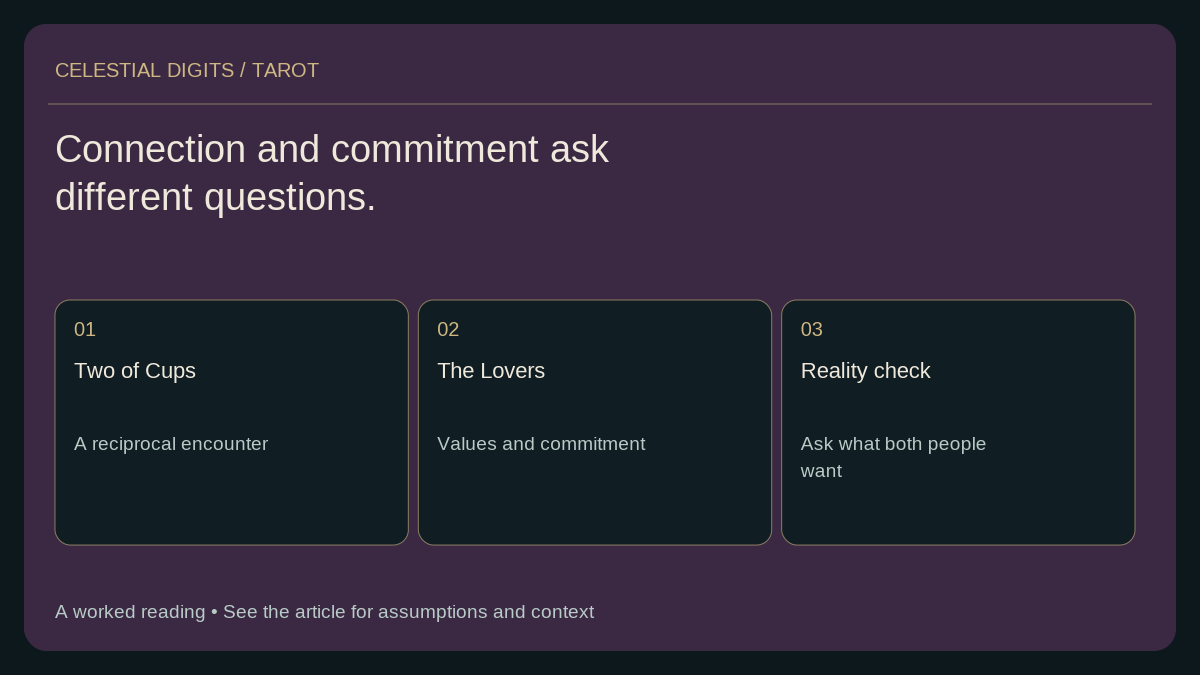
Compare two relationship-related tarot cards without promising a soulmate, using a worked example about shared values and everyday exchange.
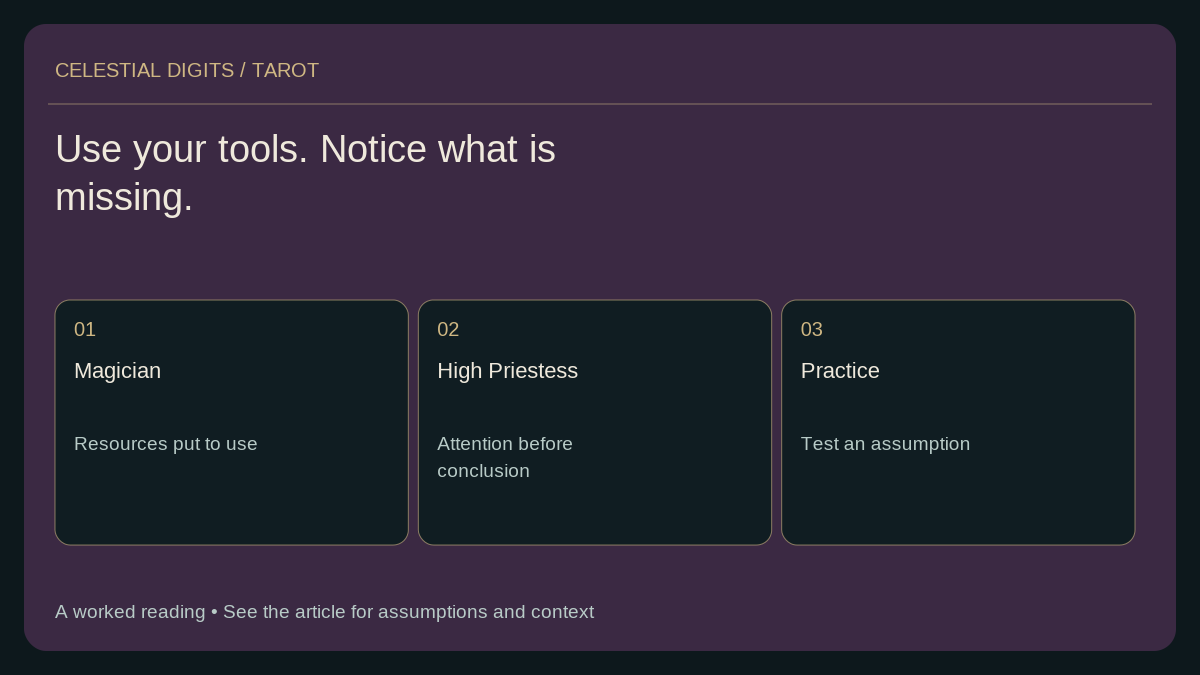
Use a worked project example to compare visible action with attentive observation, without treating intuition as proof or activity as progress.
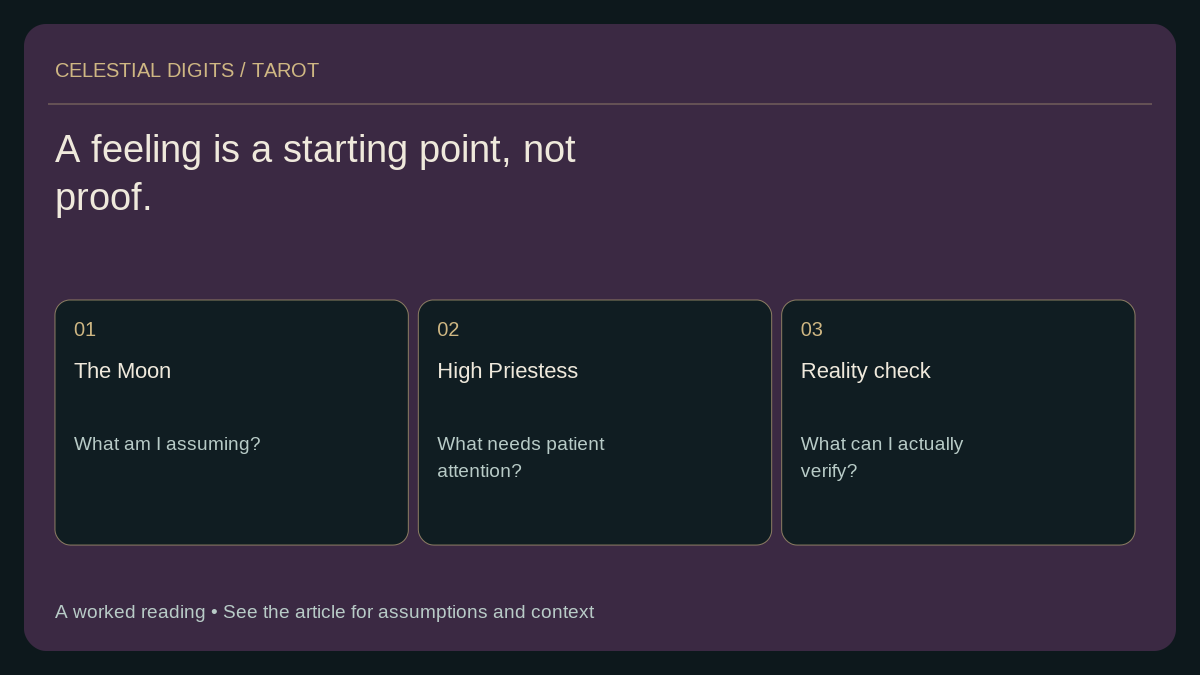
Distinguish uncertainty from quiet attention in a worked tarot comparison, without treating either card as proof of deception or hidden knowledge.
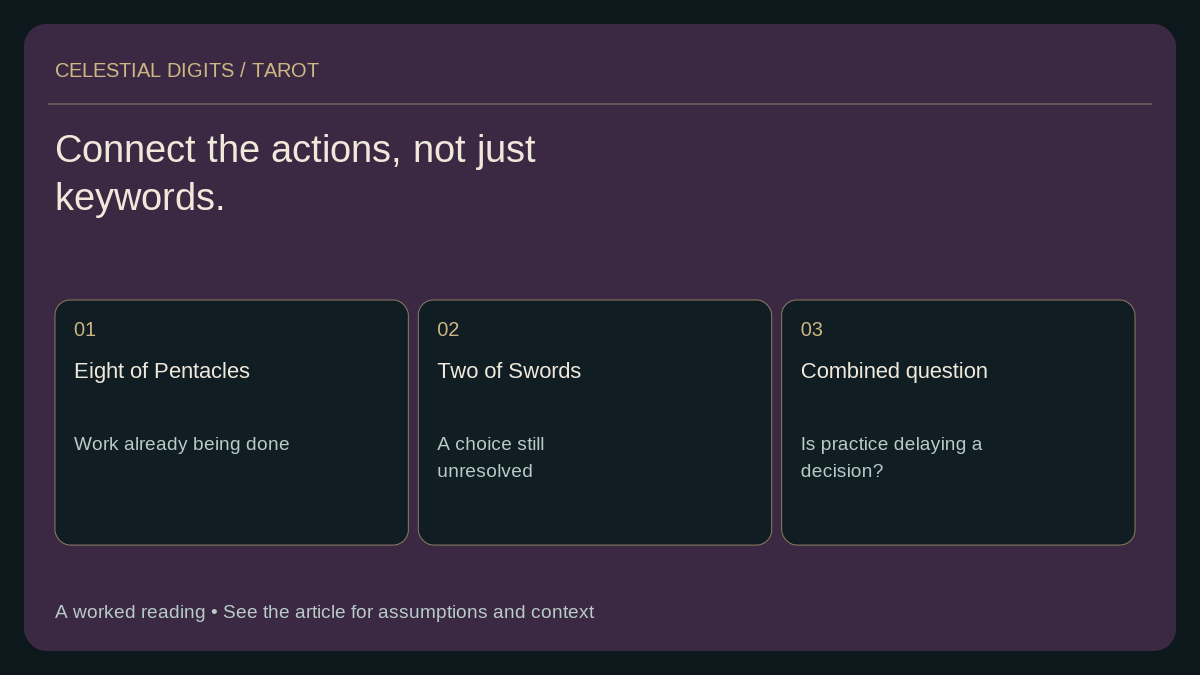
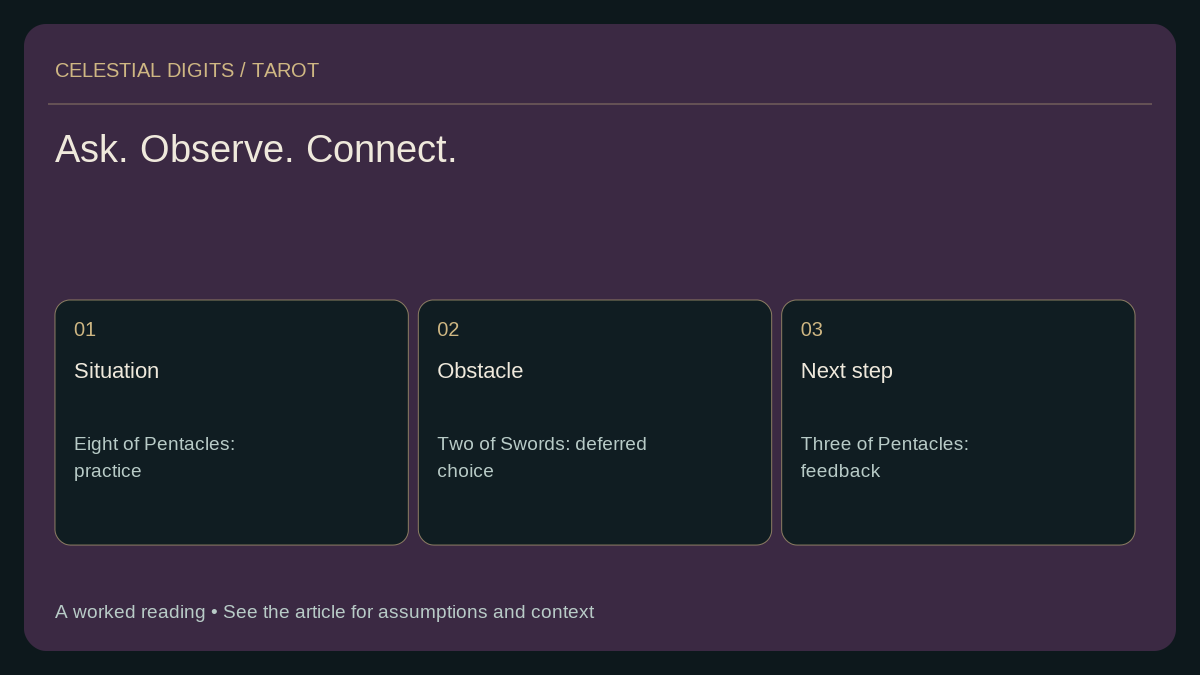
Combine the Eight of Pentacles and Two of Swords through a clear question, position roles and a sentence that remains open to correction.
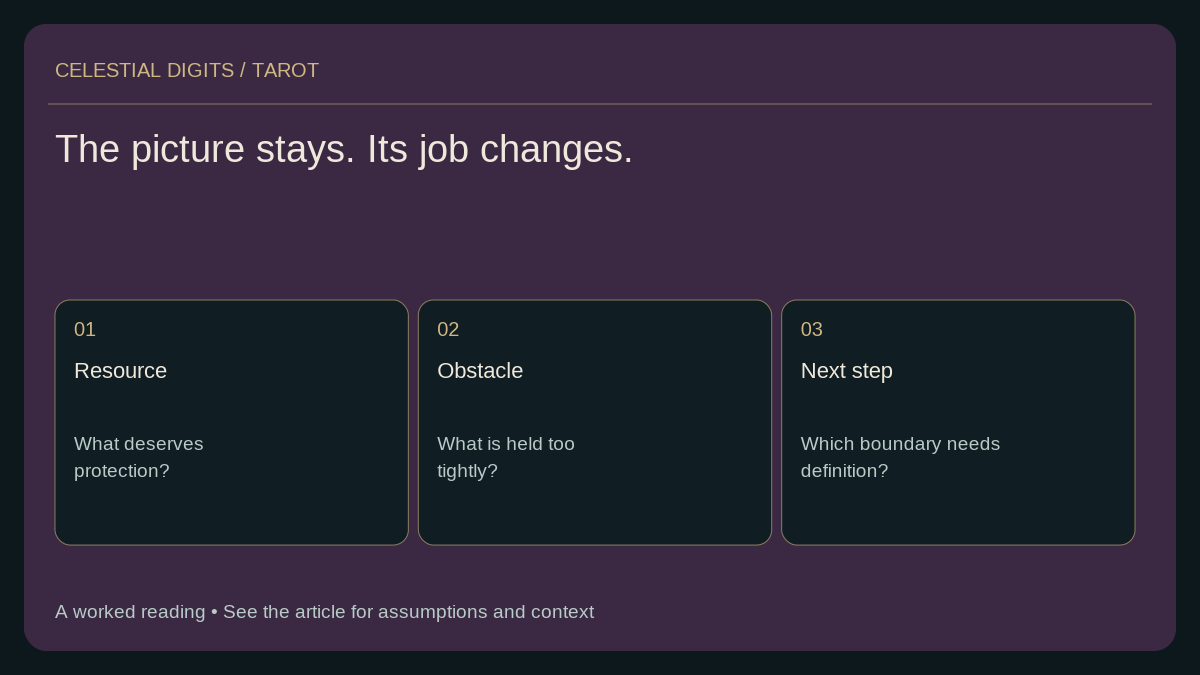
Read the Four of Pentacles as a resource, obstacle and next step while keeping the image and question consistent.
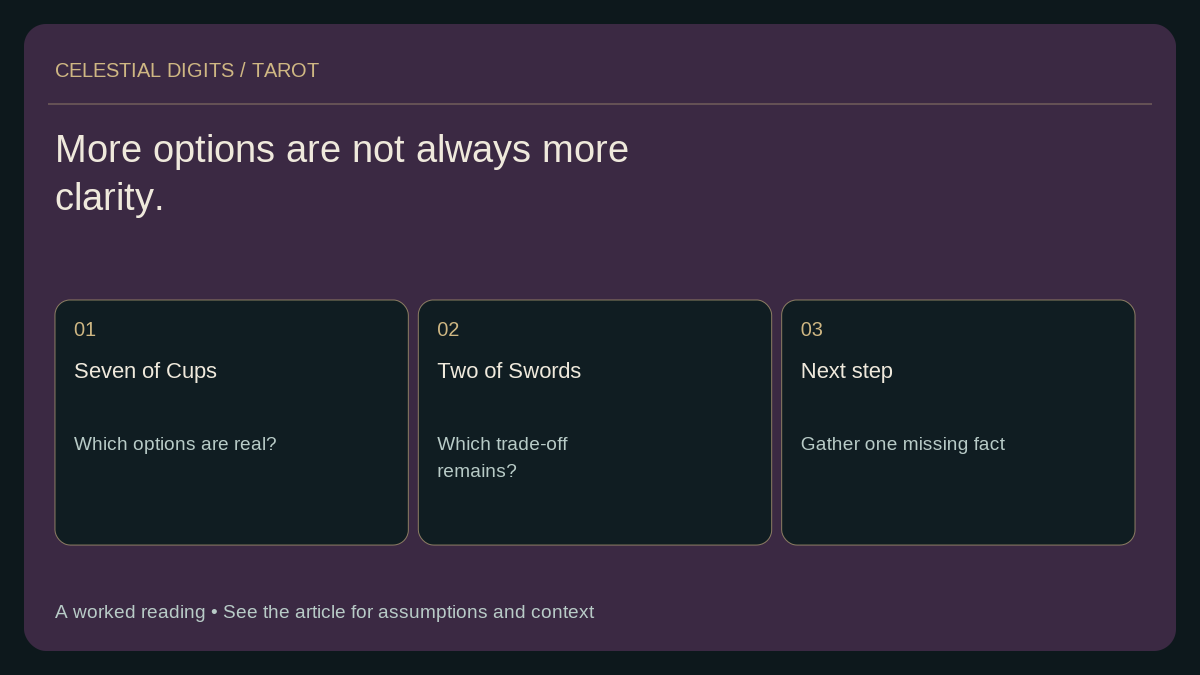
Compare imagining many possibilities with holding a decision in balance, using a concrete course-selection example rather than fixed card keywords.
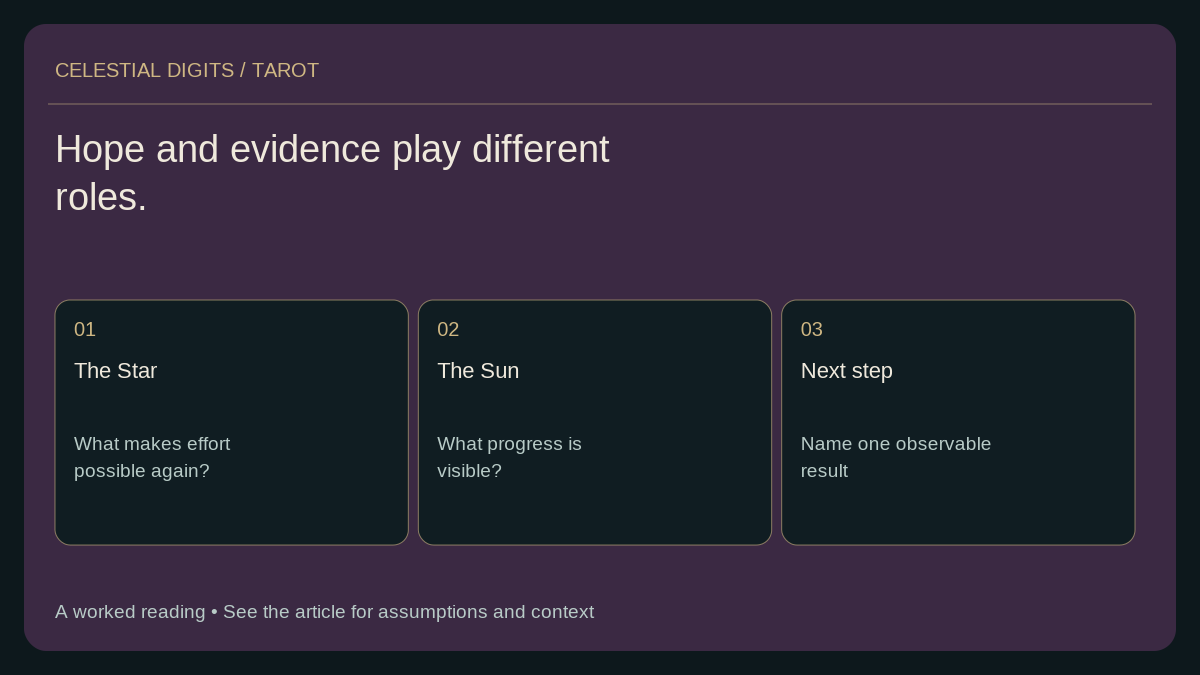
Compare recovery of confidence with visible progress through a worked tarot example, while keeping modern reflective meanings distinct from Waite’s text.
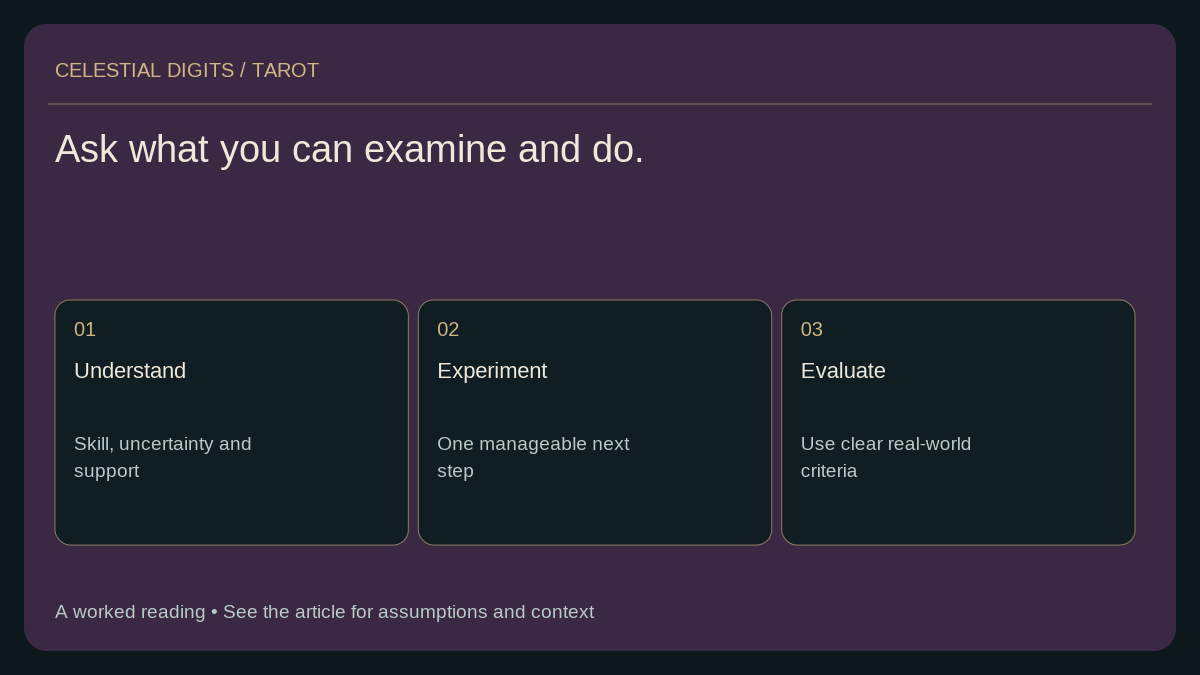
Use five clearly defined positions to review skills, uncertainty, support, a small experiment and decision criteria without predicting a job offer.
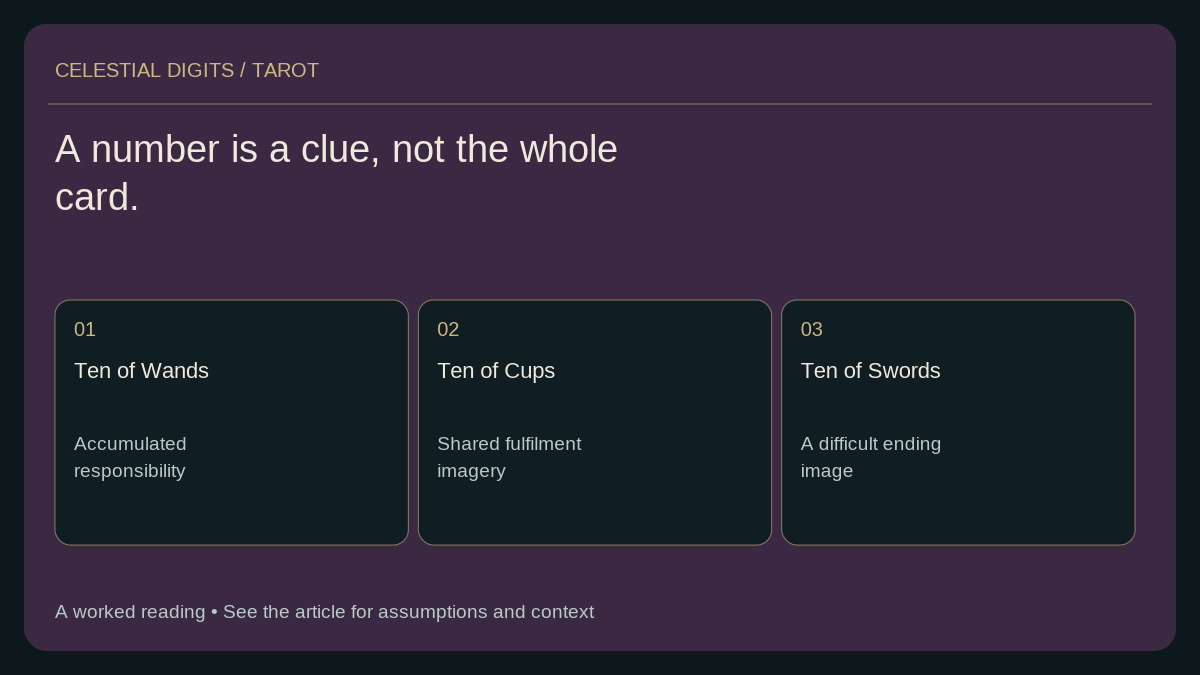
Use a numbered-card learning framework, then compare the four Tens to see why suit, image and spread position matter more than a number alone.
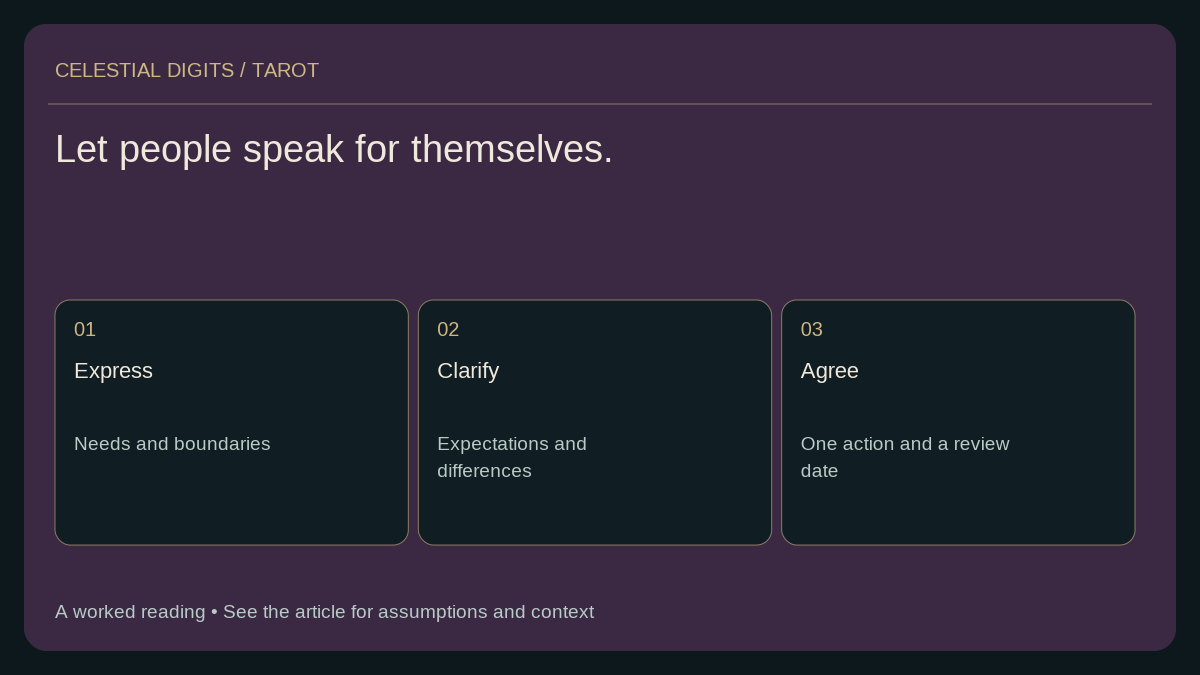
Try a consent-based reflective spread that turns card symbolism into questions each person can answer, without claiming to read a partner’s mind.
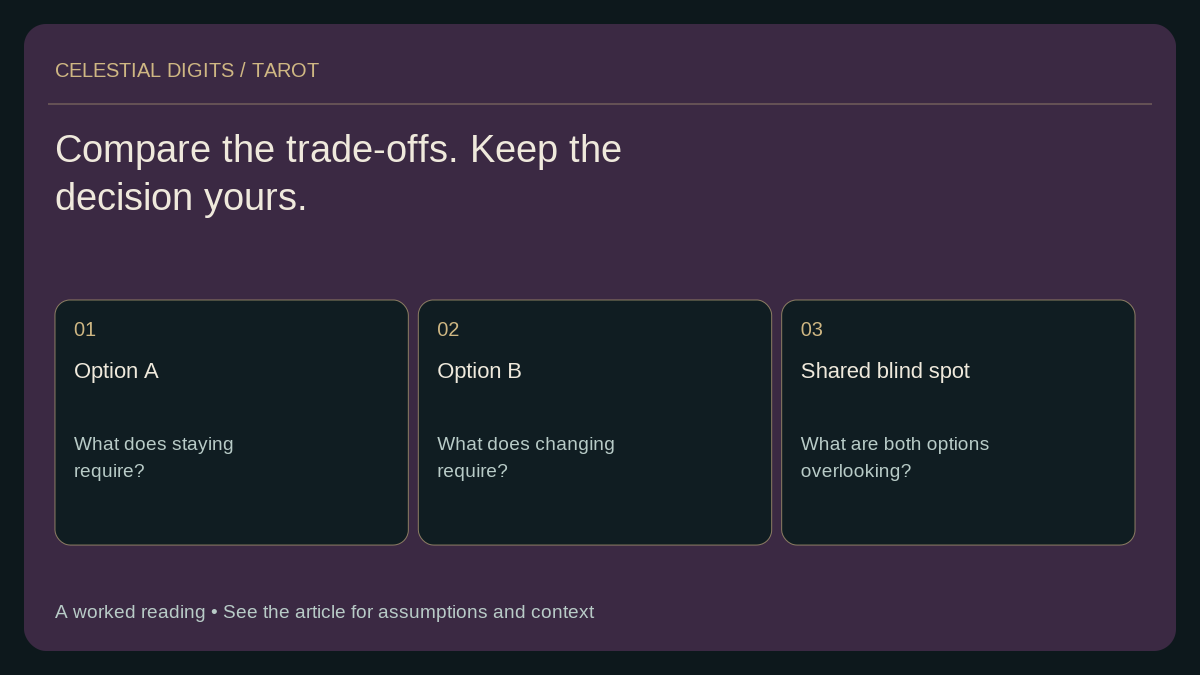
Compare two options and a shared blind spot through an illustrated reflective spread, without treating the cards as a command.
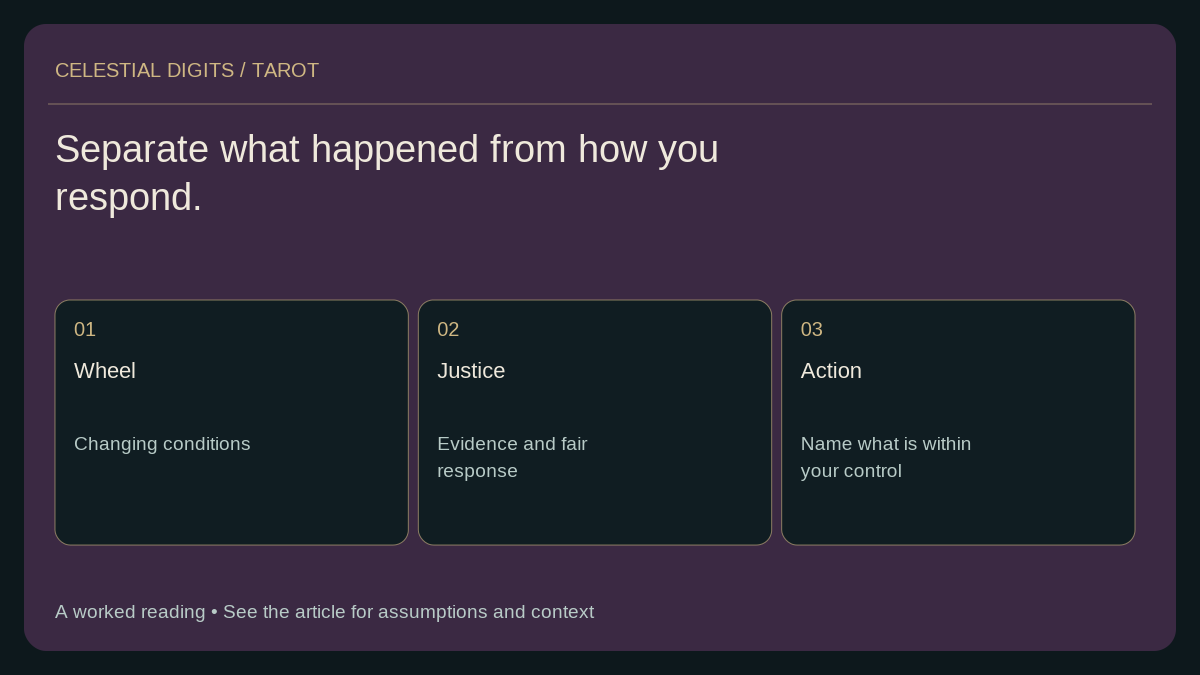
Compare what changes around you with the choices you can account for, using a project-delay example rather than a promise of luck or punishment.
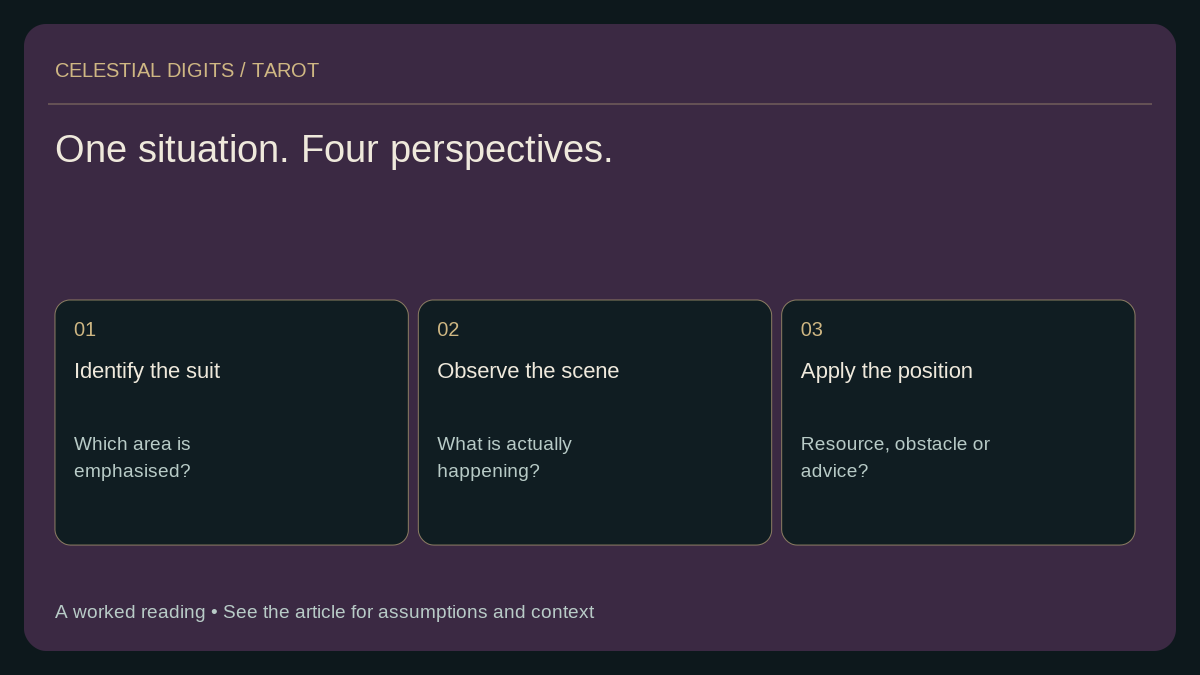
Explore all four tarot suits through one community-project example, distinguishing emotion, initiative, reasoning and resources.
Rewrite vague or intrusive tarot questions into focused prompts about choices, communication and practical next steps.
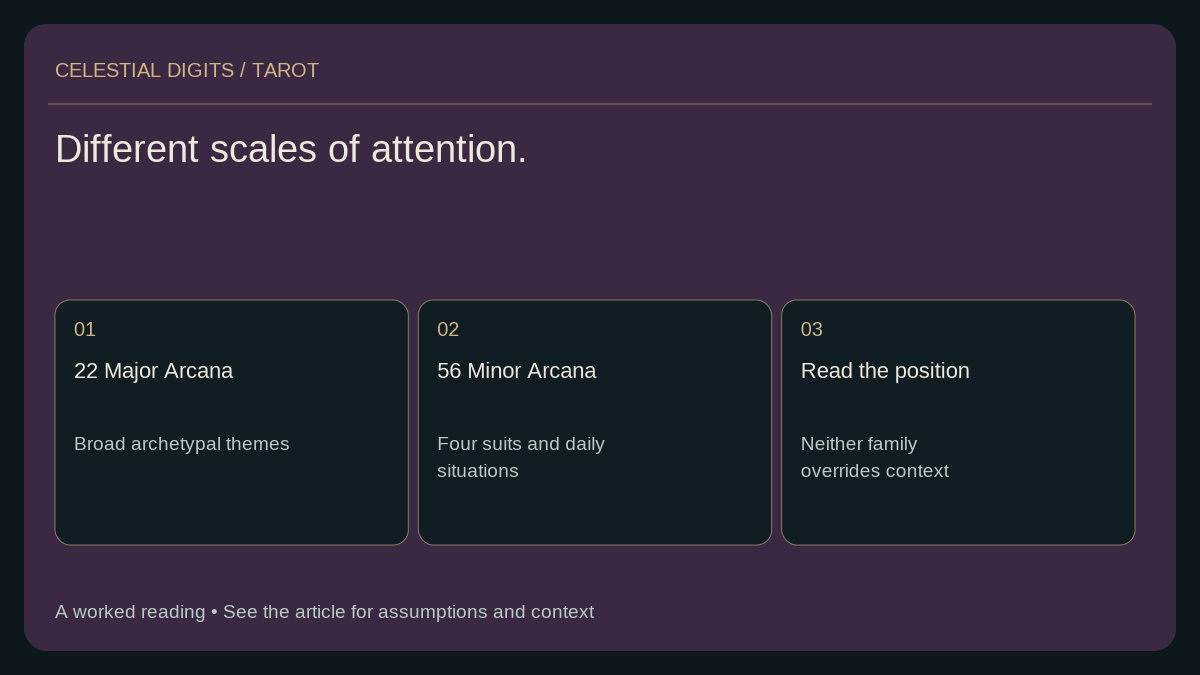
Understand the 22 Major and 56 Minor Arcana through two sample readings, without treating a Major card as an inevitable event.
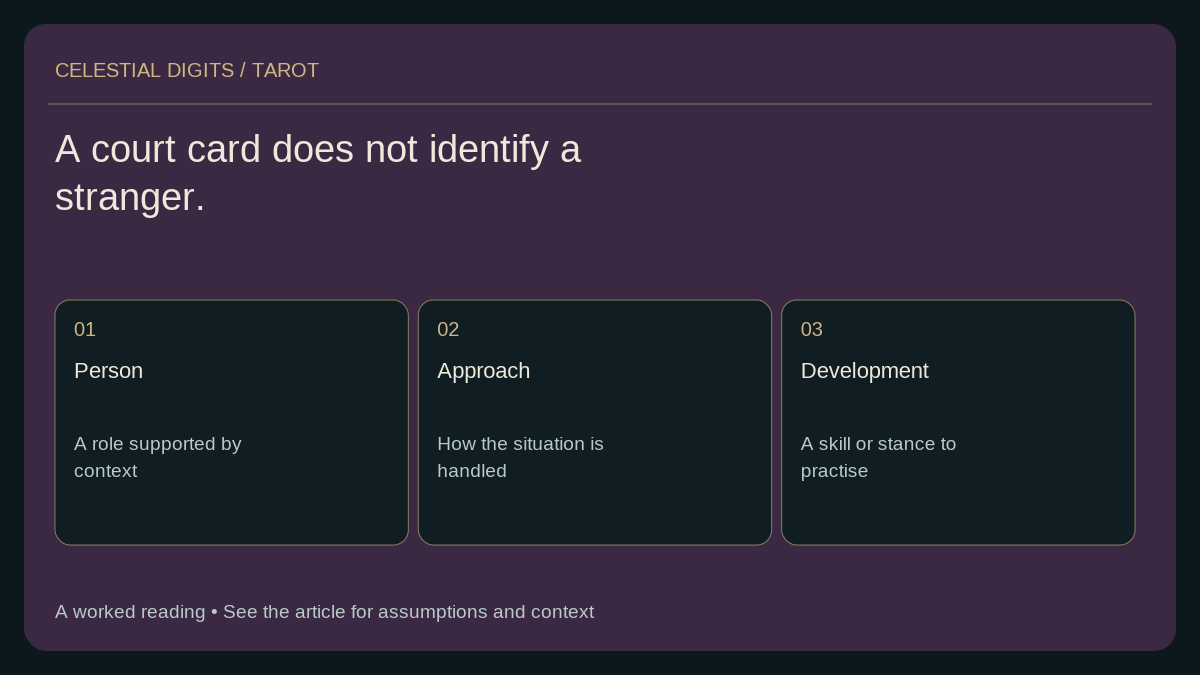
Read Page, Knight, Queen and King through a practical project example without assigning fixed genders, ages or hidden intentions.
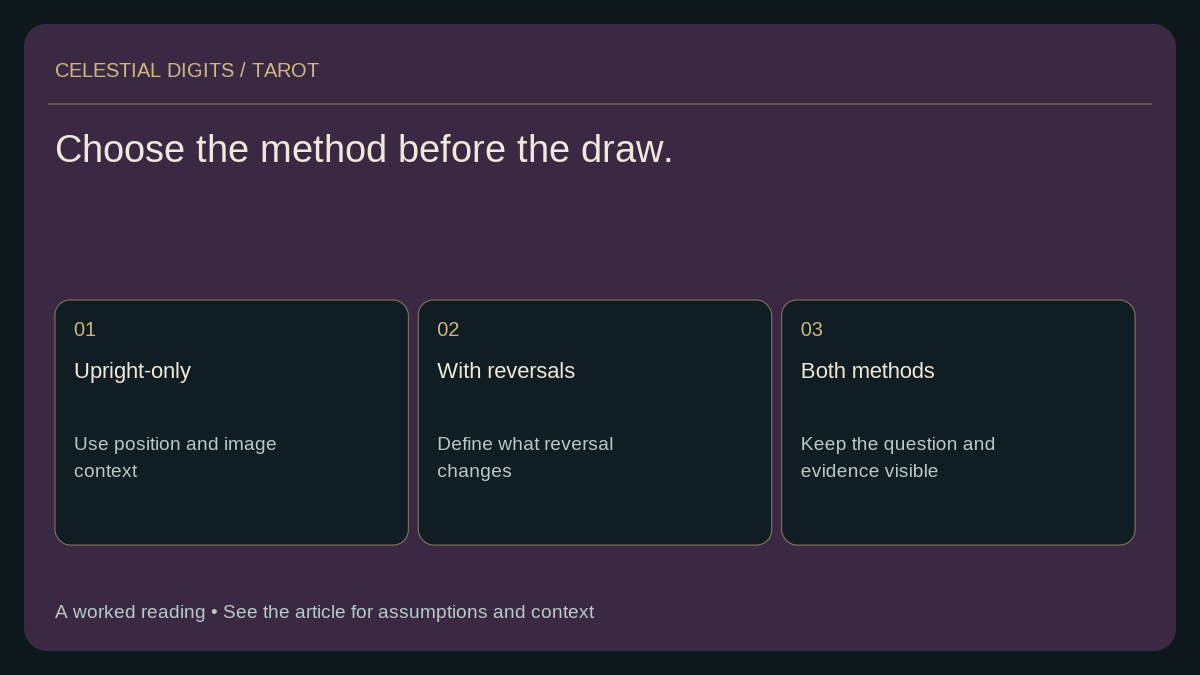
Compare an upright-only reading with an explicitly defined reversal method using a work-and-practice example.
Follow a Rider–Waite–Smith three-card reading from a clear question to a practical next step, with an illustrated sample spread.