
The Devil Card: Attachment, Habit and Recovering Your Choices
Explore the Devil card through a low-stakes habit example, without treating it as proof of a curse, diagnosis or another person’s character.
The Devil card is often described through attachment, temptation or constraint. Those themes can support reflection, but the image should not be used to label someone evil, diagnose addiction or claim that a curse is present.
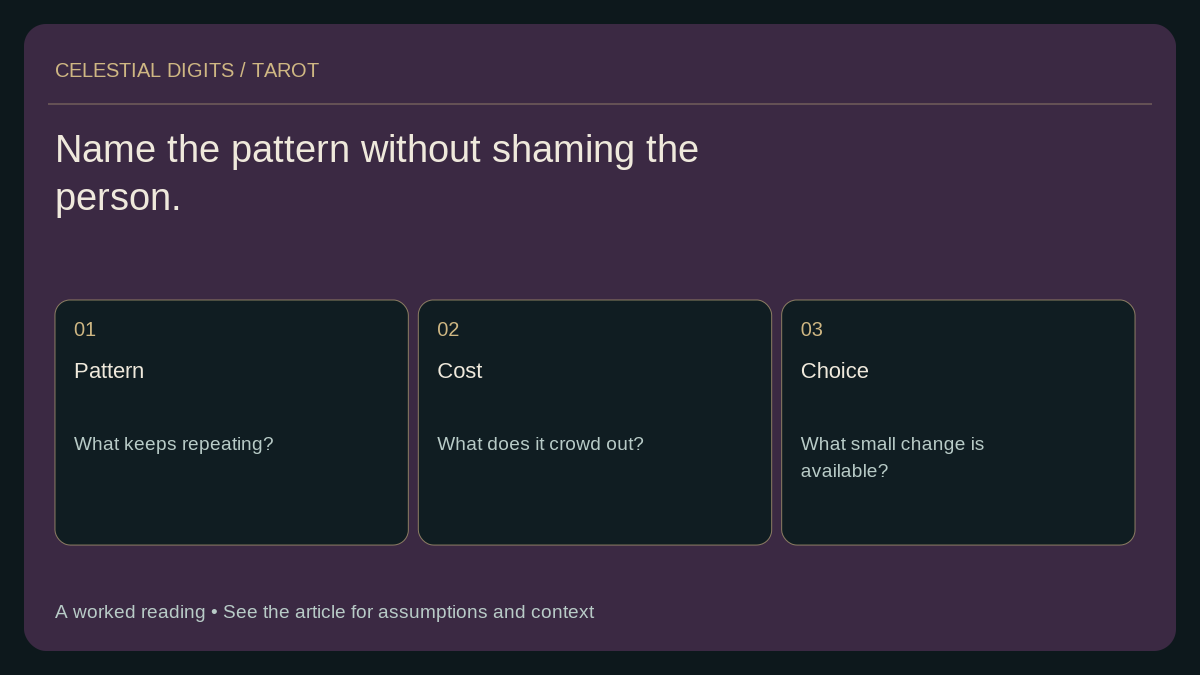
A useful reading asks what pattern is reducing a person's sense of choice and which parts of that pattern can be examined safely and realistically.
Look at the relationship in the image#
The Rider–Waite–Smith scene includes two human figures chained beneath a larger figure. Contemporary readers often use it to discuss bonds that feel powerful, including habits or assumptions that have become difficult to question.
Waite's historical account has its own religious and mystical language. The everyday habit example here is a modern reflective use of the image, not a claim that all constraints are imaginary or easily removed.
A low-stakes example#
Imagine someone repeatedly opens a social feed while trying to finish a personal sketchbook page. In a deliberately constructed reading, the Devil appears in “What pattern is taking more space than I intend?”
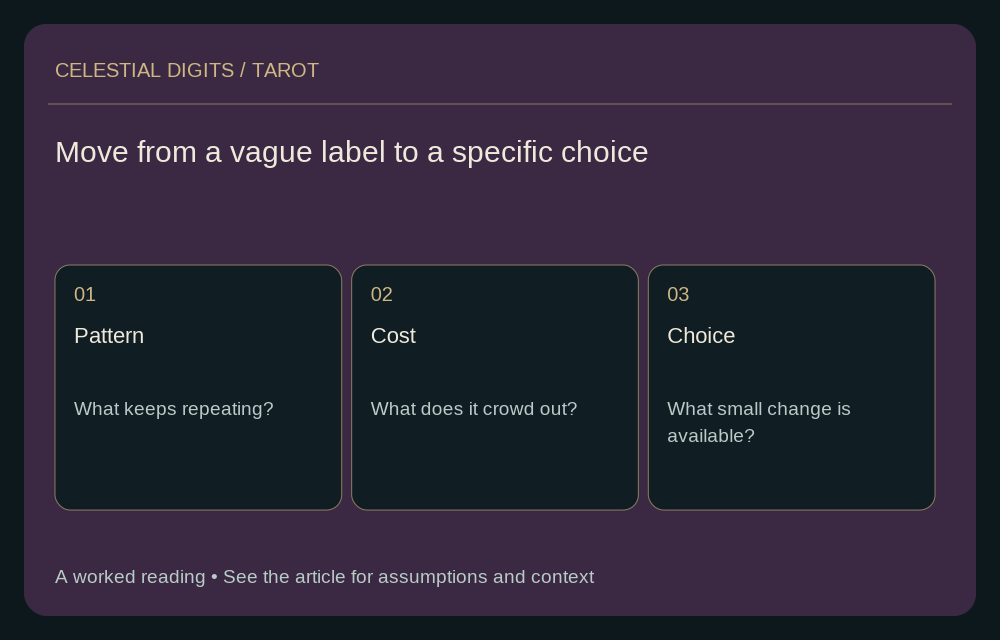
The card can prompt a specific observation: checking the feed interrupts the drawing session and makes comparison with other artists more prominent. It does not establish a clinical condition or prove that the platform has power over the person's destiny.
| Question | Example answer |
|---|---|
| What repeats? | Checking the feed after a difficult sketch |
| What does it provide? | A brief distraction from frustration |
| What does it cost? | Time and continuity of attention |
| What can be tried? | A short drawing period with the phone elsewhere |
Separate choice from blame#
Some constraints involve real obligations, unequal power or limited resources. Telling someone simply to remove the chains can minimise those circumstances. A responsible reading asks what is actually within their control and what support may be needed.
The sketchbook example is intentionally modest. It should not be generalised into advice about serious dependency, abuse or health concerns. Those situations deserve appropriate support based on the facts, not a card interpretation.
Do not identify a villain from the card#
If the Devil appears in a relationship spread, it does not prove that another person is manipulative or unfaithful. Discuss observed behaviour and boundaries rather than using the image as an accusation.
Likewise, an uncomfortable card is not evidence that a reader must perform an expensive cleansing or that a client is in danger unless they pay. Fear-based claims should not be treated as facts supplied by tarot.
A practical reflection#
Choose one manageable pattern and describe it without moral language. Notice the situation that triggers it, the immediate benefit and the longer-term cost. Try a small change and review what happened.
The point is to recover a clearer view of the available choices, not to prove that the card was right or to demand perfect self-control.
Continue with the Hanged Man and purposeful pauses and the Magician and High Priestess.
Historical source#
The image is documented in Waite's Pictorial Key to the Tarot. The sketchbook exercise is our original reflective example. Tarot does not diagnose a condition, establish wrongdoing or verify supernatural threats.
Related Posts
The Celtic Cross Explained Through One Complete Example
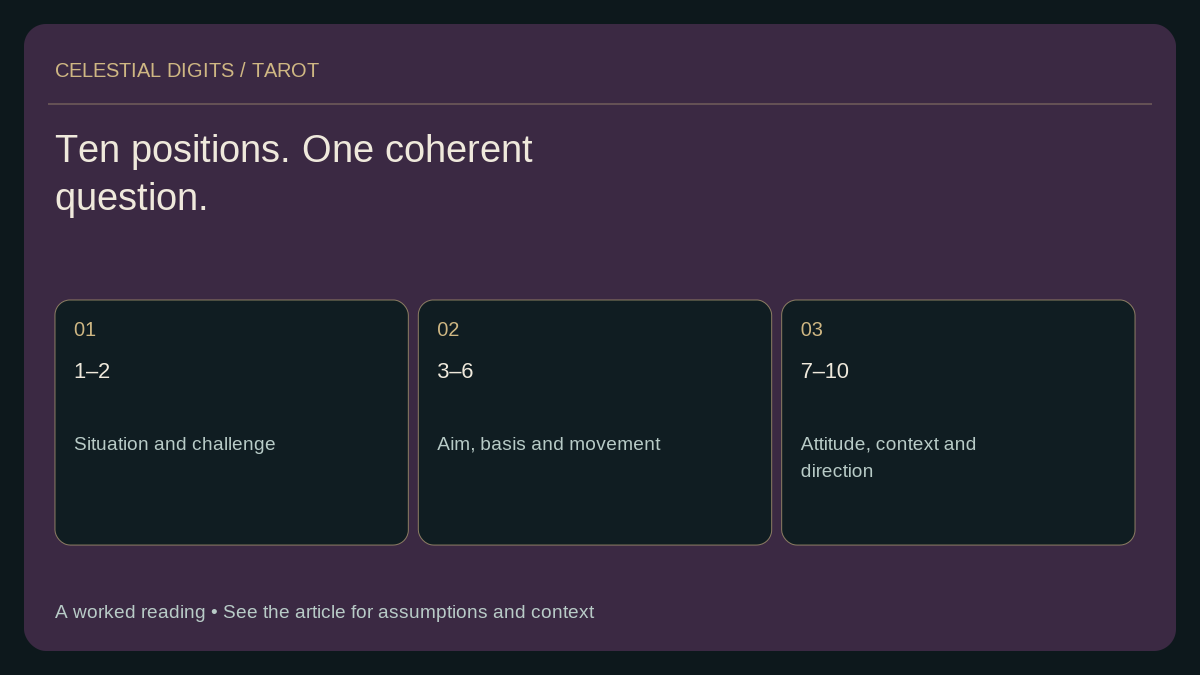
Follow all ten Celtic Cross positions in a fictional creative-project reading, then combine the cards into a practical, conditional interpretation.
The Chariot vs Strength: Direction, Persistence and Resistance
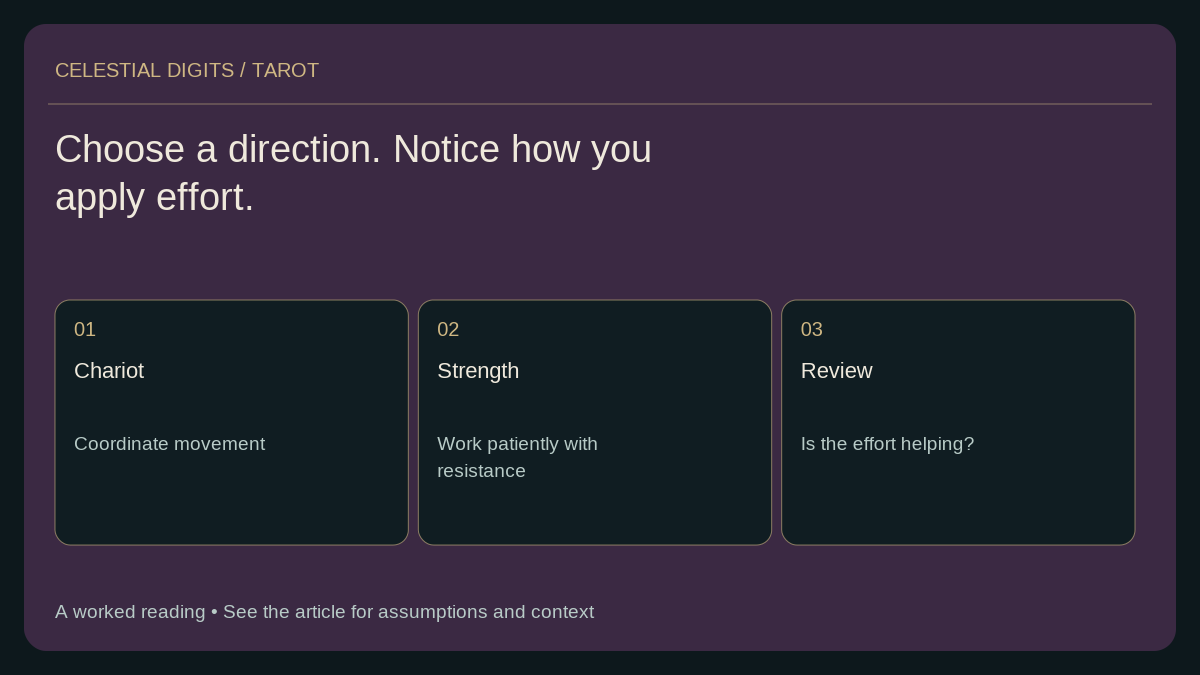
Compare purposeful direction with patient self-regulation through a rehearsal example, without treating either card as a command to push harder.
Death vs The Tower: Endings, Disruption and What Comes Next
Compare two often-feared tarot cards through project examples, separating symbolic change from literal predictions of disaster.
A little more perspective.
Keep discussions respectful. No harassment, hate, sexual content or spam. Comments are reviewed before publication. Report concerns from a comment menu, or contact [email protected].
Checking your session…