
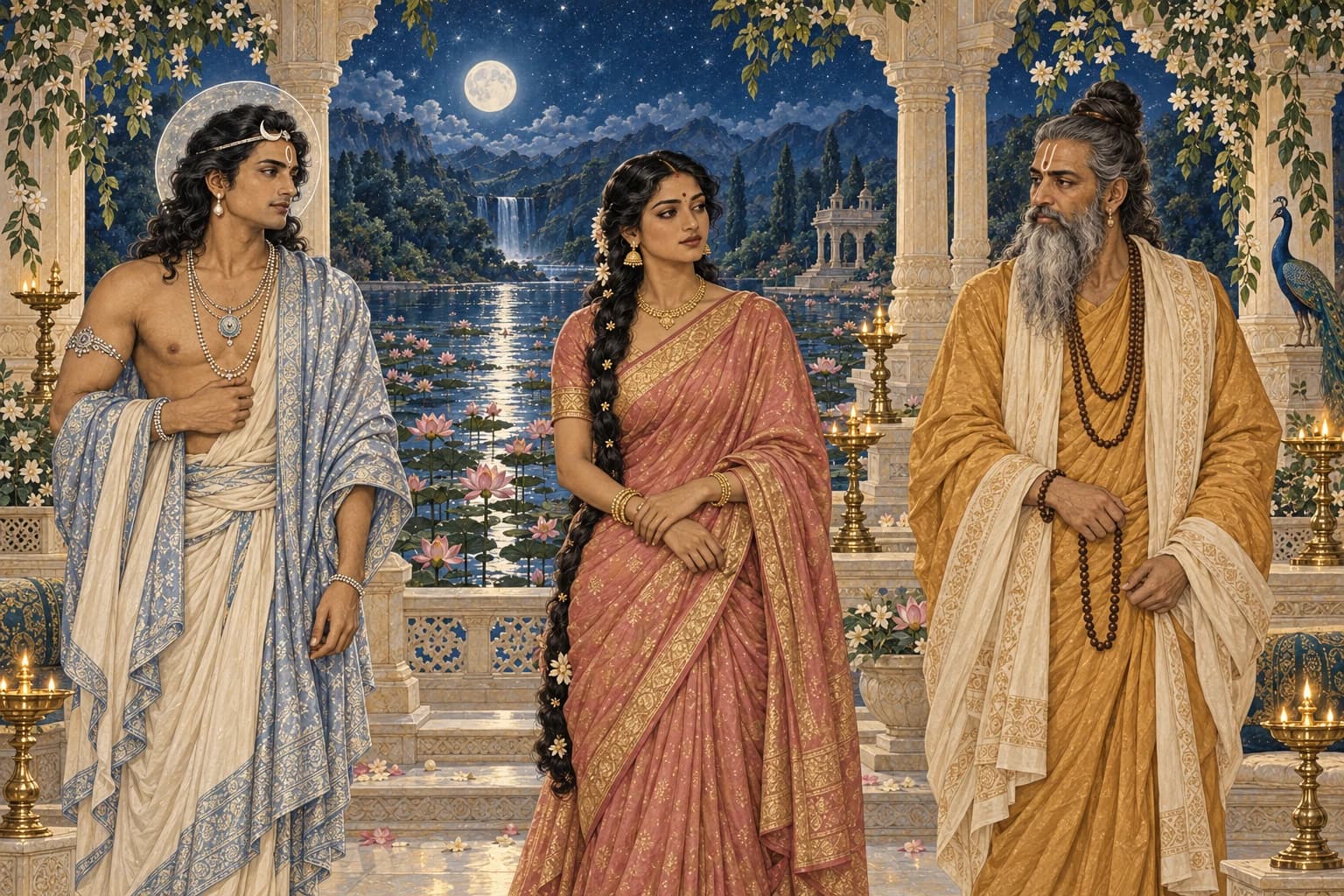
Stories Behind the Grahas: Eight Planet and Nakshatra Lores
Explore eight illustrated planetary and nakshatra stories, from Chandra and Rahu to the Ashwini twins, Kartikeya and Vamana, with source notes.
Before a planet becomes a placement on a chart, it is a character in a story: a lover, a parent, an outsider, a teacher. Those stories contain tenderness and rivalry, difficult choices and consequences that do not disappear when the gods intervene.
Stories Behind the Grahas is an eight-part illustrated series exploring those narratives and their relationship to the language of Jyotisha. Start at the beginning, or choose the question that interests you.
1. Chandra, Tara and the birth of Budha#
A conflict over love becomes a question of parentage. Chandra and Tara’s relationship draws Brihaspati, Indra, Shiva and Brahma into a crisis. What happens after Budha is born—and what does the source actually say about Brihaspati’s acceptance of him?
The opening chapter follows the dispute through its resolution, then explores the distinction between Mercury’s planetary identity and the roles it can play in a chart.
Read Chandra, Tara and the Birth of Budha →
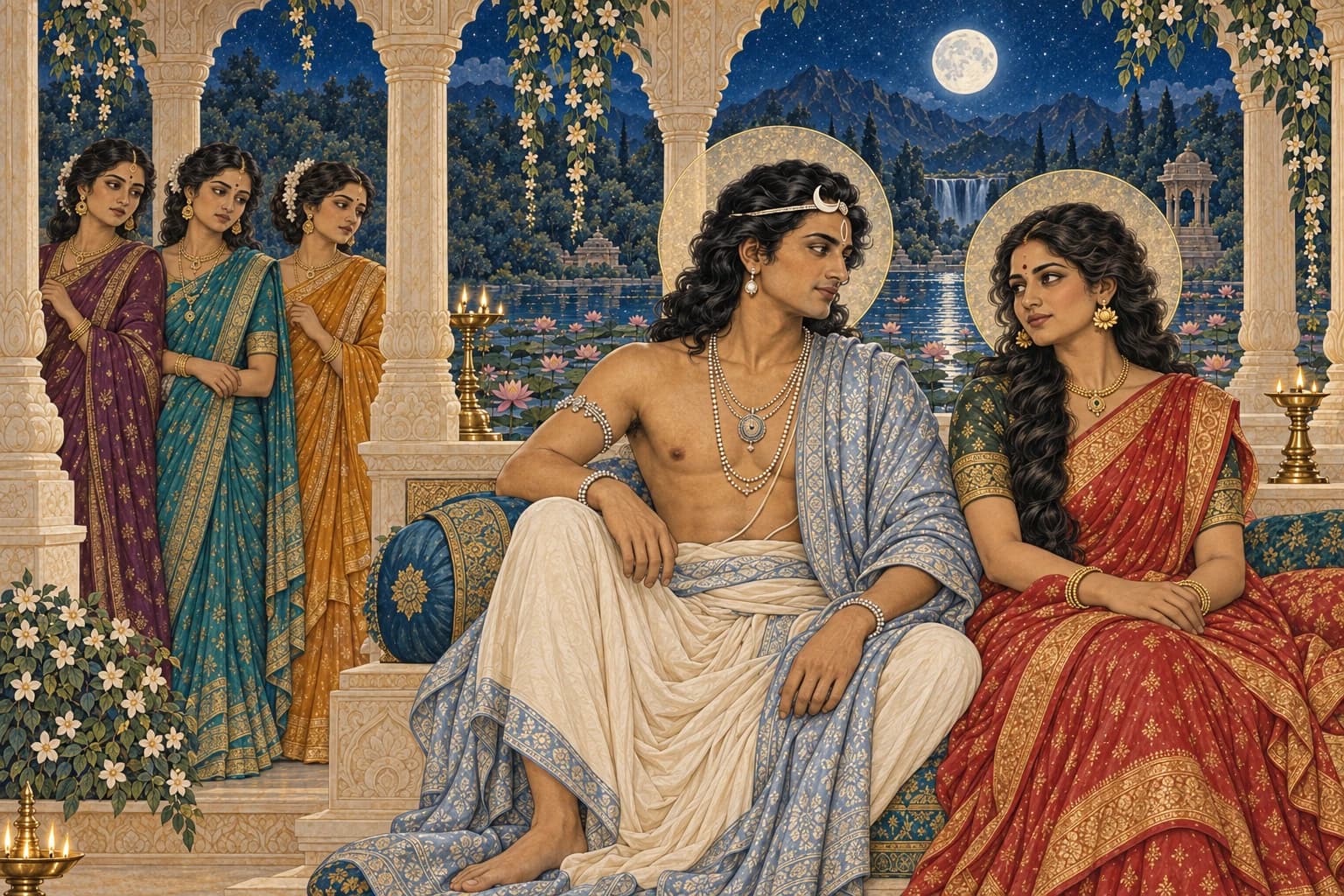
2. Chandra, Rohini and Daksha’s curse#
What happens when affection becomes favouritism? Among Daksha’s daughters, Chandra favours Rohini. The sisters appeal to their father, the Moon begins to fade, and renewal arrives with a condition.
This chapter distinguishes the Mahabharata’s Prabhasa account from the Shiva Purana’s Somnath telling. It also separates nakshatra lore from the astronomical reason the Moon waxes and wanes.
Read Chandra, Rohini and Daksha’s Curse →
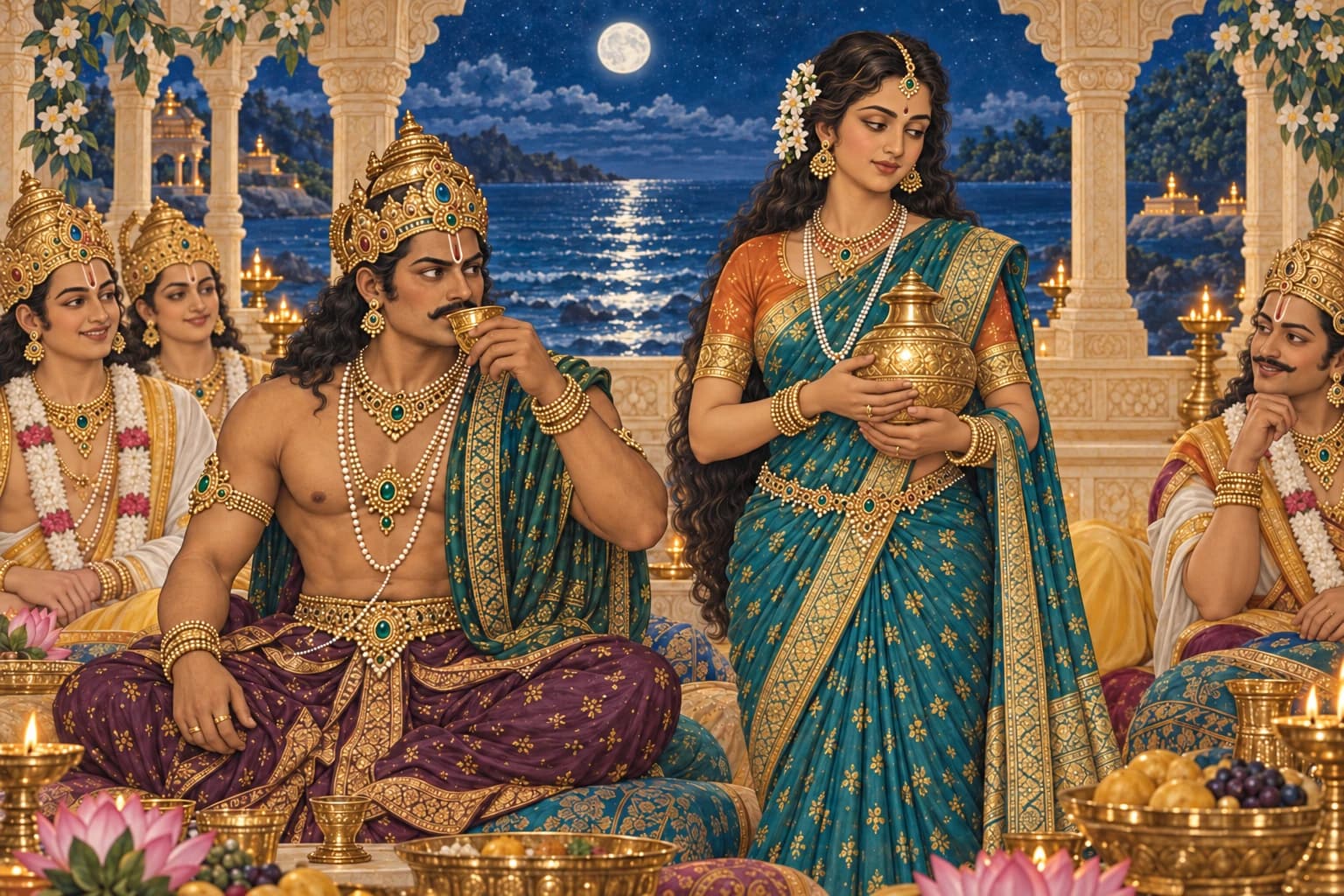
3. Rahu’s stolen immortality#
One stolen mouthful changes Rahu’s place in the cosmos. The ocean is churned, the nectar appears, and Rahu finds a place among the devas. The Sun and Moon recognise him—but not before he drinks.
Follow the story behind the eclipse chase, the differences between accounts of Rahu and Ketu, and the actual geometry of the lunar nodes. Then consider ambition and appetite without turning a chart placement into a reason for fear.
Read Rahu’s Stolen Immortality →
4. Shani, son of the Sun and Shadow#
Even the Sun has to learn to become less overwhelming. Sanjna cannot bear Surya’s radiance. Chhaya takes her place, a second family grows, and unequal affection exposes the secret.
Shani’s family story includes a detail often lost in fearful retellings: Surya eventually assigns him his planetary role. The chapter follows the Markandeya Purana, keeps Yama’s confrontation distinct from Shani’s story, and explores responsibility and recognition.
Read Shani, Son of the Sun and Shadow →
5. Shukracharya’s impossible choice#
To save his student, a teacher must trust him with his own life. Kacha comes to learn Shukra’s power of revival. Devayani repeatedly helps save him. Then the asuras create a trap that makes another rescue seem impossible.
The story continues beyond that rescue into a proposal, a refusal and exchanged curses. It offers a richer way to think about Venus: not only attraction, but care, gratitude, knowledge and the limits of what affection can demand.
Read Shukracharya’s Impossible Choice →
6. The Ashwini twins, Chyavana and Sukanya#
Who deserves a place at the divine table? The Ashwini twins restore Chyavana's youth. Sukanya faces three identical figures. The story then moves from the forest pool to a dispute over whether the divine physicians may receive Soma.
Follow the Mahabharata account, compare a clearly identified Bhagavata variant, and distinguish Ashwini's deities from Ketu, its nakshatra lord.
Read The Ashwini Twins, Chyavana and Sukanya →
7. Kartikeya and the six mothers#
Before the commander, there is a child who needs care. The Ramayana's account follows Agni, Ganga and six nurses whose name stays with Kartikeya.
This chapter considers shared nurture alongside Krittika's fire symbolism. It also explains why Kartikeya's connection to the Krittikas does not replace Agni as the nakshatra deity or the Sun as its planetary lord.
Read Kartikeya and the Six Mothers →
8. Vamana, Bali and the three steps#
A small request becomes larger than a king's world. Bali promises the young visitor three paces of land. His teacher warns him, the visitor expands, and the promise becomes a question of what Bali can still offer.
The Bhagavata account continues beyond the famous strides into protection and a future role for Bali. Read the story alongside Shravana's symbolism of listening, without turning myth into a forecast.
Read Vamana, Bali and the Three Steps →
How to read the series#
Each chapter names the text and translation behind its main narrative. Where another tradition tells the story differently, we identify that version rather than silently combining them. The artwork is original AI-assisted illustration, built around recurring character and landscape references; it is not an ancient depiction or a claim of canonical iconography.
The astrological reflections are presented separately from the source narrative. A story can make a symbol memorable and open up a useful question. It cannot establish someone’s character, predict a relationship by itself, or prove that a difficult event was deserved.
If you want to connect a story to your own placements, open your birth chart. For practical explanations beyond the lore, explore the full blog library.
Related Posts
Chandra, Rohini and Daksha’s Curse: Why the Moon Waxes and Wanes
Why did Daksha curse the Moon? Explore Chandra and Rohini’s story, the renewal at Prabhasa, the Somnath tradition, and its meaning in astrology.
Chandra, Tara and the Birth of Budha: The Conflict Behind Mercury
The story of Chandra, Tara and Budha: a celestial conflict, the birth of Mercury, and what its symbolism says about emotion, wisdom and clear thinking.
Rahu’s Stolen Immortality: The Story Behind Eclipses
Rahu stole a taste of immortality. Discover the ocean-churning story, why he pursues the Sun and Moon, and what the Rahu–Ketu symbolism means.
A little more perspective.
Keep discussions respectful. No harassment, hate, sexual content or spam. Comments are reviewed before publication. Report concerns from a comment menu, or contact [email protected].
Checking your session…