
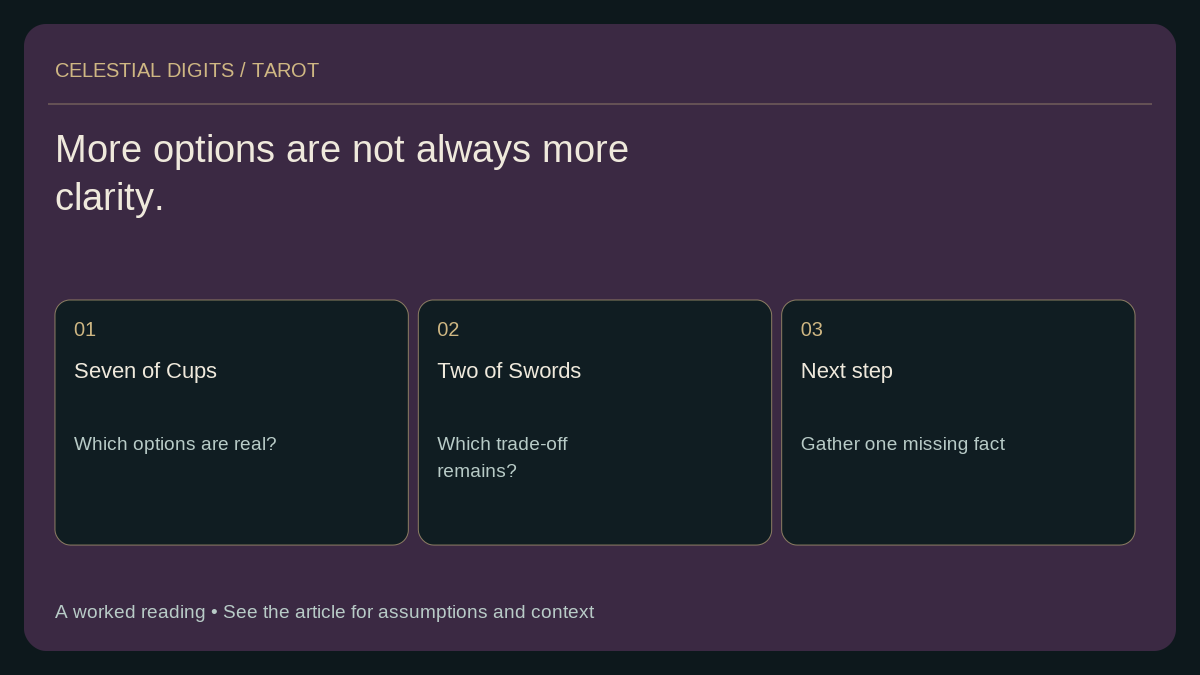
Seven of Cups vs Two of Swords: Options or an Unmade Choice?
Compare imagining many possibilities with holding a decision in balance, using a concrete course-selection example rather than fixed card keywords.
The Seven of Cups and Two of Swords are frequently described as cards of indecision. That broad label misses an important difference: a person can be overwhelmed by imagined possibilities, or they can understand the options but hesitate over a real trade-off.
A reflective comparison helps identify which problem is actually present. It should not label the person as permanently indecisive.
Begin with the images#
The Rider–Waite–Smith Seven of Cups presents a collection of unusual images in cups. Waite emphasises imagination and insubstantial possibilities. The Two of Swords shows a blindfolded figure balancing two swords; his text includes equilibrium and qualified harmony, rather than simply using the modern keyword “avoidance.”
The distinction used here—many possibilities versus a decision held in balance—is a contemporary reading exercise grounded in those images, not a claim that Waite supplied the following scenario.
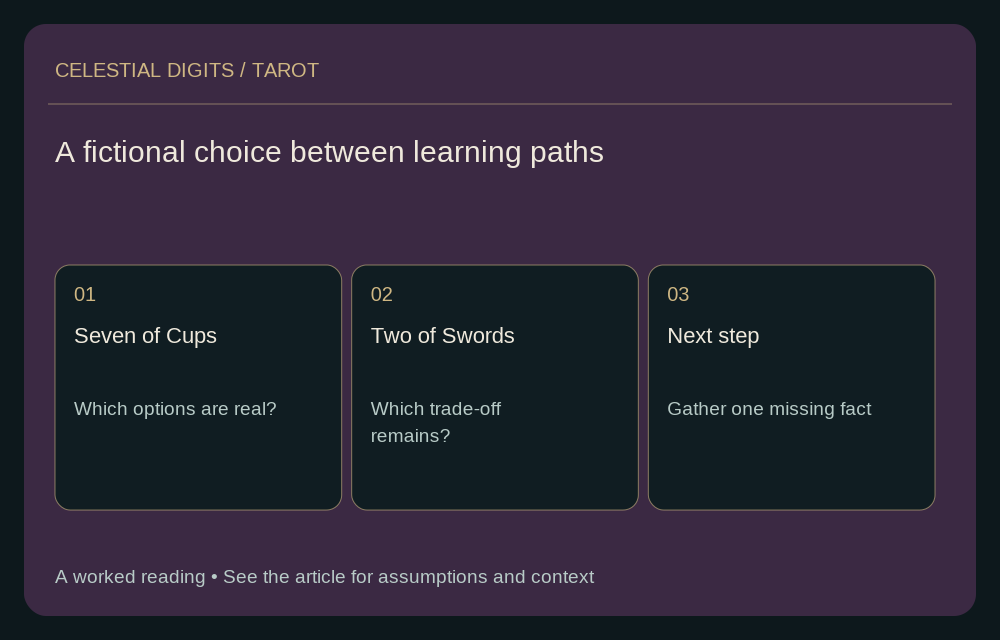
Work with a fictional course choice#
Imagine someone considering photography, coding, design and language courses. They have collected appealing descriptions but have not checked costs, schedules or entry requirements. The Seven of Cups can prompt a reality check on the options.
Later, they narrow the choice to two feasible courses. One is convenient but less interesting; the other is engaging but requires a longer commute. The Two of Swords can prompt attention to that genuine trade-off.
| Stage | Actual difficulty | Useful question |
|---|---|---|
| Many attractive courses | Options have not been tested | Which meet my constraints? |
| Two feasible courses | Values pull in different directions | Which trade-off can I accept? |
Do not mistake missing information for avoidance#
Sometimes a decision is delayed because an important fact is unavailable. Waiting for a timetable or accessibility information can be sensible. A card should not turn an appropriate pause into a character flaw.
Write down the missing information and how to obtain it. If the facts are already available, ask whether the remaining issue is fear of disappointing someone, accepting a cost or giving up an alternative.
Reduce the question to an action#
For the Seven of Cups stage, choose one verification task: compare course hours, attend an introductory session or read the actual syllabus. For the Two of Swords stage, choose a decision criterion and a reasonable review date.
The action does not need a supernatural guarantee. It is useful because it changes the quality of information or makes the trade-off explicit.
Keep uncertainty after the choice#
No course can be known perfectly in advance. Making a decision does not require eliminating every possible regret. Ask whether the choice is reversible, whether a small trial is possible and what would justify reconsidering it.
If these cards appear in different spread positions, their emphasis can change. A Two of Swords in “resource” might invite a calm pause; in “obstacle,” it might prompt examination of an unresolved balance. The position should be recorded before the interpretation.
Read useful tarot questions and a three-card decision spread.
Source and scope#
Historical imagery is documented in Waite's Pictorial Key. The course example is original. Tarot can structure reflection, but it cannot establish which educational choice will produce a guaranteed outcome.
Related Posts
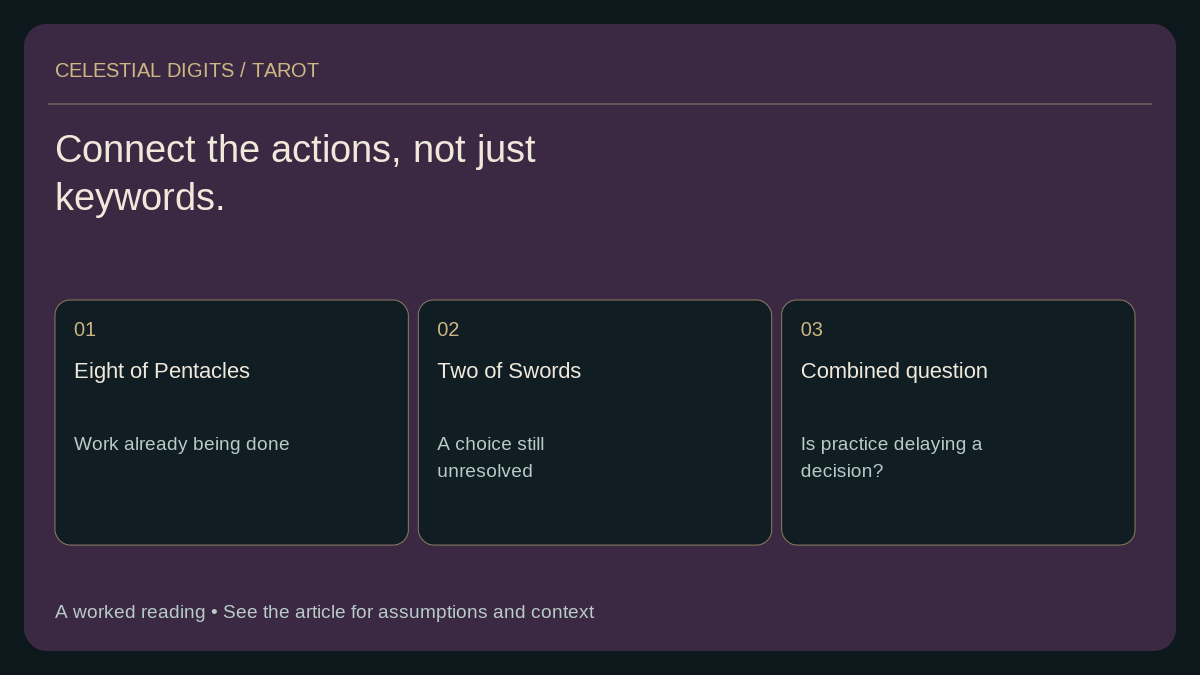
How to Read Two Tarot Cards Together Without Memorising Every Pair
Combine the Eight of Pentacles and Two of Swords through a clear question, position roles and a sentence that remains open to correction.
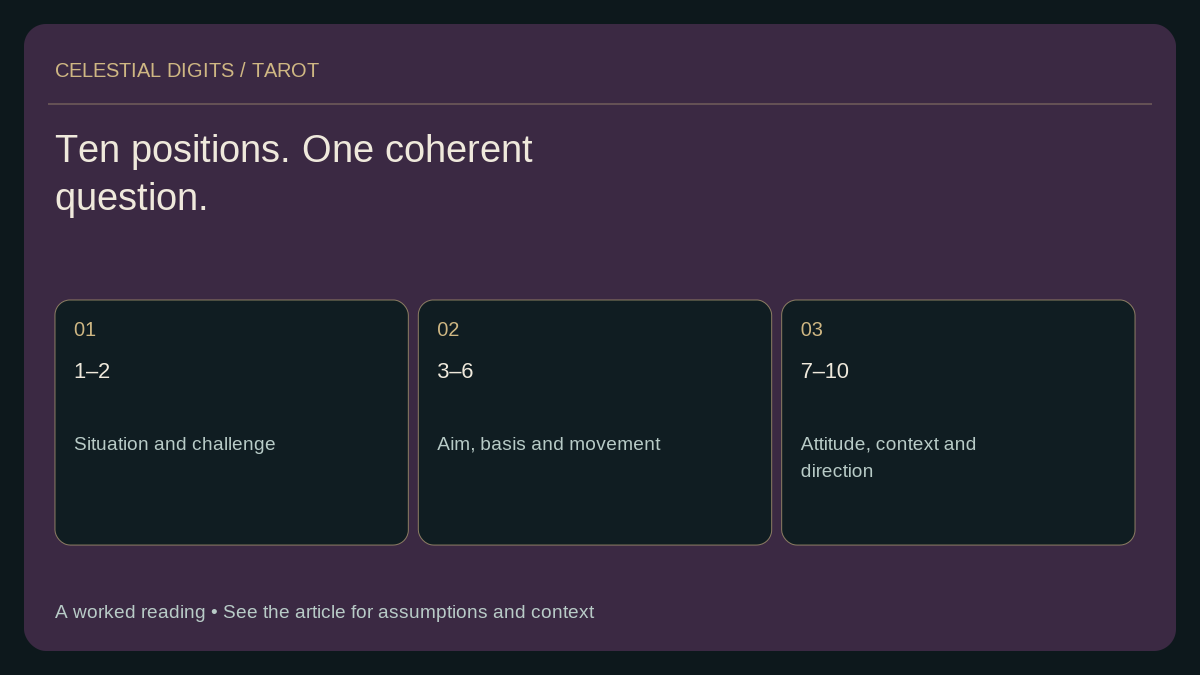
The Celtic Cross Explained Through One Complete Example
Follow all ten Celtic Cross positions in a fictional creative-project reading, then combine the cards into a practical, conditional interpretation.
The Chariot vs Strength: Direction, Persistence and Resistance
Compare purposeful direction with patient self-regulation through a rehearsal example, without treating either card as a command to push harder.
A little more perspective.
Keep discussions respectful. No harassment, hate, sexual content or spam. Comments are reviewed before publication. Report concerns from a comment menu, or contact [email protected].
Checking your session…