
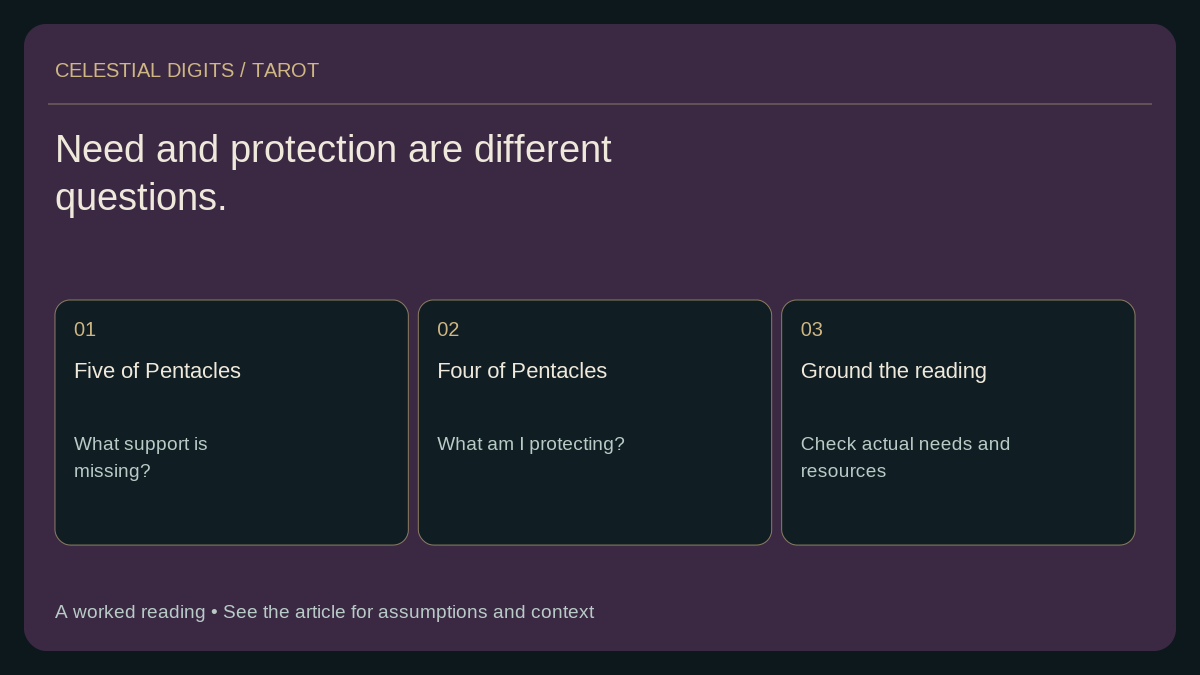
Five of Pentacles vs Four of Pentacles: Scarcity and Security
Compare unmet needs with protecting what is held, without treating tarot as a financial forecast or blaming people for difficult circumstances.
The Five and Four of Pentacles can both bring attention to security, but they approach it from different images. One depicts people exposed to difficult conditions; the other depicts a figure holding closely to possessions.
A reflective reading can distinguish an unmet need from an effort to protect what is already held. It should never imply that poverty is caused by a person's attitude or that a card can forecast their finances.
Read the images without judging the people#
The Rider–Waite–Smith Five shows two figures in snow near a lighted window. Waite's traditional account includes material difficulty. The Four shows a figure holding a pentacle with others positioned around the body, emphasising possession and retention.
Modern readings sometimes turn the Five into an instruction to “just ask for help.” That can be insensitive when support is inaccessible. The image does not prove that an easy solution exists nearby.
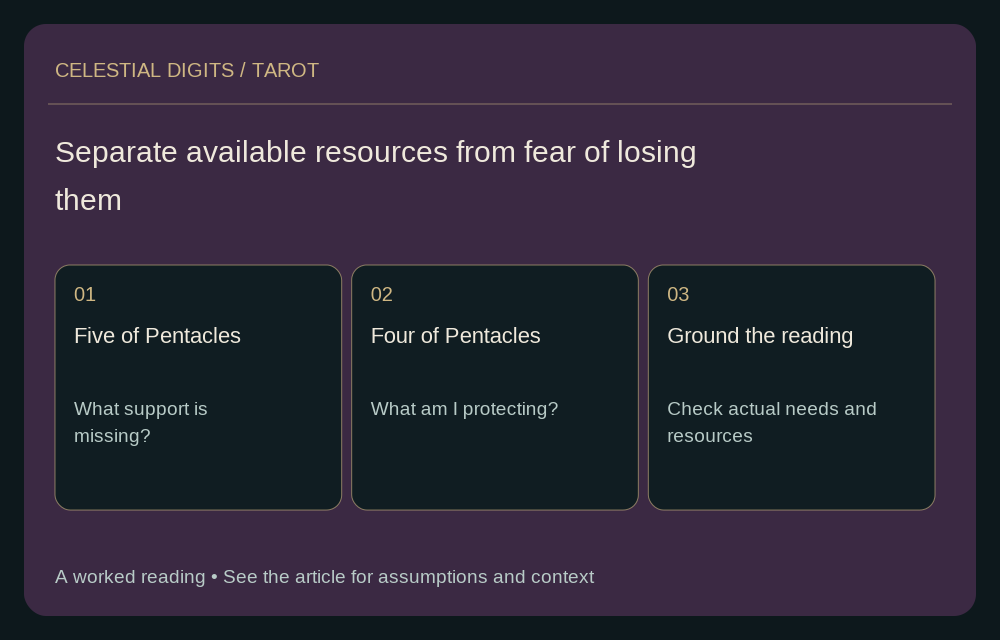
A fictional resource-planning example#
Imagine a small volunteer group with limited supplies. In one situation, it genuinely lacks materials for its next event. In another, it has enough materials but is reluctant to use any because future donations are uncertain.
| Situation | Reflective card emphasis | Practical question |
|---|---|---|
| Materials are insufficient | Five of Pentacles | What need is unmet, and what help is actually available? |
| Materials exist but are tightly held | Four of Pentacles | What reserve is necessary, and what can reasonably be used? |
The distinction comes from checking the inventory and commitments. The cards do not reveal the quantities or determine the answer.
Protection is not automatically greed#
Holding resources can be sensible when responsibilities are uncertain. A Four of Pentacles reading should ask what is being protected and why before declaring someone controlling or ungenerous.
Likewise, willingness to spend or give is not automatically wise. Decisions need actual information about obligations and capacity. The symbolism can prompt discussion, but it is not a substitute for a budget or qualified financial guidance where needed.
Need is not a personal failure#
A Five of Pentacles interpretation should leave room for structural barriers, unexpected costs and circumstances outside someone's control. Do not use the card to claim that they attracted hardship or failed a spiritual lesson.
If discussing support, make the question concrete: which person or organisation can provide accurate information, what eligibility conditions exist and what steps are manageable? Avoid promising assistance that has not been confirmed.
Keep material and emotional meanings distinct#
The Five may also prompt reflection on feeling excluded, and the Four on guardedness. Those are possible contemporary applications, not reasons to ignore an actual material problem.
Ask which meaning fits the stated question. If the reading concerns belonging, discuss invitations, boundaries and communication. If it concerns supplies or expenses, return to the real facts rather than treating everything as a metaphor.
End with a proportionate next step#
For the fictional group, that might be checking inventory, clarifying commitments or contacting a potential supporter. It should not be a major financial decision based on a draw.
Read tarot questions with useful boundaries and The Devil as a reflection on attachment.
Source and scope#
Imagery comes from Waite's Pictorial Key. The volunteer-group example is original. Tarot is used here for reflection, not to predict poverty, investments or financial recovery.
Related Posts
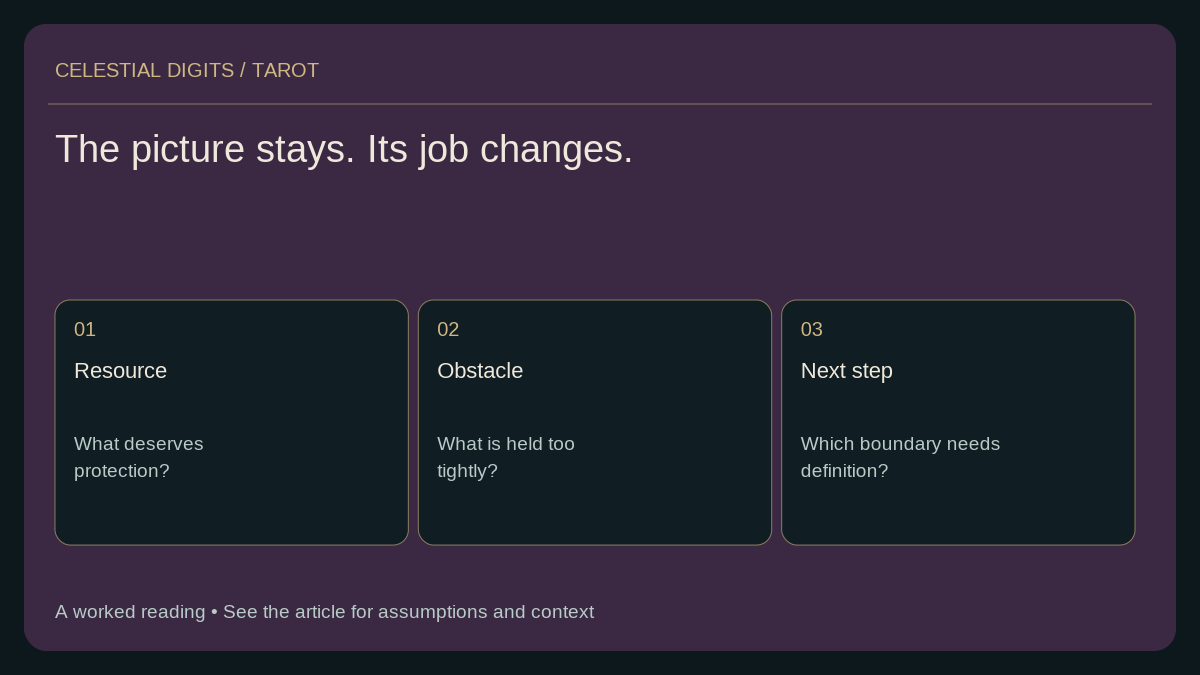
The Same Tarot Card in Different Positions: Why Context Matters
Read the Four of Pentacles as a resource, obstacle and next step while keeping the image and question consistent.
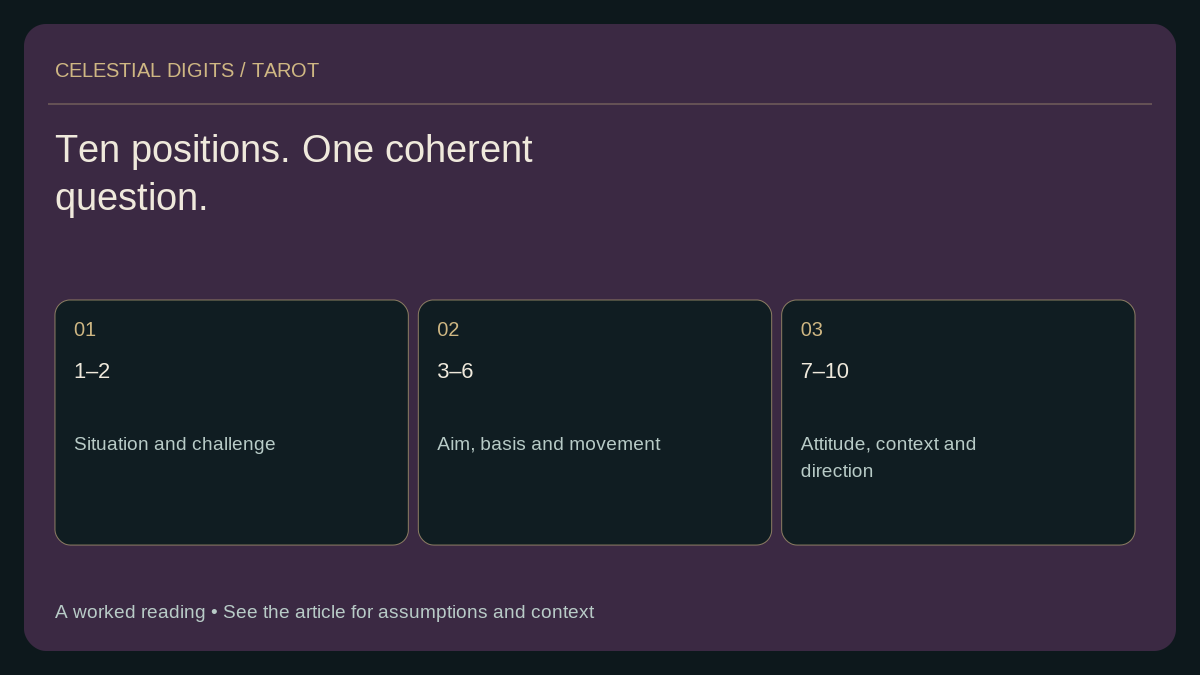
The Celtic Cross Explained Through One Complete Example
Follow all ten Celtic Cross positions in a fictional creative-project reading, then combine the cards into a practical, conditional interpretation.
The Chariot vs Strength: Direction, Persistence and Resistance
Compare purposeful direction with patient self-regulation through a rehearsal example, without treating either card as a command to push harder.
A little more perspective.
Keep discussions respectful. No harassment, hate, sexual content or spam. Comments are reviewed before publication. Report concerns from a comment menu, or contact [email protected].
Checking your session…