
The Same Tarot Card in Different Positions: Why Context Matters
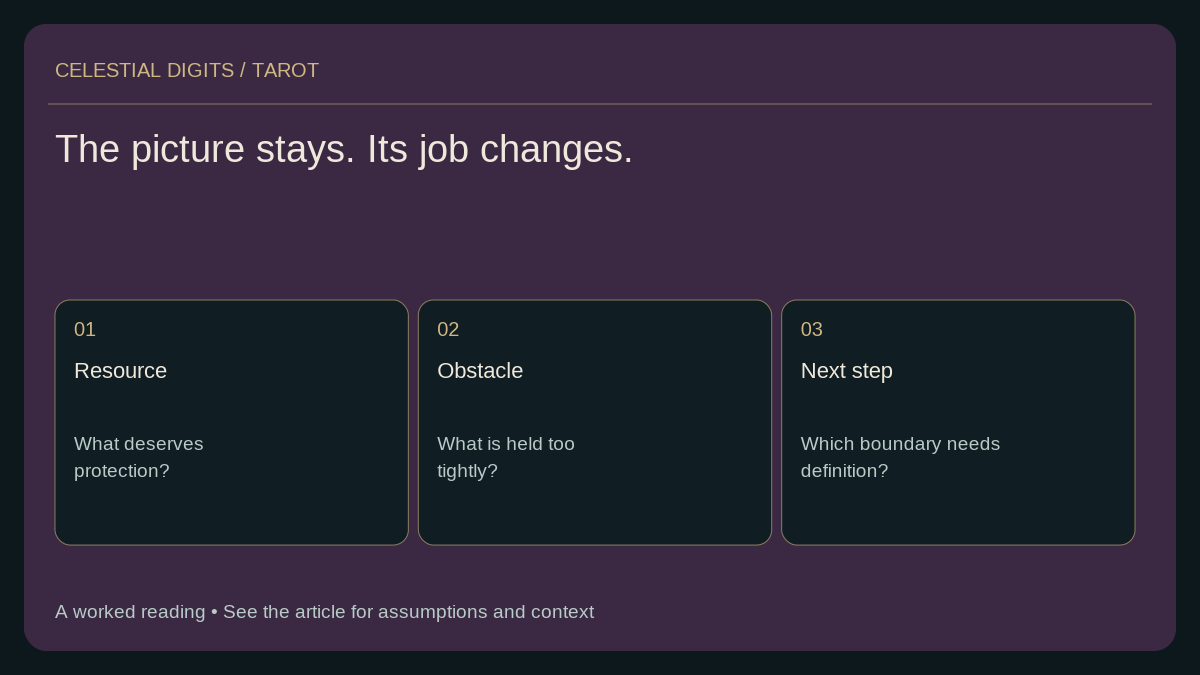
Read the Four of Pentacles as a resource, obstacle and next step while keeping the image and question consistent.
A tarot card does not have to mean exactly the same sentence in every spread. Its position gives it a role in answering the question. The challenge is to use context without making the meaning so flexible that any card can say anything.
We will keep one image and one fictional situation fixed, then change the position. That makes the interpretive step visible.
Start with the image#
The Rider–Waite–Smith Four of Pentacles shows a seated figure holding a pentacle, with others placed at the head and feet. Holding, possession and guarded stability are useful observations to investigate. “This person is selfish” is already a judgement, not a neutral description of the picture.
Our fictional question is: “How can a small volunteer group keep its shared equipment available and in good condition?” The card was selected for study, not randomly drawn for a real group.
Position one: resource#
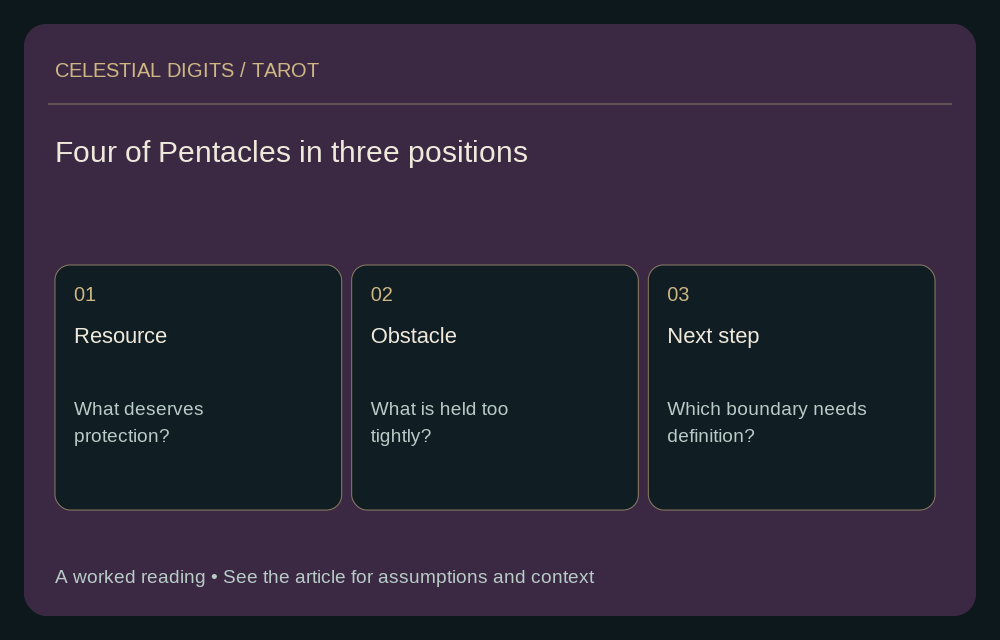
As a resource, the card can invite attention to protecting something valuable. The group may benefit from a clear inventory, a storage place and an agreement about borrowing. Preservation is useful when equipment is being lost or damaged.
The interpretation does not need to become “never lend anything.” It asks what level of care allows the resource to remain available over time.
Position two: obstacle#
As an obstacle, the same image can invite examination of excessive control. Perhaps one organiser keeps all access information and is rarely available. Equipment exists, but the group cannot use it when needed.
Here the issue is not ownership itself. It is whether the way something is held prevents its intended purpose. That distinction comes from the question and position, not from changing the image into an unrelated story.
Position three: next step#
As advice, the Four can suggest defining a workable boundary: who may borrow the equipment, how returns are recorded and what happens if something breaks. This combines preservation with access rather than choosing an absolute rule of hoarding or unrestricted sharing.
| Position | Interpretation to investigate | Real-world check |
|---|---|---|
| Resource | Existing care protects the equipment | Is the inventory reliable? |
| Obstacle | Control may prevent access | Can others obtain it when needed? |
| Next step | Make the boundary explicit | Is there a clear borrowing agreement? |
What keeps the reading from becoming arbitrary?#
All three interpretations stay connected to holding and managing resources. None claims that the card secretly predicts travel, pregnancy or a specific person's intentions. The question provides the setting; the image constrains the vocabulary; the position defines the task.
The group's actual experience can still contradict the interpretation. If access is already clear and equipment is well maintained, acknowledge that the selected card may not add much. There is no need to invent a hidden problem.
Practise without changing rules halfway#
Choose a card and write three position meanings before interpreting it. Keep the question fixed. Then explain which visual detail supports each reading and what information would make you revise it.
For historical card descriptions, see Waite's The Pictorial Key to the Tarot. The equipment example and position exercise are our contemporary teaching method. Continue with asking useful tarot questions and upright-only versus reversal methods.
Related Posts
Five of Pentacles vs Four of Pentacles: Scarcity and Security
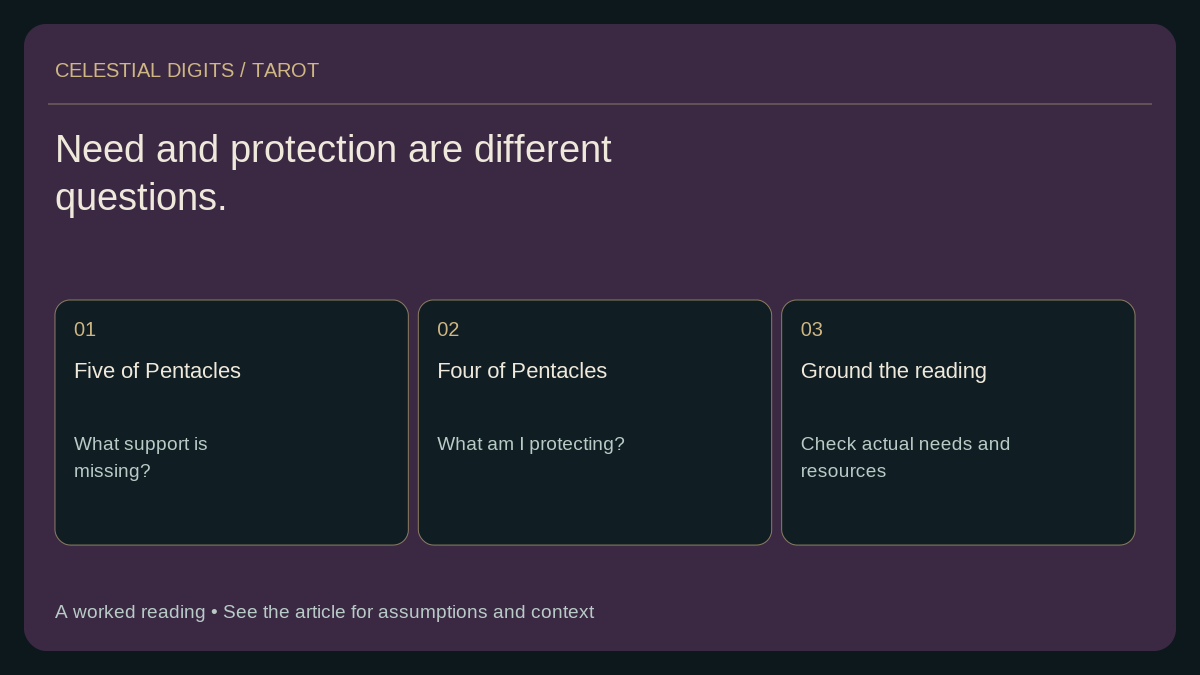
Compare unmet needs with protecting what is held, without treating tarot as a financial forecast or blaming people for difficult circumstances.
The Celtic Cross Explained Through One Complete Example
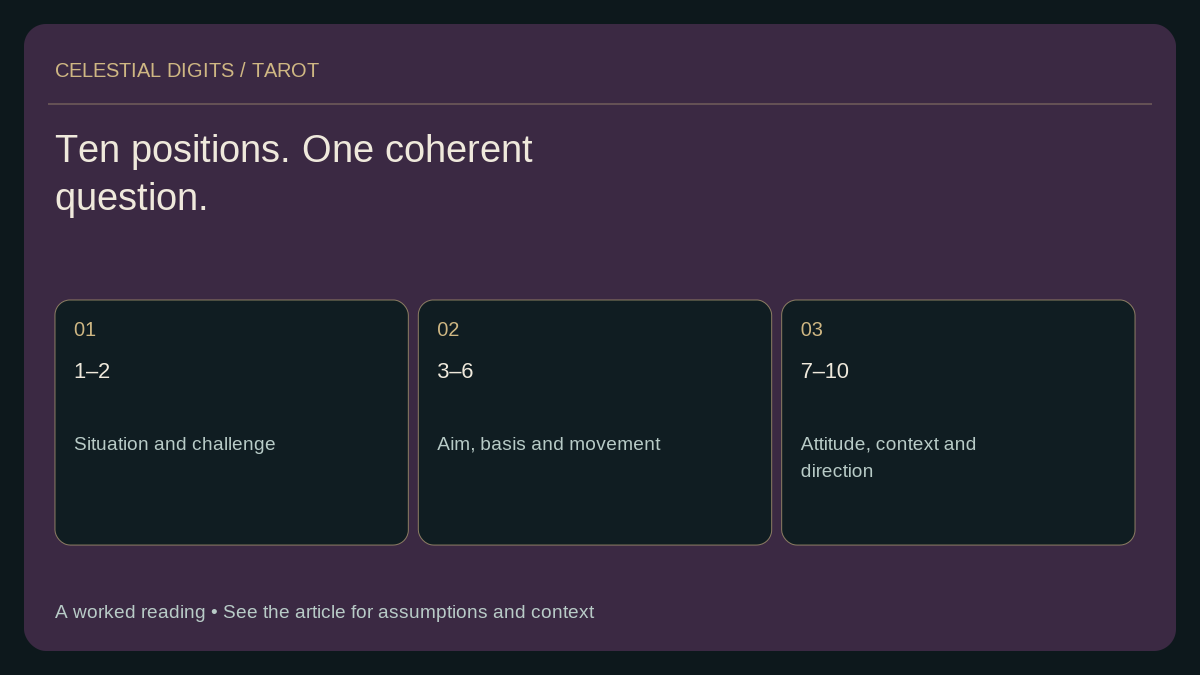
Follow all ten Celtic Cross positions in a fictional creative-project reading, then combine the cards into a practical, conditional interpretation.
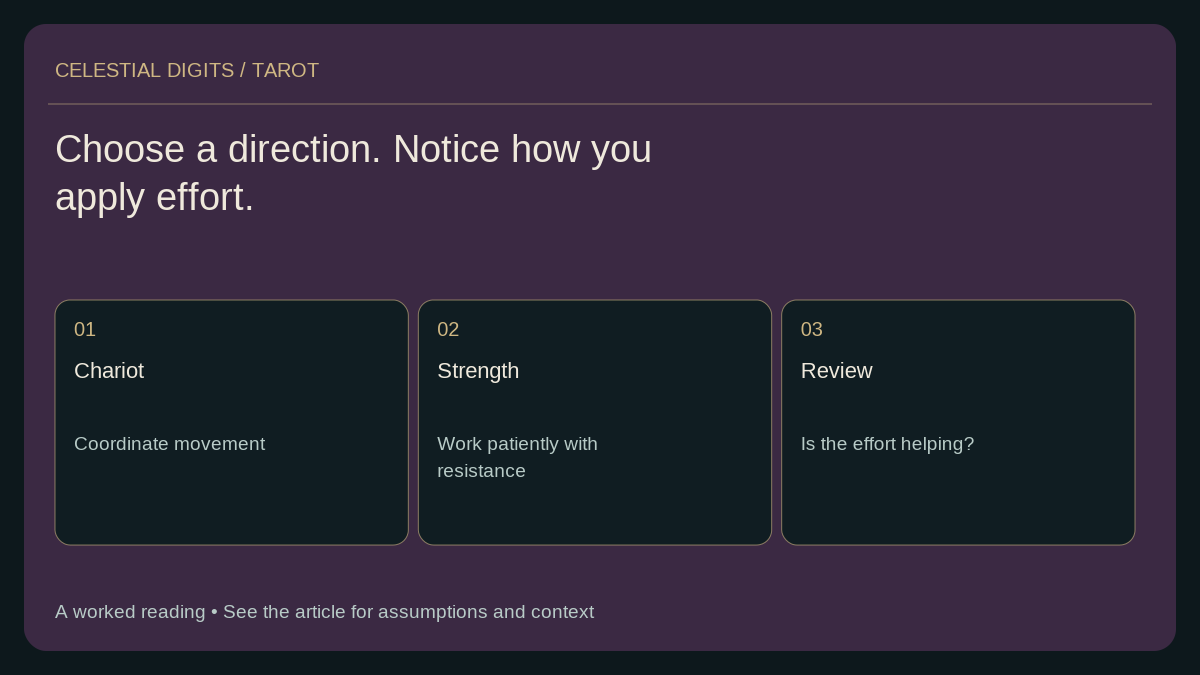
The Chariot vs Strength: Direction, Persistence and Resistance
Compare purposeful direction with patient self-regulation through a rehearsal example, without treating either card as a command to push harder.
A little more perspective.
Keep discussions respectful. No harassment, hate, sexual content or spam. Comments are reviewed before publication. Report concerns from a comment menu, or contact [email protected].
Checking your session…