
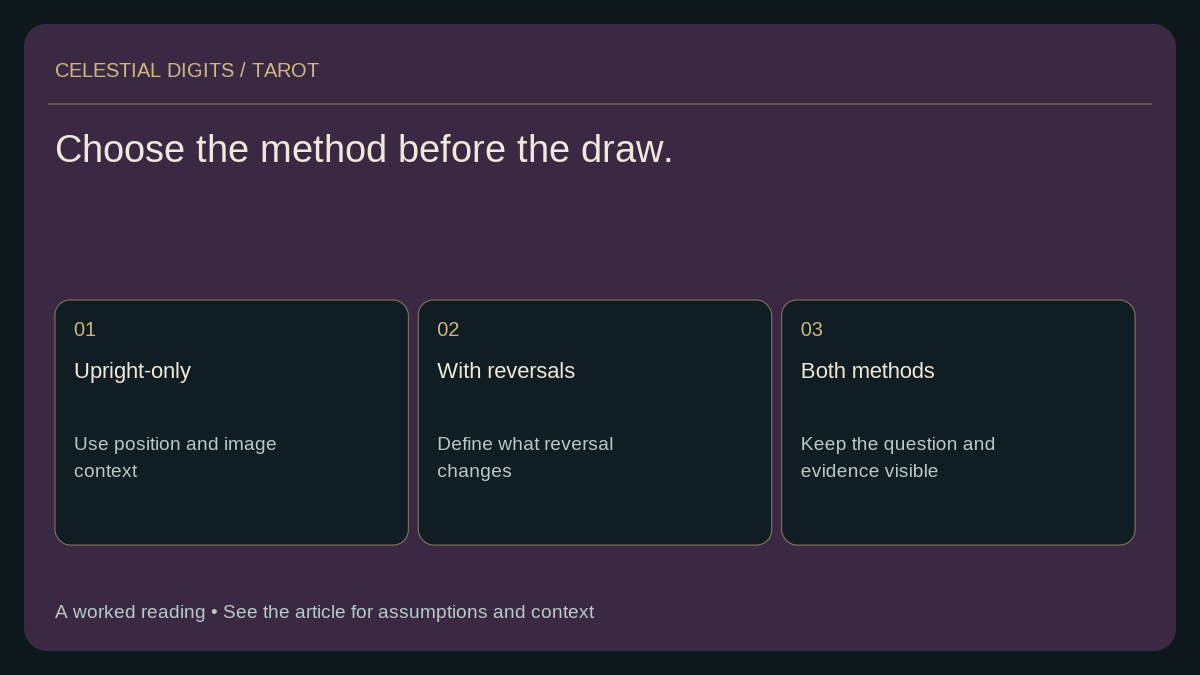
Do You Need Reversed Tarot Cards? Two Consistent Reading Methods
Compare an upright-only reading with an explicitly defined reversal method using a work-and-practice example.
You can read tarot without reversals. You can also use reversals consistently. The problem is not the choice itself; it is changing the rule after seeing a card so that the spread produces the preferred answer.
A reversal is a card appearing upside down relative to the reader. What that orientation means is determined by the reading method, not by a single universal rule shared by every tarot practitioner.
Method one: upright cards, contextual interpretation#
An upright-only reader uses the image, question, spread position and neighbouring cards to explore both useful and difficult expressions. A card does not have to be reversed to describe an obstacle.
For example, the Eight of Pentacles in an advice position can invite deliberate practice. In an obstacle position, it might invite examination of repetitive work that has become perfectionism or avoidance of finishing. The interpretation changes because the position changes, not because the picture has been inverted.
Method two: define a reversal convention#
A reader using reversals might define them as blocked, internalised, excessive or diminished expressions. Those possibilities should not all be selected interchangeably whenever convenient. Choose a primary approach and explain how context narrows it.
Historical manuals may instead provide separate upright and reversed entries for individual cards. Their reversed meanings are not always simple opposites. If you use such a manual, identify it rather than pretending that “upside down means bad” describes the whole system.
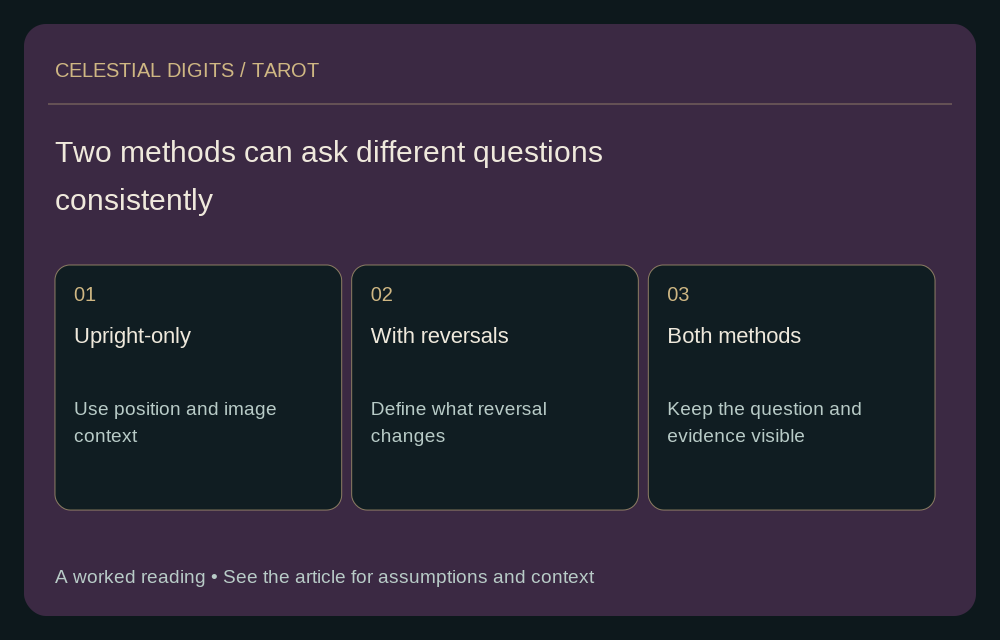
Compare a complete example#
A fictional designer asks why a portfolio remains unfinished. Consider the Eight of Pentacles as the central card.
| Method | Starting interpretation | Question to check |
|---|---|---|
| Upright-only, obstacle position | Practice may be replacing completion | Are finished pieces repeatedly being restarted? |
| Reversal means blocked expression | Consistent practice may be difficult to sustain | Is the schedule fragmented or the task unclear? |
These interpretations point in different directions. The designer's actual behaviour helps determine whether either is useful. If the real problem is missing equipment or an unexpected obligation, the reading should acknowledge that rather than force a psychological explanation.
The example is deliberately constructed to compare methods. It is not a random draw or evidence that card orientation detects the cause of a delay.
Avoid three common mistakes#
First, do not treat every reversal as a prediction of failure. Second, do not rotate an unwanted card and then claim that the reading has changed objectively. Third, do not keep pulling clarification cards until one interpretation becomes emotionally comfortable.
A small spread with a clear method is easier to learn from than a growing pile of cards interpreted through changing rules. Record the original question and orientation before discussing alternatives.
Which method should a beginner choose?#
Start with the one you can explain clearly. Upright-only reading reduces the number of conventions to learn at once. Reversals add another interpretive dimension if you can use it consistently. Neither choice makes a reader inherently more gifted or authentic.
After several practice readings, review whether the chosen method helped you ask better questions and identify useful actions. Record misses as carefully as apparent matches.
Waite's The Pictorial Key to the Tarot includes historical upright and reversed entries. Our blocked-expression example is a contemporary convention, not a quotation from Waite. Continue with court-card interpretation and the three-card example to practise explaining your choices.
Related Posts
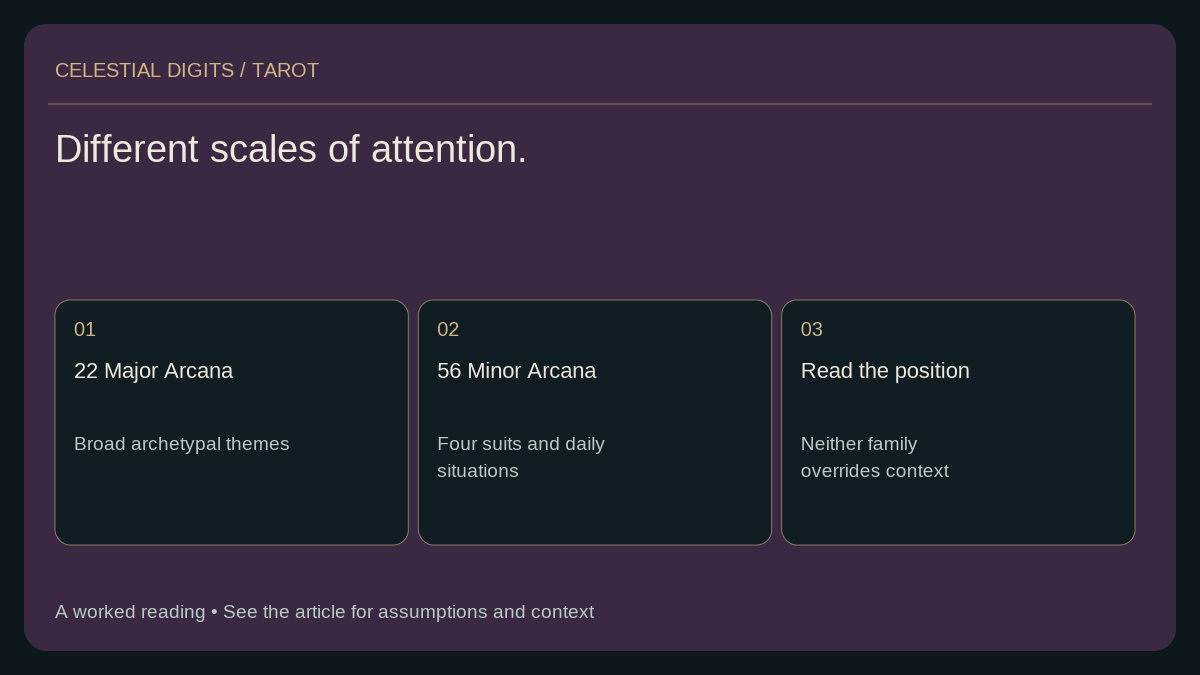
Major vs Minor Arcana: Big Themes and Everyday Situations
Understand the 22 Major and 56 Minor Arcana through two sample readings, without treating a Major card as an inevitable event.
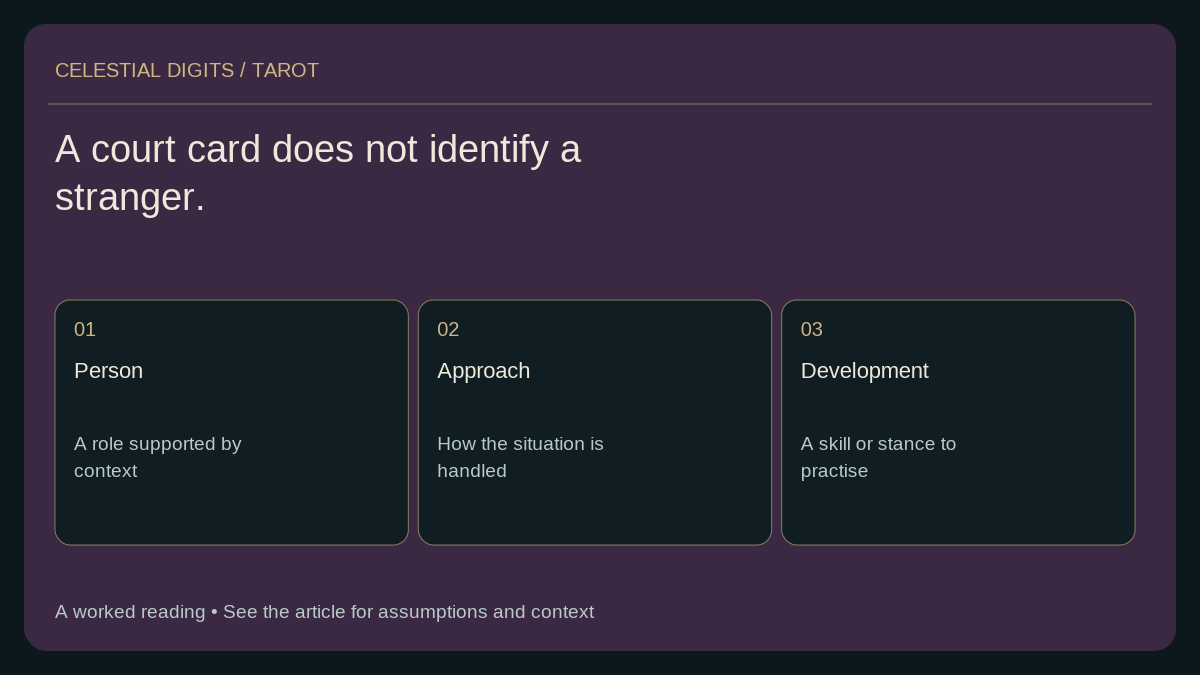
Tarot Court Cards: People, Roles or Parts of Yourself?
Read Page, Knight, Queen and King through a practical project example without assigning fixed genders, ages or hidden intentions.
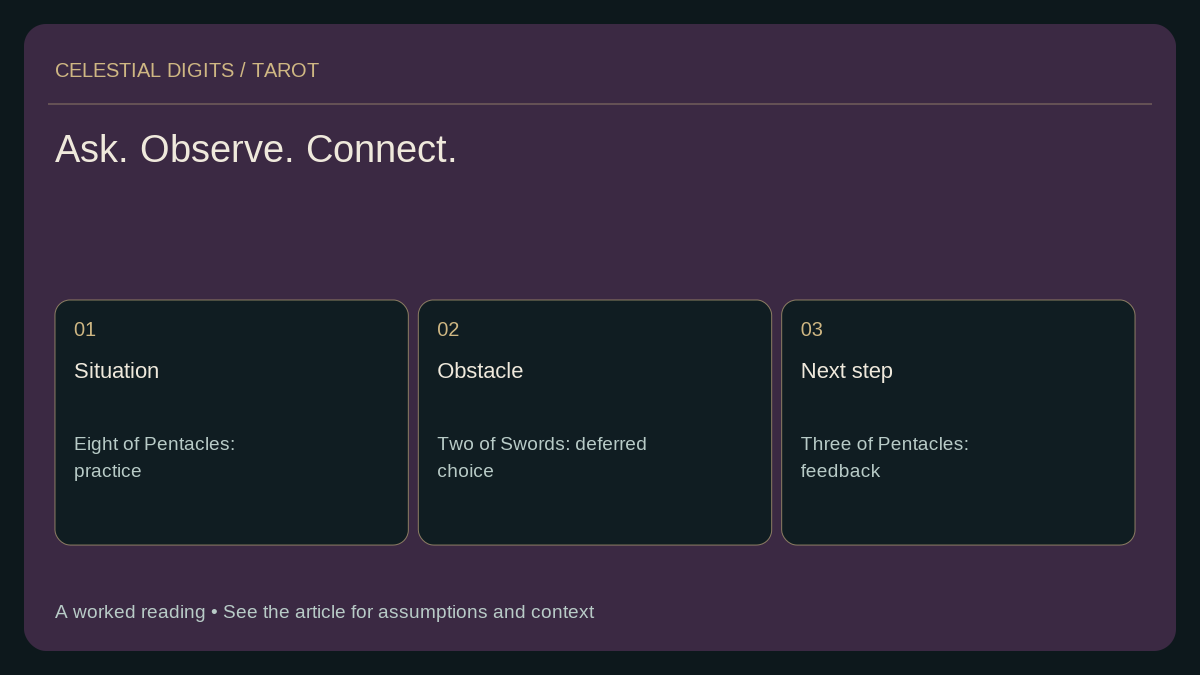
How to Read Tarot: A Complete Three-Card Beginner Example
Follow a Rider–Waite–Smith three-card reading from a clear question to a practical next step, with an illustrated sample spread.
A little more perspective.
Keep discussions respectful. No harassment, hate, sexual content or spam. Comments are reviewed before publication. Report concerns from a comment menu, or contact [email protected].
Checking your session…