
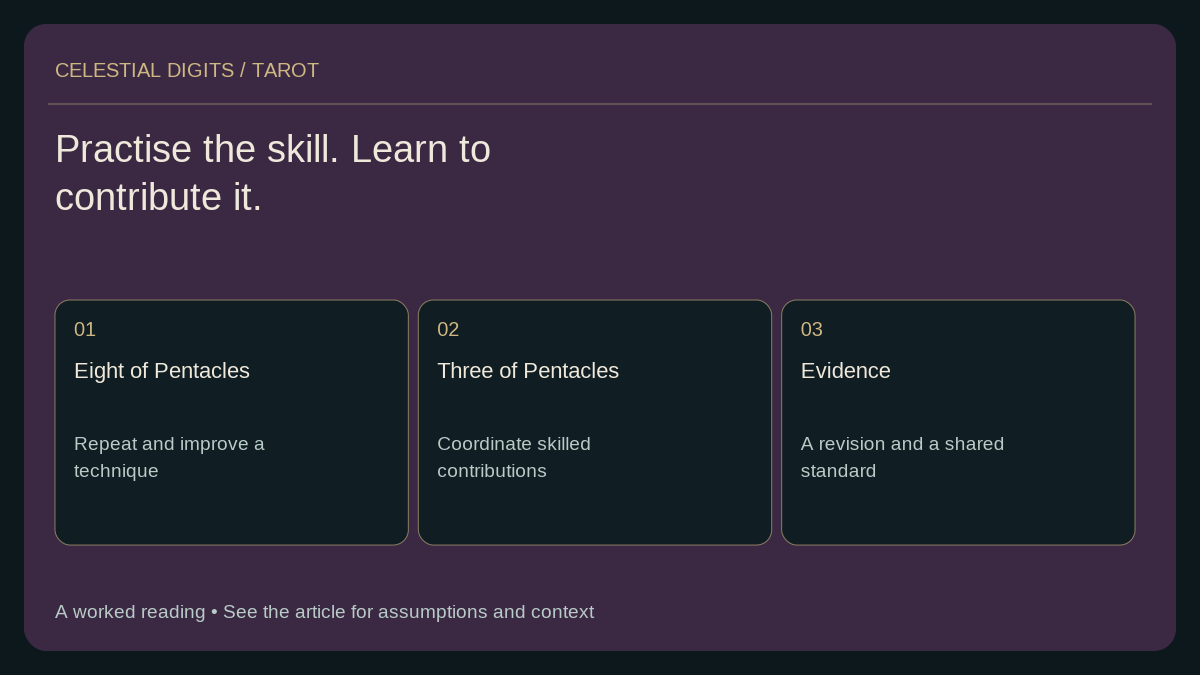
Eight of Pentacles vs Three of Pentacles: Skill and Collaboration
Distinguish focused practice from contributing skilled work with others through a worked project example and concrete questions about feedback.
The Eight and Three of Pentacles both concern skilled work in common Rider–Waite–Smith readings. Their difference is easier to understand through the work itself than through a slogan about working hard.
The Eight can focus attention on practice, repetition and refinement. The Three can focus attention on how skilled work is recognised, coordinated and brought into a larger project. Neither card guarantees employment or professional status.
Notice the setting of each image#
The Eight shows a craftsperson working on pentacles. Waite associates it with craftsmanship and skill, including work in preparation. The Three shows skilled work within an architectural setting, with other figures present in the design.
Waite explicitly compares the Three with the Eight. Modern readers often emphasise collaboration in the Three; that is a useful image-based extension, but it should not replace the importance of actual craft.
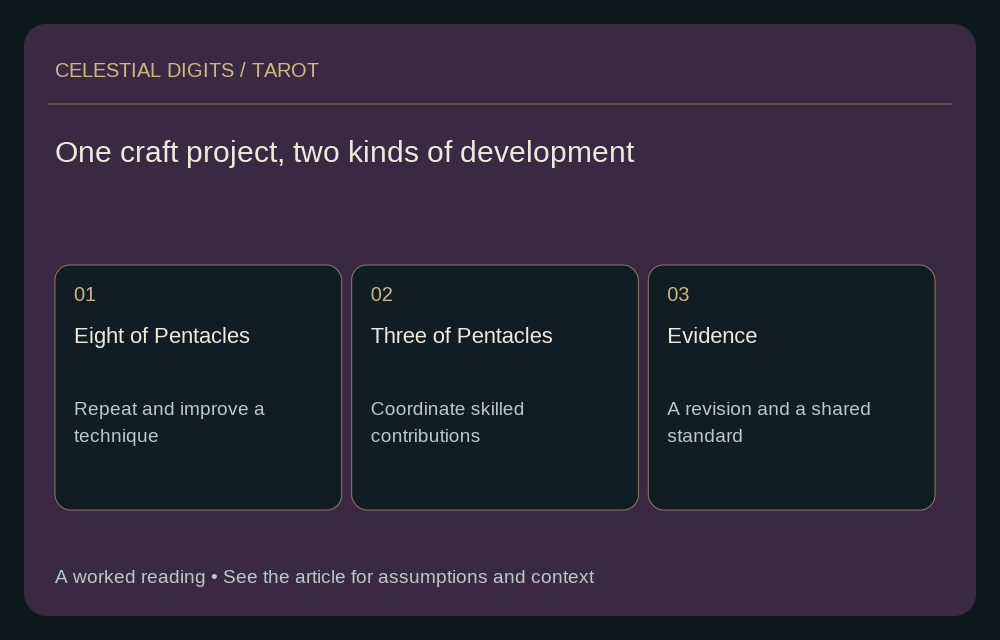
Follow one fictional project#
Imagine a person learning to build a small website for a community group. At first, they practise accessible forms and responsive layouts. Later, they work with a writer and organiser to make the website useful for visitors.
| Focus | Eight of Pentacles question | Three of Pentacles question |
|---|---|---|
| Quality | Which technique needs repetition? | What standard will everyone use? |
| Feedback | What changed between attempts? | Who needs to review this work? |
| Progress | Can I perform the task reliably? | Does my contribution fit the whole? |
This exercise assigns cards deliberately to explain a distinction. It is not a report of a real client's reading.
Practice needs feedback, not just hours#
Repeating an error many times does not necessarily improve a skill. An Eight of Pentacles reflection should ask what the person is practising, how they assess it and whether they receive useful feedback.
For the website example, that could mean testing a form with a keyboard and checking whether labels are clear. The observable result is improved usability, not merely the feeling of having worked hard.
Collaboration needs clear responsibilities#
A Three of Pentacles reflection can ask who decides priorities, who supplies content and who checks the finished result. Skilled people can still produce a confusing project if their responsibilities and standards are unclear.
The card should not be used to assume that every team is supportive. If communication is poor, identify the actual process that needs changing rather than promising that collaboration will automatically solve it.
Avoid a rigid beginner-to-expert ladder#
Experienced people still practise fundamentals, and beginners can contribute meaningfully to teams. The Eight and Three are not permanent ranks assigned to a person.
A project may move repeatedly between individual refinement and shared review. Record which kind of work is needed now, then choose a specific action: revise one component, request targeted feedback or agree on a definition of completion.
Make the reading testable as reflection#
At the next review, compare the earlier attempt with the revision and ask whether coordination improved. If nothing changed, examine the plan rather than blaming a card or the person's supposed energy.
Continue with four tarot suits and reading two cards together.
Source and scope#
The historical card descriptions come from The Pictorial Key to the Tarot. The website project and feedback procedure are original reflective applications. They do not predict hiring decisions, qualifications or income.
Related Posts
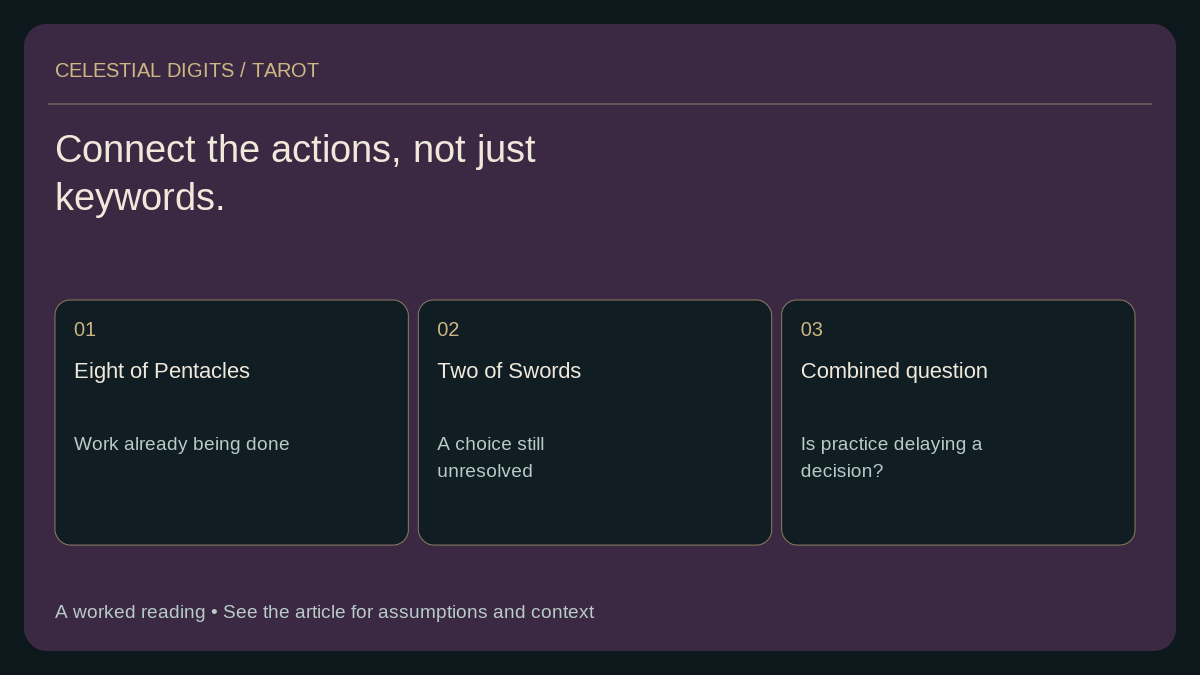
How to Read Two Tarot Cards Together Without Memorising Every Pair
Combine the Eight of Pentacles and Two of Swords through a clear question, position roles and a sentence that remains open to correction.
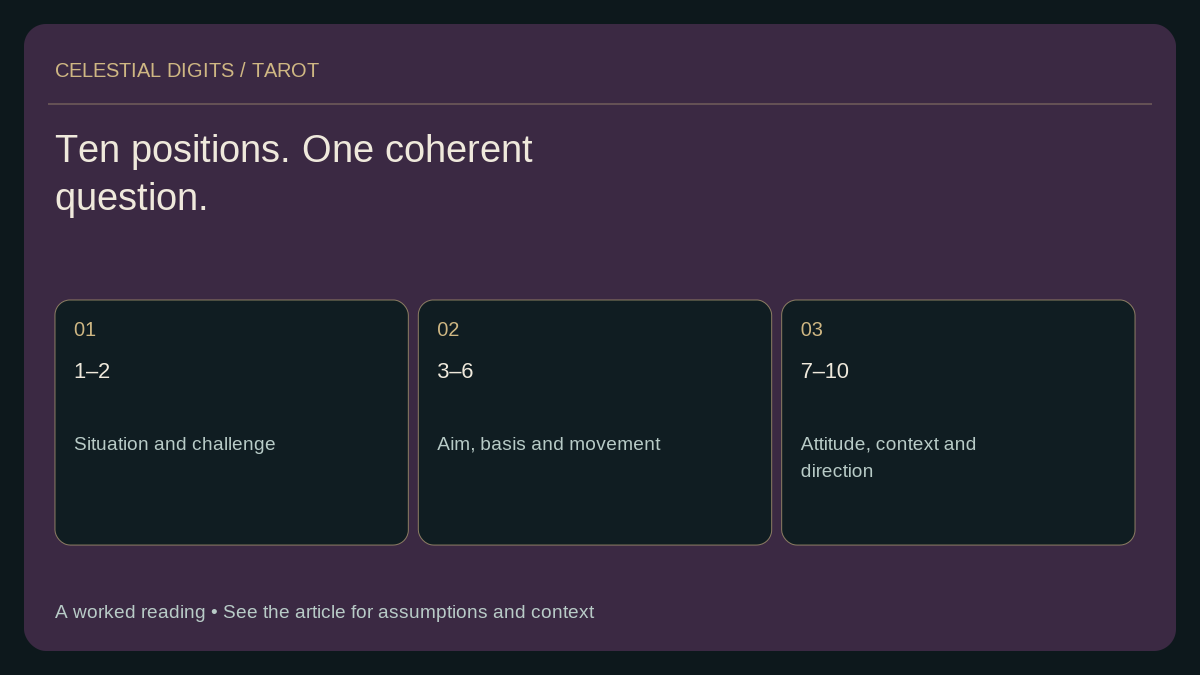
The Celtic Cross Explained Through One Complete Example
Follow all ten Celtic Cross positions in a fictional creative-project reading, then combine the cards into a practical, conditional interpretation.
The Chariot vs Strength: Direction, Persistence and Resistance
Compare purposeful direction with patient self-regulation through a rehearsal example, without treating either card as a command to push harder.
A little more perspective.
Keep discussions respectful. No harassment, hate, sexual content or spam. Comments are reviewed before publication. Report concerns from a comment menu, or contact [email protected].
Checking your session…