
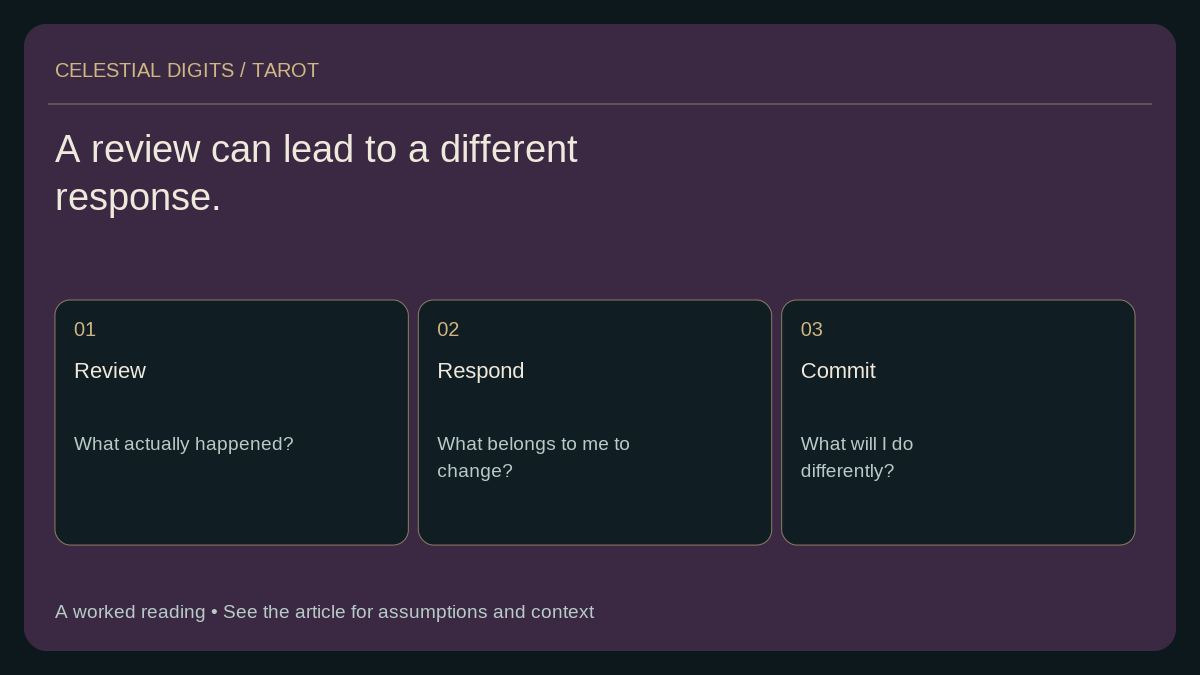
Judgement: Reviewing the Past Before a New Commitment
Read the Judgement card through a practical review exercise: evidence, responsibility and a chosen next commitment rather than doom or a verdict.
Judgement can sound like a sentence being passed. In a tarot reading, that association can make the card feel punitive before the image has even been examined. A more useful reflective approach is to ask what is being recognised and what response is now possible.
The card need not announce punishment, a legal outcome or another person's final opinion of you. It can become a structured invitation to review experience and choose a response.
Start with the historical image#
The Rider–Waite–Smith card shows an angel with a trumpet and figures rising below. Waite interprets the scene through transformation and a summons answered from within. The imagery draws on religious symbolism; it is not a courtroom diagram.
A contemporary review exercise can borrow the movement from recognition to response without claiming to reproduce every part of Waite's spiritual explanation.
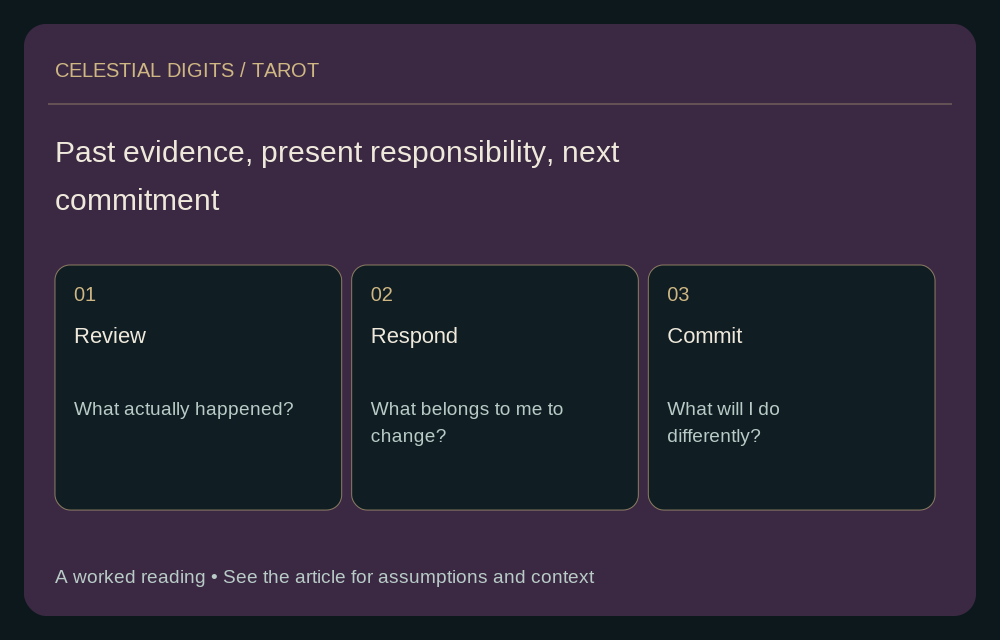
A fictional example: returning to a shared project#
Imagine a person considering whether to rejoin a community project after previously leaving because responsibilities were unclear. Instead of asking whether the cards approve, use three questions: what happened, what needs acknowledgement and what would a new commitment require?
| Review area | Example evidence | Useful next question |
|---|---|---|
| Past | Meetings repeatedly lacked clear tasks | What process would prevent that? |
| Responsibility | The person stopped replying without explanation | What communication can they own? |
| Commitment | The group now proposes written roles | Is the new arrangement realistic? |
Judgement is used here as the organising symbol for the exercise. It does not establish that the group has changed or that returning is the correct choice.
Accountability is more specific than self-condemnation#
“I handled that message poorly” identifies something that can be repaired. “I ruin everything” is a sweeping identity claim. A useful reading helps distinguish a specific action from a permanent verdict about the person.
The same distinction applies to others. A missed commitment can be discussed without claiming that a card has revealed someone's essential nature. Keep statements tied to observable behaviour and the information actually available.
A new commitment can include saying no#
Transformation does not always mean returning, reconciling or accepting another opportunity. After review, the person may decide that the project still does not fit their time or values. A clear refusal can be a considered response rather than a failure to answer a supposed calling.
If they do return, define the commitment in ordinary terms: a task, a time limit, a communication channel and a review date. The symbolism should support a decision process, not replace it.
Compare Judgement with Justice#
Justice can be a useful prompt for fairness, consequences and standards. Judgement can emphasise recognition, reassessment and responding differently after reflection. The overlap does not make the cards identical, and neither provides an actual legal judgement.
Record the reading question and spread position so the interpretation remains anchored. Then check whether the proposed action is proportionate, consensual and feasible without needing the card to certify it.
Continue with Wheel of Fortune versus Justice and a decision spread.
Source and scope#
The historical imagery comes from The Pictorial Key to the Tarot. The community-project example and review questions are original contemporary exercises. Tarot does not determine guilt, legal outcomes or another person's willingness to reconcile.
Related Posts
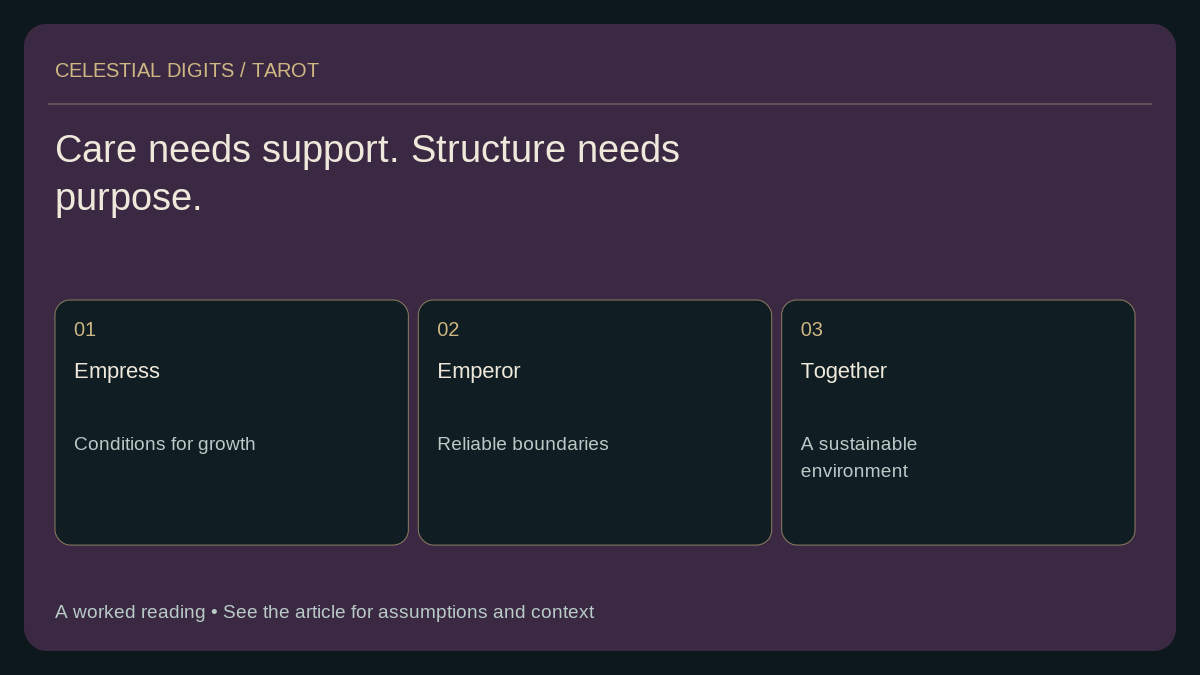
The Empress and The Emperor: Care, Structure and Their Imbalances
Compare nurture and structure through a community-garden example, with questions for reading both cards beyond gender stereotypes.
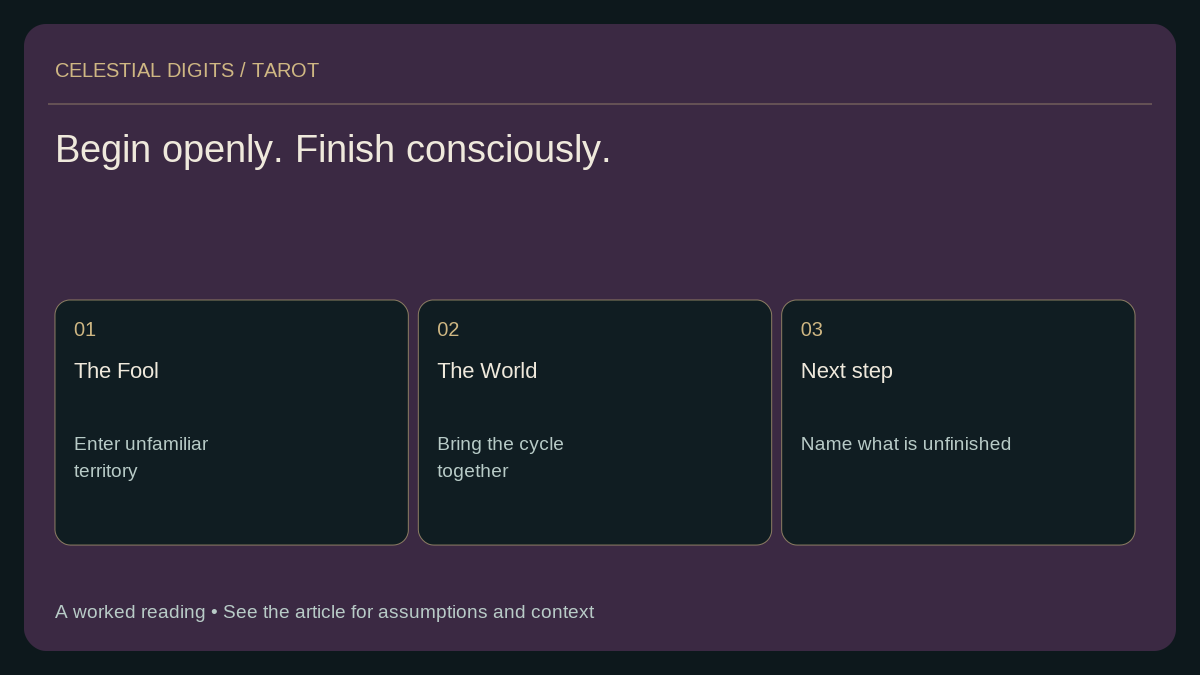
The Fool and The World: Beginning a Journey vs Completing One
Compare two Major Arcana cards through a practical project example, and learn why openness and completion ask different questions.
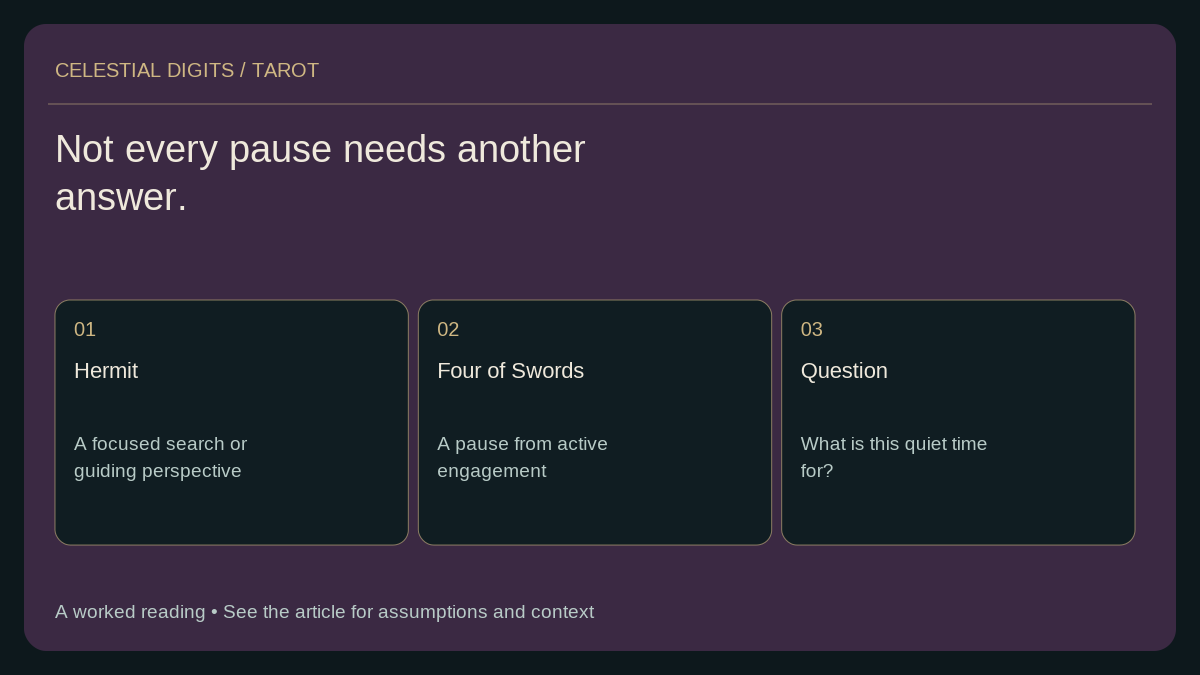
The Hermit vs Four of Swords: Searching for Answers or Needing Rest?
Distinguish purposeful reflection from stepping back, with a worked example that avoids treating every quiet period as a spiritual crisis.
A little more perspective.
Keep discussions respectful. No harassment, hate, sexual content or spam. Comments are reviewed before publication. Report concerns from a comment menu, or contact [email protected].
Checking your session…