
Three Steps That Changed the Universe: Vamana and King Bali
Vamana asks Bali for three steps of land. Explore Shukra's warning, Vishnu's cosmic form, Bali's fate and the story's connection with Shravana.
The request sounds too small to be dangerous: three steps of land, measured by the visitor's own feet.
King Bali has far more to offer. The young ascetic standing before him appears to ask for almost nothing. But Bali's teacher, Shukracharya, recognises the visitor and understands that the size of the request is not the size of its consequence.
This telling follows Bhagavata Purana, book 8, chapters 18–23. It is a story about Vishnu and Bali before it becomes a reflection on Shravana nakshatra. The chart symbolism comes later, and should not be mistaken for a prediction hidden inside every scene.
The visitor at the sacrifice#
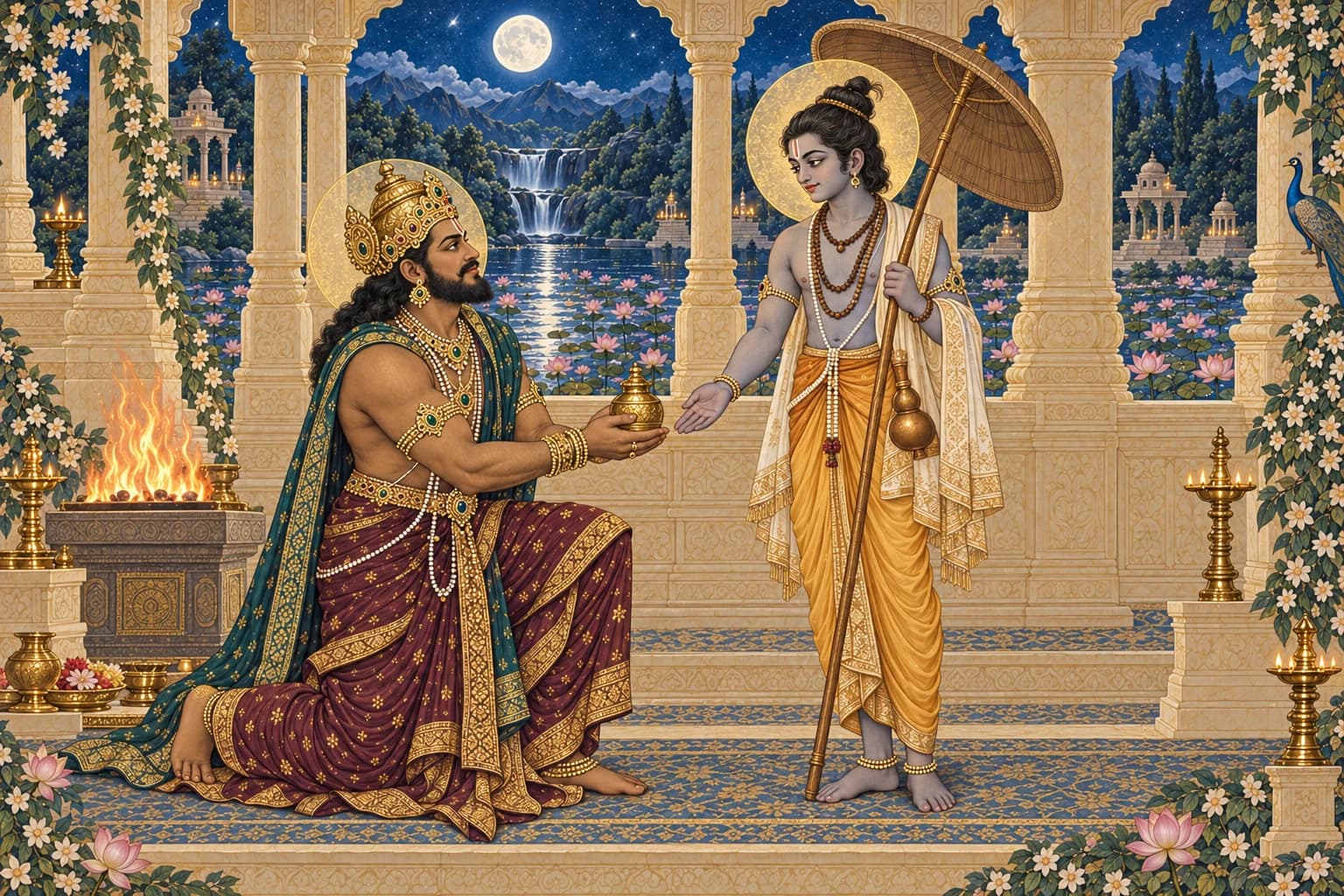
Vishnu appears as Vamana, a small-statured brahmacharin, and enters Bali's sacrificial gathering with the signs of a student ascetic, including a staff, water vessel and umbrella. Bali receives him respectfully and offers a gift. Bhagavata Purana 8.18.
Vamana asks for as much land as he can cover in three steps. Bali considers the request inadequate to the opportunity: why approach a powerful giver and ask for so little?
Vamana's answer turns toward contentment. More possessions do not necessarily end wanting. Shukra then identifies the visitor as Vishnu and warns that the gift will cost Bali his dominion. Bhagavata Purana 8.19.
The scene holds two uncomfortable possibilities together. A generous gesture can be sincere, and the giver can still misunderstand what he is promising. A warning can be accurate without resolving what the listener ought to do next.
Bali hears the warning and chooses#
Bali does not proceed simply because nobody told him. He weighs his teacher's counsel against the promise he has made. In this account, he refuses to withdraw the gift, even after Shukra curses him to lose his wealth.
The offering is completed. Vamana's form expands beyond the scale of the gathering. Earth, sky and the worlds appear within the immense divine form. One step covers Bali's earthly realm; the next reaches through the heavens. There is no land left for the third. Bhagavata Purana 8.20.
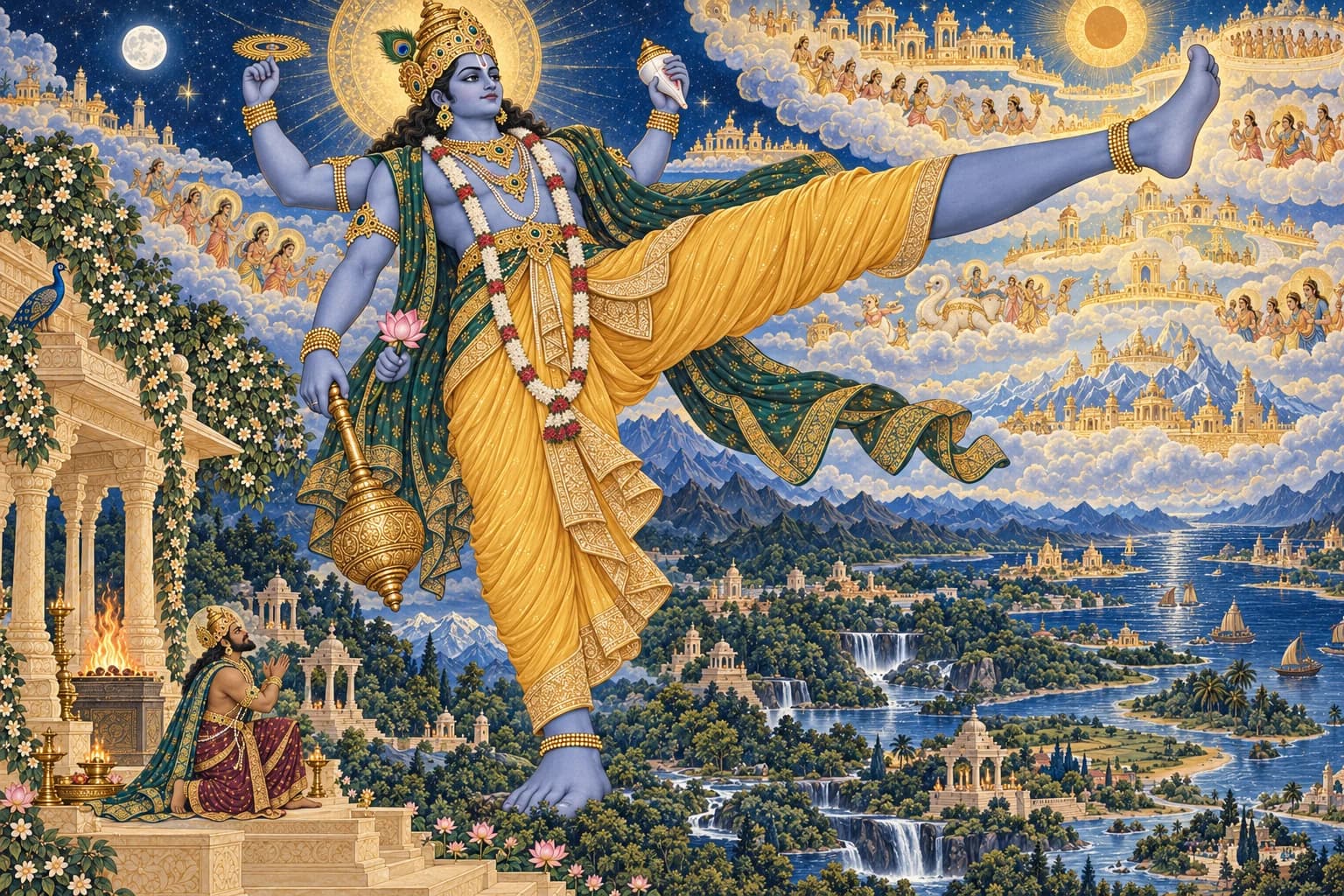
The visual reversal is the heart of the story. The person who seemed able to give anything discovers that he cannot measure the recipient. What looked like a minor transaction reveals the limits of ownership itself.
Where can the third step go?#
Bali's followers resist, but the conflict does not restore his position. Bound and challenged over the unfulfilled third step, he faces the failure of the gift as originally understood. Bhagavata Purana 8.21.
He offers his own head as the place for that final step. The act shifts the story from giving possessions to offering himself. His grandfather Prahlada and his wife Vindhyavali also enter the episode; Bali is not treated as an isolated villain whose removal ends the matter.
Vishnu recognises Bali's steadfastness despite his losses. He grants him Sutala and promises protection; the text also speaks of a future role as Indra. The ending is therefore more complex than “Bali was killed” or “Bali was thrown into hell”. Bhagavata Purana 8.22.
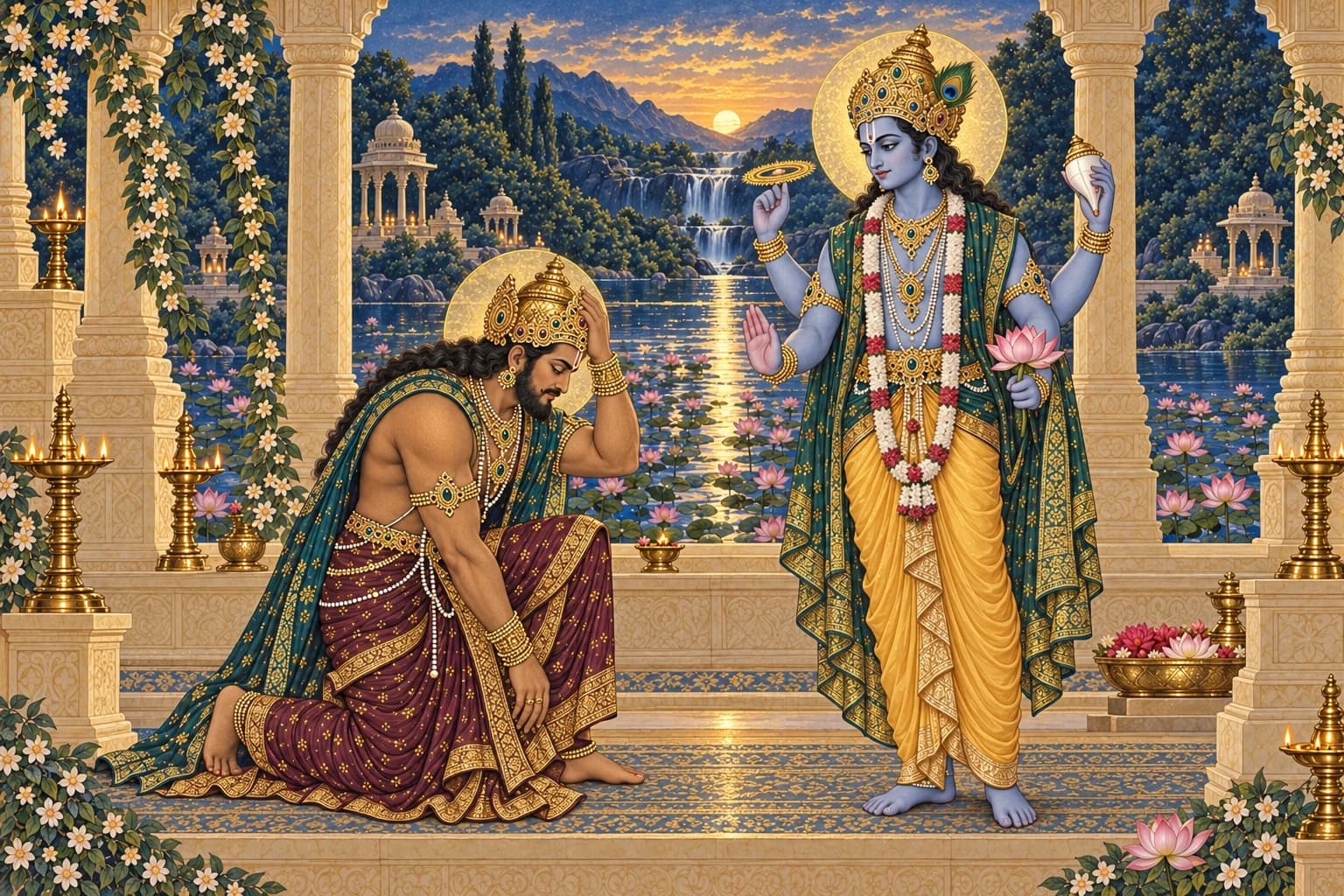
The sacrifice is subsequently brought to completion and the divine order is re-established. Bhagavata Purana 8.23.
Why Shukracharya's warning matters#
It would be easy to flatten Shukra into an obstructive teacher. Yet his warning about the immediate consequence is borne out: Bali loses the realm he believes he is giving from.
The disagreement concerns more than information. Shukra seeks to protect his pupil's interests; Bali places his promise and encounter with Vishnu above retaining his position. The narrative lets those loyalties clash.
That tension is worth preserving when discussing the story today. “Trust every small request” is not its practical lesson. Nor should a devotional account of surrender be used to pressure someone into accepting exploitation, giving away money or remaining in a harmful situation.
For another story in which Shukra's responsibilities become difficult, read Shukracharya's Impossible Choice.
What is the connection with Shravana?#
Shravana is traditionally associated with Vishnu, and its symbols include an ear and three footsteps. The imagery of Vishnu's strides provides a connection for reflection. The Bali episode itself is not a manual of predictions for people with Shravana placements.
| Chart detail | Shravana association |
|---|---|
| Zodiac span | 10°00′ to 23°20′ Capricorn |
| Deity | Vishnu |
| Nakshatra lord in Vimshottari | Moon |
| Sign lord | Saturn |
Vishnu, Moon and Saturn are not three interchangeable answers to “who rules Shravana?” They identify a deity, nakshatra lord and sign lord respectively. Read the full distinction if those labels have become tangled in your chart reading.
Listening is more than obeying#
Shravana is often interpreted through hearing and learning. This story offers a particularly interesting reflection because Bali hears a warning and still chooses a costly path.
Listening does not always mean agreeing. It means understanding what has been said, including its consequences, before deciding how to respond. The modern question suggested by the scene is: have I understood the commitment, or am I reacting to how small it sounds?
A short request can carry a long responsibility. “Just help for a few days” may change a schedule; a casual promise can affect other people. Clear terms are a form of care, not a failure of generosity.
The story also questions the expectation that possession will finally satisfy desire. We can reflect on that without romanticising poverty or treating someone's loss as proof that it was spiritually necessary.
Read the placement, not a verdict#
If Shravana contains your Moon, ascendant or another planet, begin by naming that point. Then note its pada and the surrounding chart context. The same nakshatra attached to different points is not the same reading.
No Shravana placement establishes that a person must lose wealth, surrender to a teacher or repeat Bali's life. The narrative belongs to a religious tradition; the chart association is a separate interpretive practice.
Explore the Shravana placement guide, compare ascendant and Moon nakshatras, or open your own birth chart.
The story begins with a ruler deciding how much land he can spare. It ends with a much harder question: what remains of a promise when everything that made it easy has been taken away?
Sources: Bhagavata Purana 8.18–23, linked beside each episode. Narrative summaries are paraphrased; no invented dialogue is presented as scripture. The reflections are editorial, and the original AI-assisted illustrations are artistic interpretations.
Previous: Kartikeya and the Six Mothers · Explore all illustrated stories
Related Posts
The Ashwini Twins and the Sage Who Became Young Again
Chyavana regains his youth, Sukanya faces three identical men, and Indra refuses the healers a place. Discover the lore behind Ashwini nakshatra.
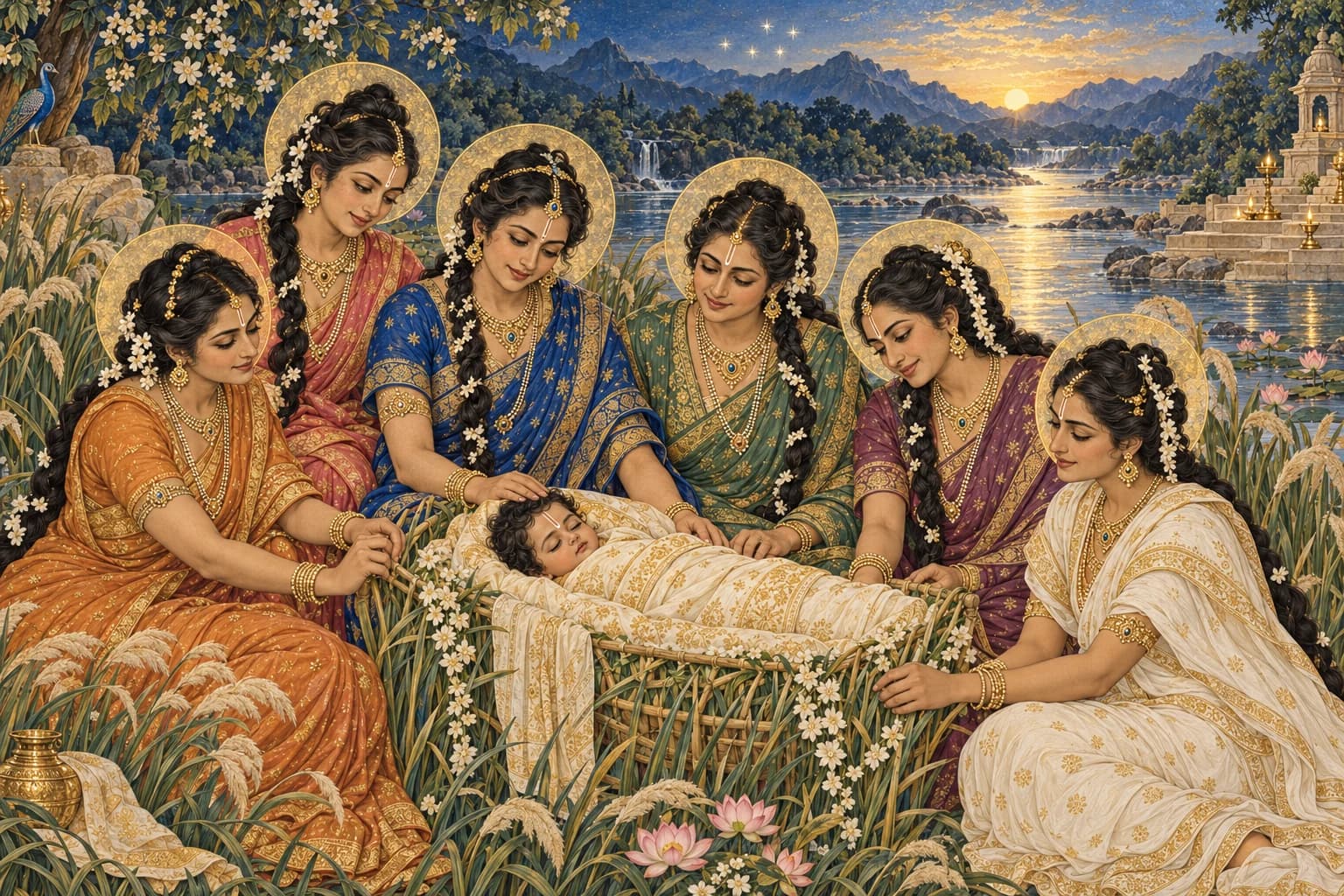
Kartikeya and the Six Mothers: The Story Behind the Krittikas
Discover Kartikeya's six nurses in the Ramayana, the fire and care behind the story, and how Krittika's deity differs from its planetary lord.
Stories Behind the Grahas: Eight Planet and Nakshatra Lores
Explore eight illustrated planetary and nakshatra stories, from Chandra and Rahu to the Ashwini twins, Kartikeya and Vamana, with source notes.
A little more perspective.
Keep discussions respectful. No harassment, hate, sexual content or spam. Comments are reviewed before publication. Report concerns from a comment menu, or contact [email protected].
Checking your session…