
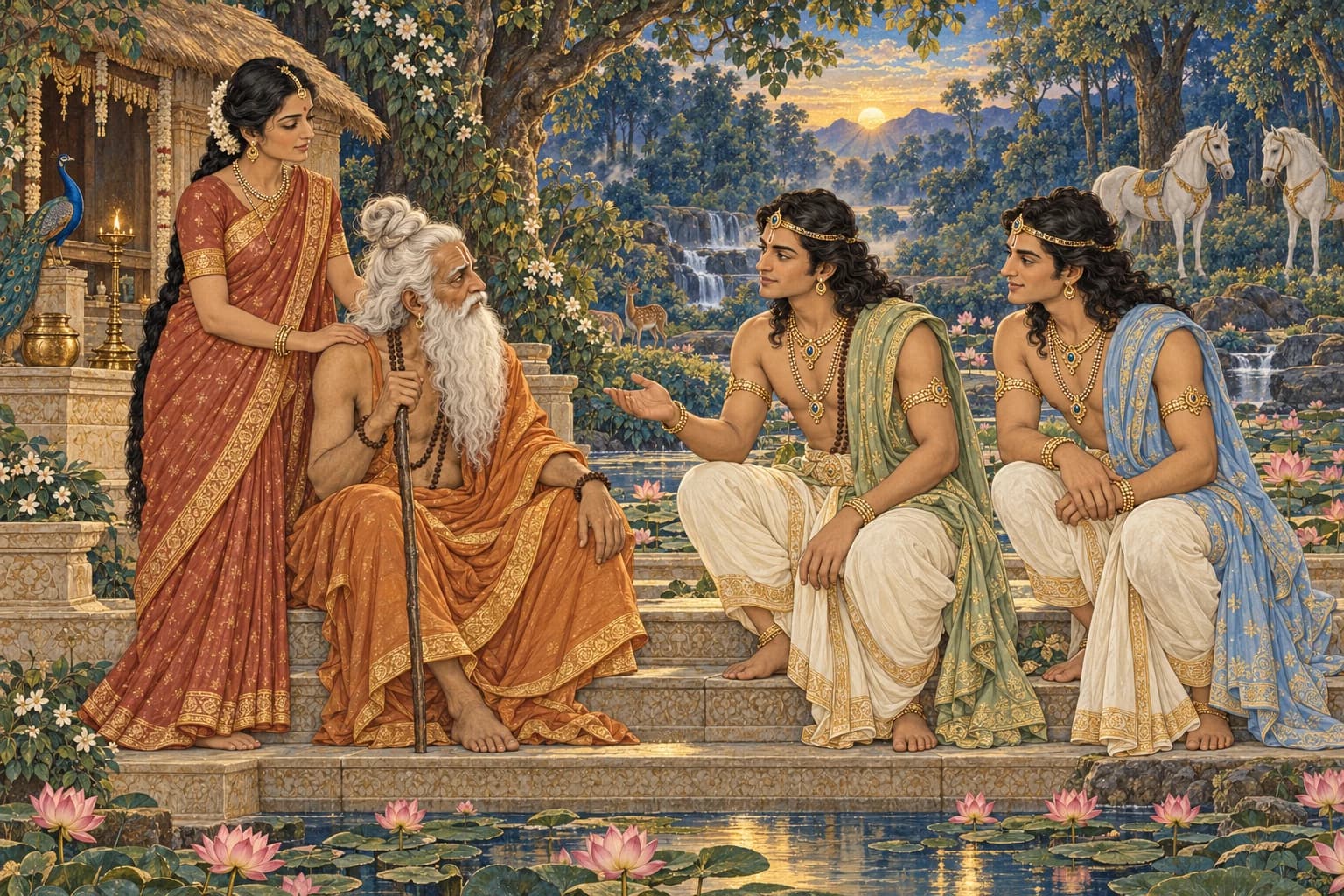
The Ashwini Twins and the Sage Who Became Young Again
Chyavana regains his youth, Sukanya faces three identical men, and Indra refuses the healers a place. Discover the lore behind Ashwini nakshatra.
Stories Behind the Grahas · Nakshatra stories
Three young men emerge from a pool. They have the same face, the same beauty, the same gleaming ornaments. One is Sukanya's husband. The other two are the divine physicians who have restored his youth.
She must recognise a person whose familiar appearance has disappeared.
The scene is extraordinary, but it is not the end of the story. The healers can transform an old sage's body; they cannot persuade the king of the gods to give them an equal place at the sacrifice. For that, Chyavana will have to return the favour.
Our main telling follows Mahabharata, Vana Parva, sections 122–125, in K. M. Ganguli's public-domain translation. The connection with Ashwini nakshatra is discussed separately after the narrative.
The two lights in the anthill#
King Saryati's daughter Sukanya enters the woodland where Chyavana has been absorbed in austerities for so long that an anthill covers his body. Two bright points catch her attention. Not recognising the sage's eyes, she pierces them with a thorn.
The injury brings a crisis upon the king's company. Saryati searches for its cause, learns what his daughter has done, and approaches Chyavana. The settlement in the epic includes Sukanya's marriage to the sage. She remains with him in the forest. Vana Parva 122.
This beginning should not be polished into a modern romance. The marriage arises in an unequal situation shaped by injury, a father's negotiation and a sage's power. We can describe that setting honestly while still noticing the agency Sukanya displays later.
The physicians make an offer#
The Ashwini twins encounter Sukanya and question why she has remained with an aged husband. They offer themselves as alternatives. She affirms her attachment to Chyavana.
Their next proposal changes the problem: they will make Chyavana young and beautiful, after which she may choose among the three. Sukanya tells her husband, and he agrees to the arrangement.
The twins and the sage enter the water. When they come out, the old man's appearance is gone. All three are young and alike.
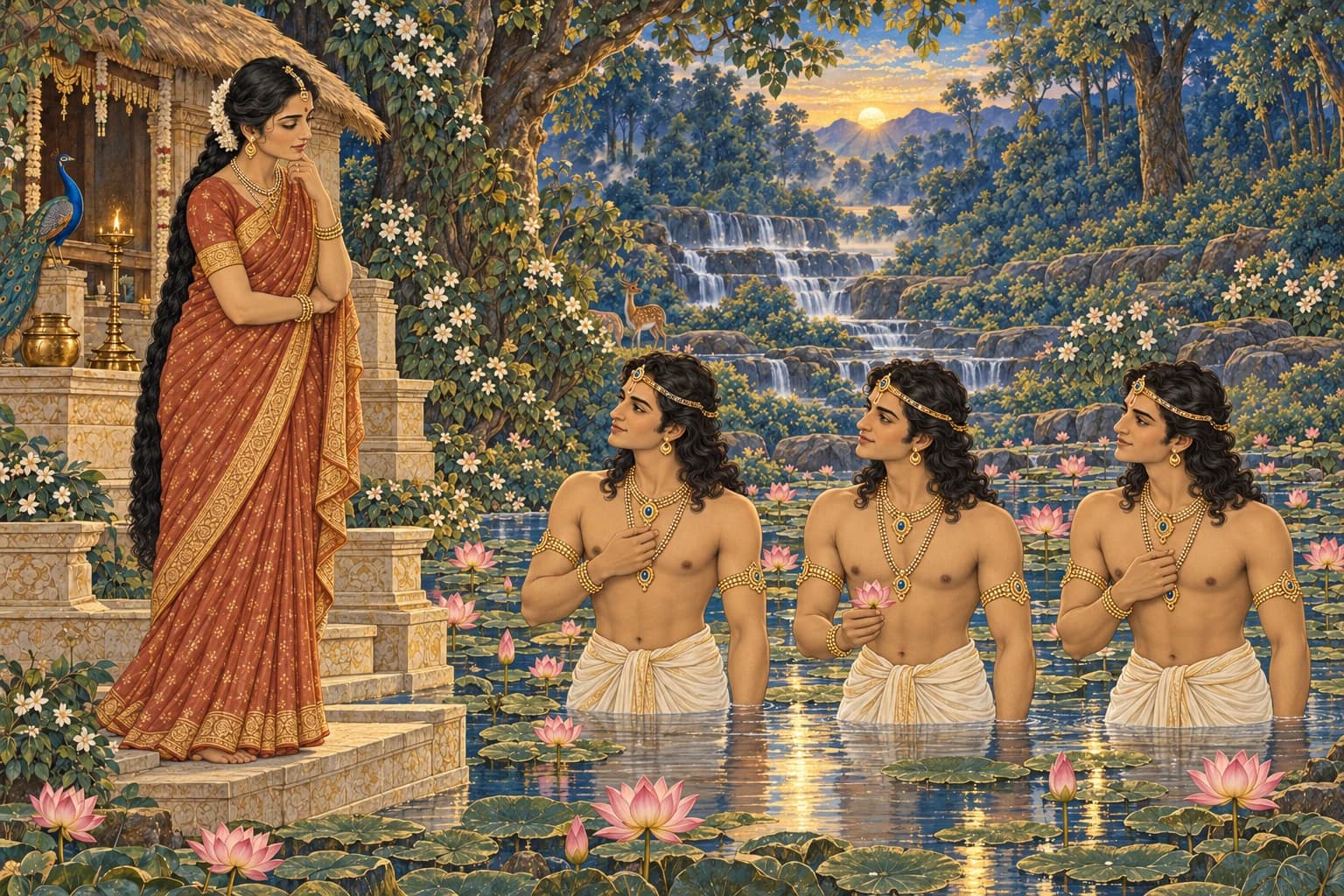
Sukanya considers them and chooses her husband. Ganguli's passage says she recognises him but does not supply the elaborate secret sign sometimes added in retellings. We do not need to invent one to make the scene work.
Chyavana has gained youth and retained his marriage. In gratitude, he promises to secure the twins a share of Soma in the presence of Indra himself. Vana Parva 123.
The promise moves the story from the private world of a marriage into a public dispute about belonging.
Useful enough to heal, not welcome enough to share#
Saryati arranges a sacrifice with Chyavana officiating. When the sage prepares an offering for the Ashwins, Indra objects.
His objection is striking: their work as physicians and their involvement with mortals make them, in his argument, unfit to receive Soma with the other gods. The very activity for which Chyavana is grateful becomes the reason they are excluded.
Chyavana challenges the distinction. The twins are divine, capable and worthy of recognition. He continues with the offering.
Indra raises his thunderbolt. The sage arrests his arm and brings forth Mada, a terrifying being whose enormous form threatens the king of the gods. The episode has become a confrontation between royal authority and ascetic power. Vana Parva 124.
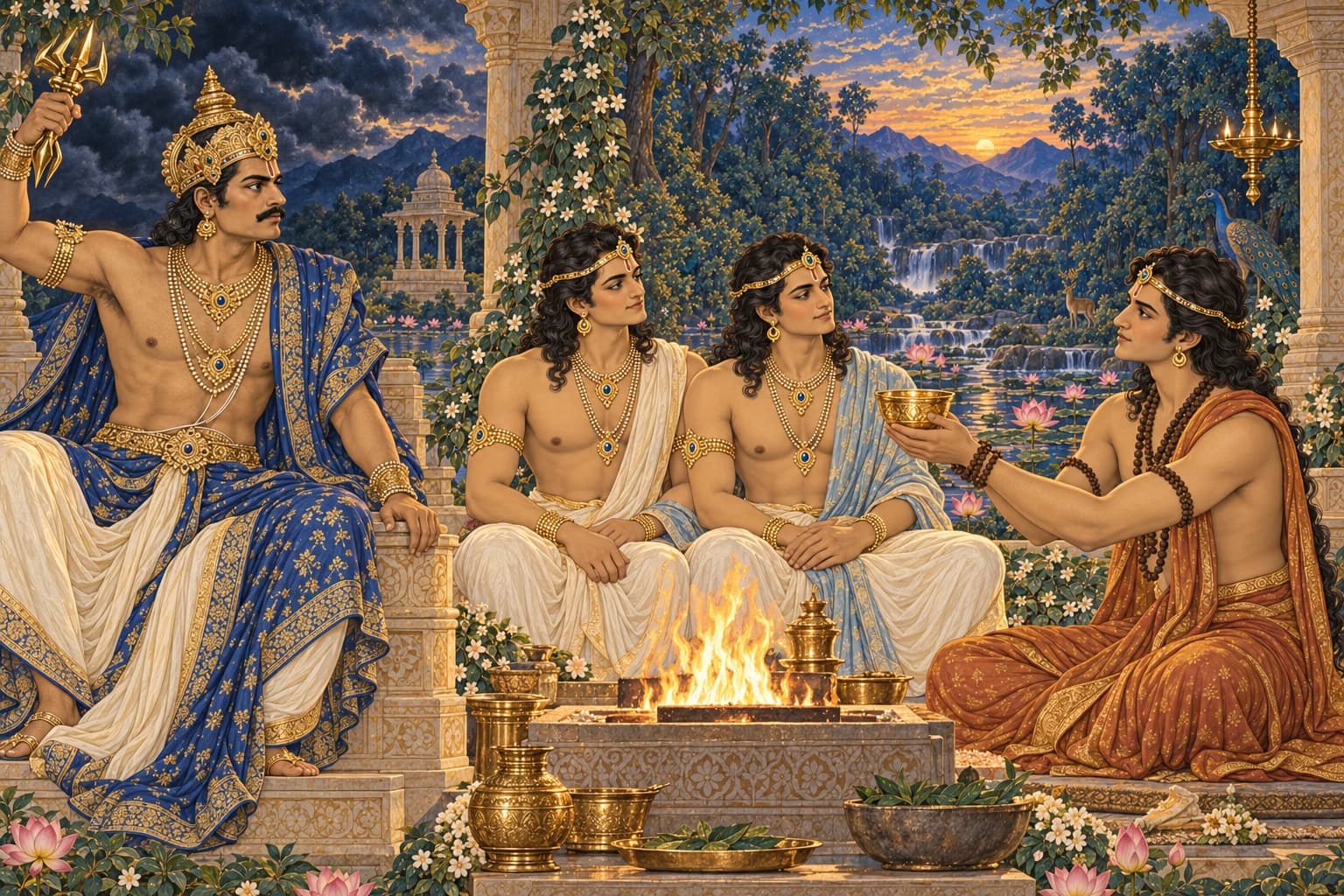
Indra yields and accepts the twins' entitlement to Soma. Chyavana withdraws the threat and the sacrifice continues with their inclusion. The restoration of the sage is now followed by recognition of the healers. Vana Parva 125.
This is not a recommendation to settle disputes through threats. It is the epic's dramatic resolution of a hierarchy that had made the twins valuable and excluded at the same time.
A different telling changes the recognition scene#
The Bhagavata Purana 9.3 also tells the rejuvenation story. In that account, when Sukanya cannot distinguish the three figures, she turns to the Ashwins and they identify her husband. That differs from the Mahabharata passage used above. Bhagavata Purana 9.3.
The distinction is small enough to disappear in a quick retelling, yet it changes the emphasis: recognition through Sukanya's discernment in one account, help from the twins in the other. Both can be discussed without pretending they are the same wording.
What this has to do with Ashwini nakshatra#
The Ashwini Kumaras are the deities associated with Ashwini, the first nakshatra, occupying 0°00′ to 13°20′ Aries in the standard sidereal arrangement.
Keep three assignments separate:
| Role | Ashwini association |
|---|---|
| Deities | Ashwini Kumaras |
| Nakshatra lord in Vimshottari | Ketu |
| Sign lord, because Ashwini lies in Aries | Mars |
Ketu is not another name for the twins, and Mars is not Ashwini's nakshatra lord. Our guide to these different kinds of rulership explains the distinction.
Astrologers often connect Ashwini with beginnings, swiftness and restoration. The physicians' story makes that symbolism memorable. It does not prove that someone born with an Ashwini placement has medical abilities or will recover from an illness in a particular way.
Three reflections beyond “Ashwini means fast”#
Restoration needs a purpose. Chyavana's transformation is not just a display of power. It changes his participation in a relationship and creates an obligation of gratitude. In ordinary life, solving a problem matters because of what someone can do afterwards.
Help and recognition are different needs. The twins can perform remarkable work and still be denied a place. The story invites a question about the people we rely on: do we value them only when something breaks, or also when decisions and recognition are shared?
A new appearance does not explain the whole person. Sukanya's recognition scene resists reducing identity to age or beauty. A change in circumstances may be dramatic without erasing history, loyalty or difficult choices.
These are reflections suggested by the narrative, not personality rules for everyone with Ashwini Moon or ascendant. If a symbol feels useful, connect it to a real question rather than turning it into a permanent label.
Find the placement before interpreting it#
In your birth chart, check whether Ashwini contains the ascendant, Moon or another planet. Those are different placements. Then note the pada and the relevant planetary context.
Continue with the Ashwini placement guide or ascendant nakshatra vs Moon nakshatra.
The question at the end of the story is not only who can restore someone. It is whether the people doing that work are allowed to belong once the crisis is over.
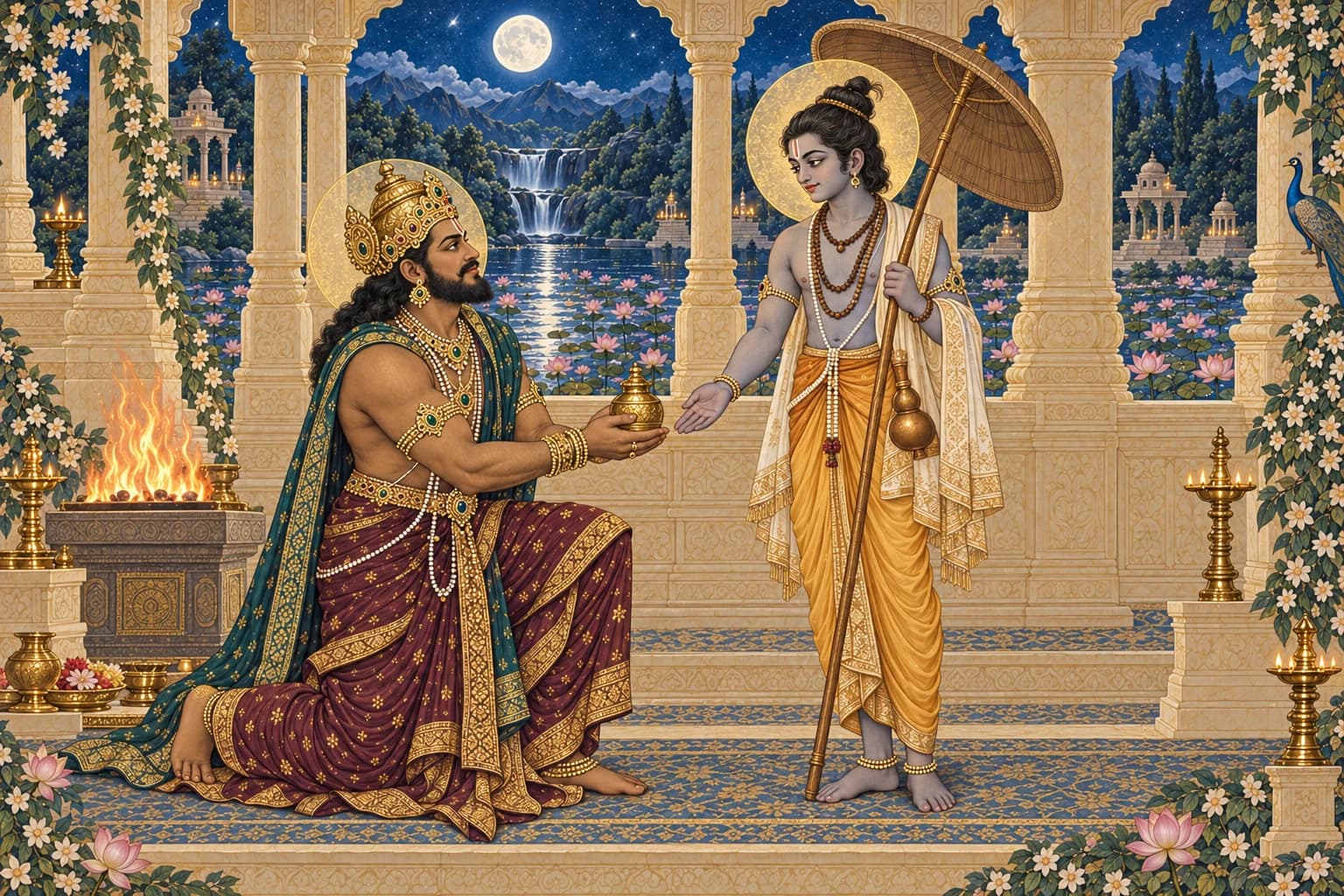
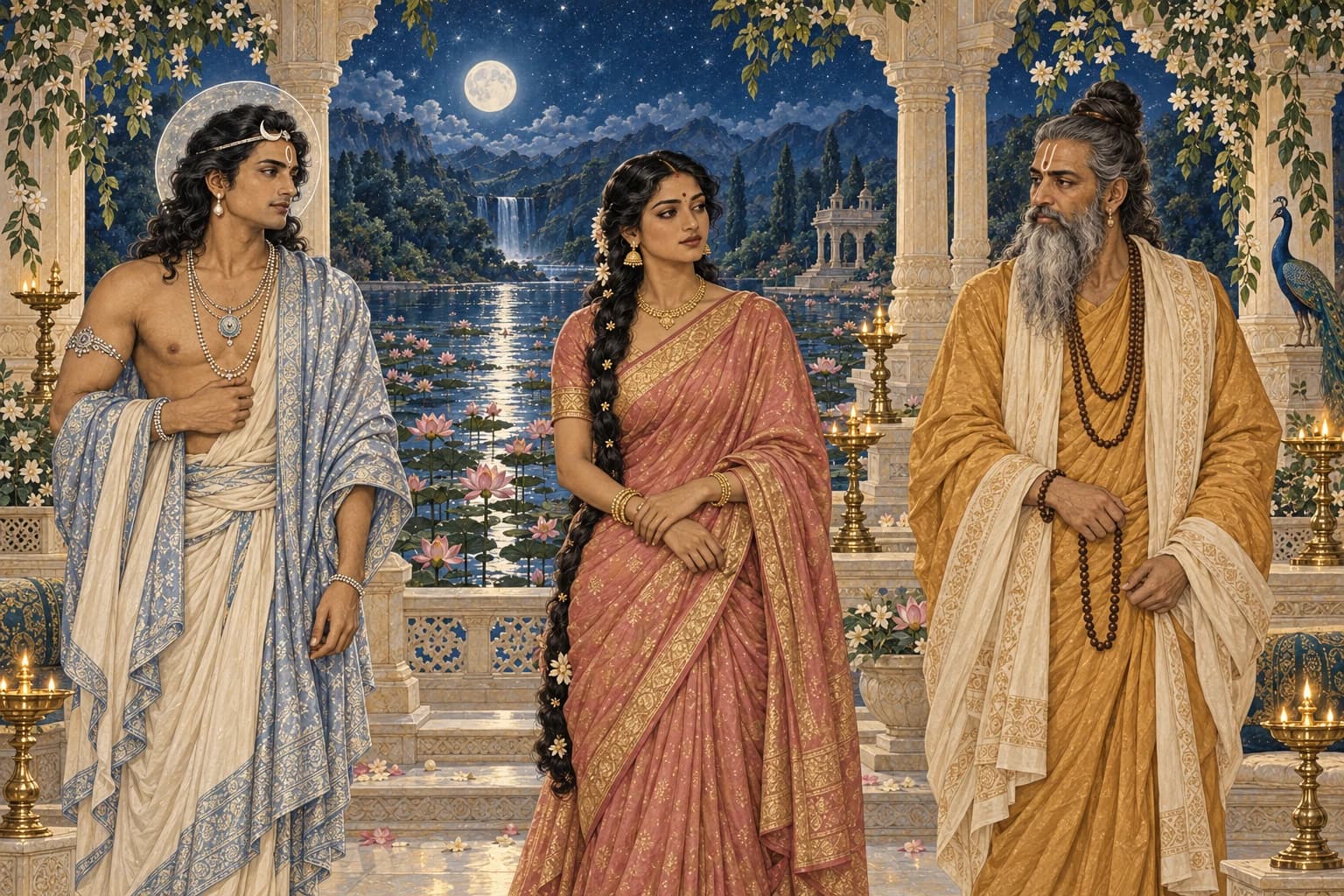
Sources: Mahabharata, Vana Parva 122–125, K. M. Ganguli translation; Bhagavata Purana 9.3 for the separately identified variant. Illustrations are original AI-assisted interpretations, not canonical depictions. Astrological associations are traditional symbolism.
Next story: Kartikeya and the Six Mothers · Explore the illustrated story collection
Related Posts
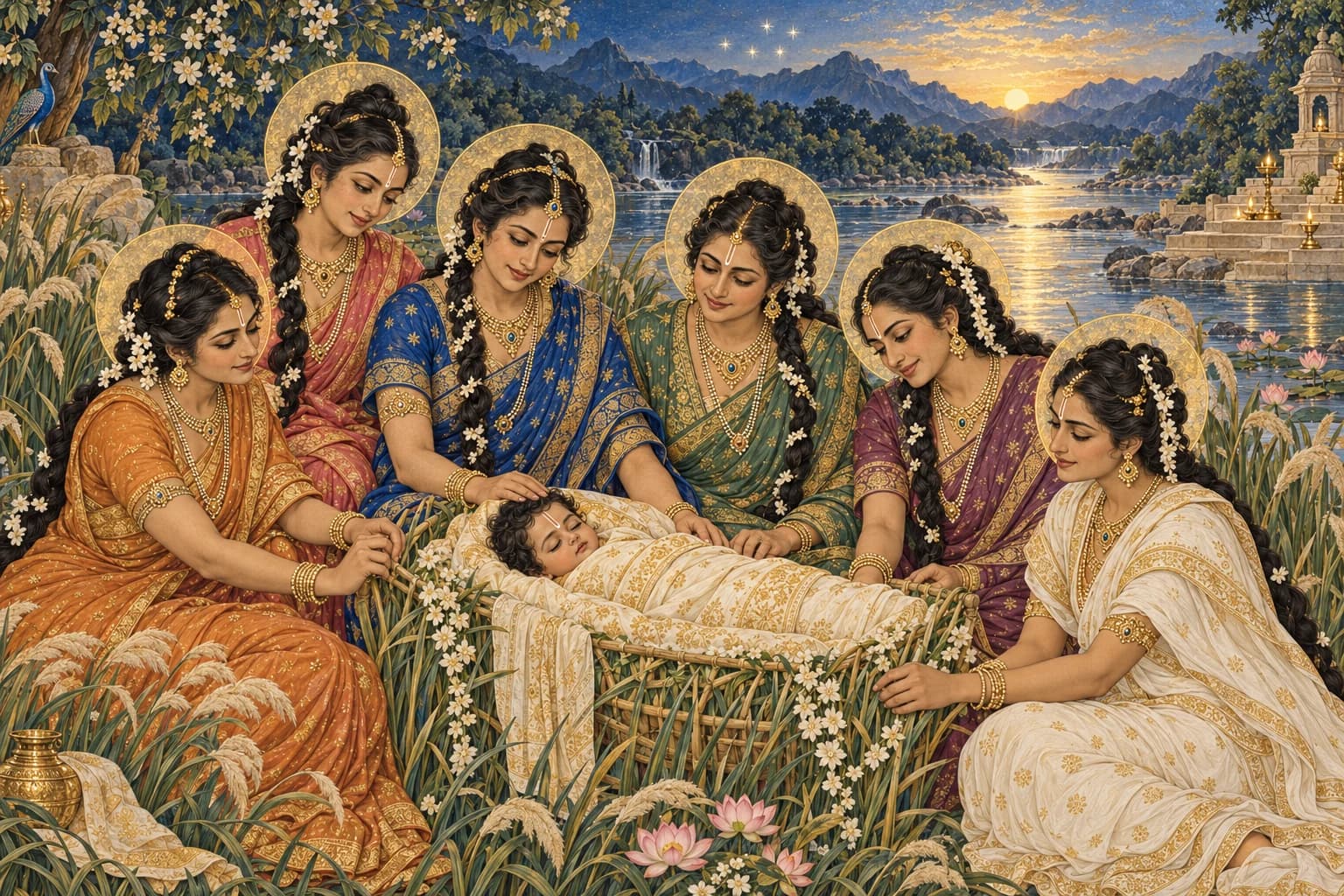
Kartikeya and the Six Mothers: The Story Behind the Krittikas
Discover Kartikeya's six nurses in the Ramayana, the fire and care behind the story, and how Krittika's deity differs from its planetary lord.
Three Steps That Changed the Universe: Vamana and King Bali
Vamana asks Bali for three steps of land. Explore Shukra's warning, Vishnu's cosmic form, Bali's fate and the story's connection with Shravana.
Stories Behind the Grahas: Eight Planet and Nakshatra Lores
Explore eight illustrated planetary and nakshatra stories, from Chandra and Rahu to the Ashwini twins, Kartikeya and Vamana, with source notes.
A little more perspective.
Keep discussions respectful. No harassment, hate, sexual content or spam. Comments are reviewed before publication. Report concerns from a comment menu, or contact [email protected].
Checking your session…