
Shani, Son of the Sun and Shadow: The Family Story Behind Saturn
Meet Sanjna, Chhaya and Surya in the story of Shani’s birth, and explore Saturn’s symbolism of responsibility, limits and recognition without fear.
Stories Behind the Grahas · Chapter 4
The substitution · Shani’s birth · Surya changes · Saturn in your chart
Before Shani becomes the name people whisper when life feels slow or heavy, his story begins inside a family that cannot bear its own brightness.
Surya illuminates the worlds. His wife Sanjna cannot endure his radiance. She leaves her shadow counterpart in her place, asks her to care for the children and departs without telling him.
Surya believes the woman beside him is still Sanjna. With Chhaya, he has more children. One of them is Shani, Saturn.
The secret eventually breaks through a conflict over unequal affection. And when the household finally faces the truth, the Sun himself has to become less overwhelming.
When the Sun’s light became too much#
This retelling follows the Markandeya Purana, cantos 106–108, in F. E. Pargiter’s translation. The Vishnu Purana also preserves the family story, with differences in detail. We will not treat every later story about Shani as an event narrated in these chapters.
Sanjna is the daughter of Vishvakarman, the divine artisan. She marries Vivasvat—Surya—and they have Manu, Yama and Yami, associated with the Yamuna river.
But Surya’s brilliance is unbearable to her. The very power that makes him life-giving at a cosmic scale makes living beside him difficult.
Sanjna turns to her shadow, Chhaya, and tells her to take her place. She asks Chhaya to care for the children and keep the arrangement secret. Chhaya agrees, but gives a limit to her promise: under certain threats, she will reveal what has happened.
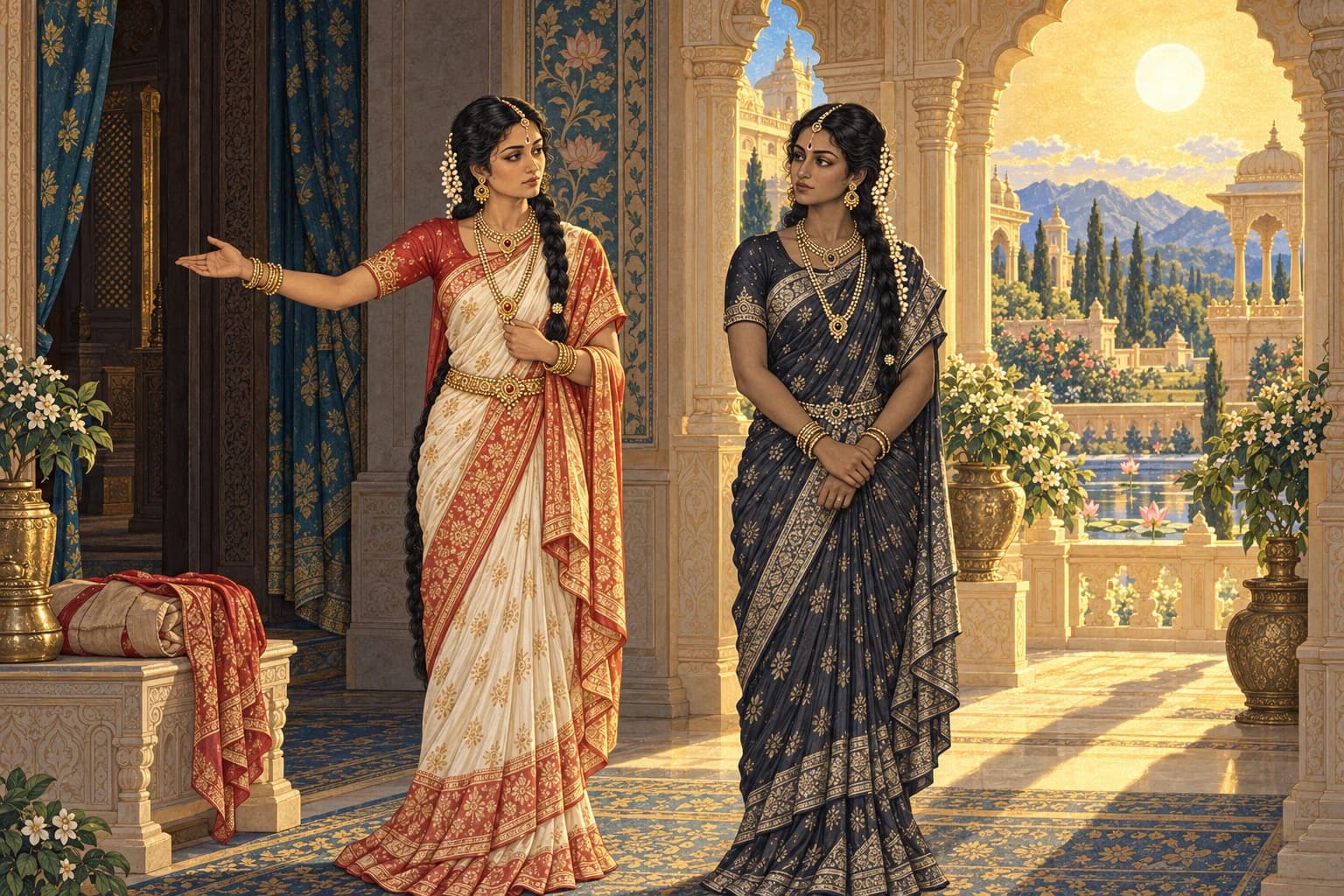
Sanjna first goes to her father’s home. He repeatedly urges her to return to her husband. Instead, she takes the form of a mare and goes to the Northern Kurus to practise austerities. Markandeya Purana, canto 106.
The departure is more complicated than a simple escape with a happy ending. Sanjna finds a way to leave, but conceals it. Chhaya accepts another woman’s identity. Surya continues without understanding what has changed. The children live inside an arrangement they did not choose.
The children of light and shadow#
Chhaya has three children with Surya: Savarni, Shani and Tapati. Surya still believes she is Sanjna.
It helps to keep the two branches of the family clear:
| Mother | Children named in this part of the story |
|---|---|
| Sanjna | Manu Vaivasvata, Yama and Yami |
| Chhaya | Savarni, Shani and Tapati |
Shani and Yama therefore share a father but have different mothers. They are not two names for the same figure. Sanjna and Surya’s later reunion also brings further children into the narrative, including the Ashvins; this table covers the household before that reunion.
Chhaya does not show the older children the same affection as her own. Manu bears it, but Yama becomes angry. He threatens her with his foot, without actually striking her. Chhaya curses that foot to fall away.
Yama goes to Surya. He admits his angry action, asks forgiveness and describes the unequal treatment. Surya devises a way to lessen the curse’s consequences, then questions Chhaya about the difference in her affection.
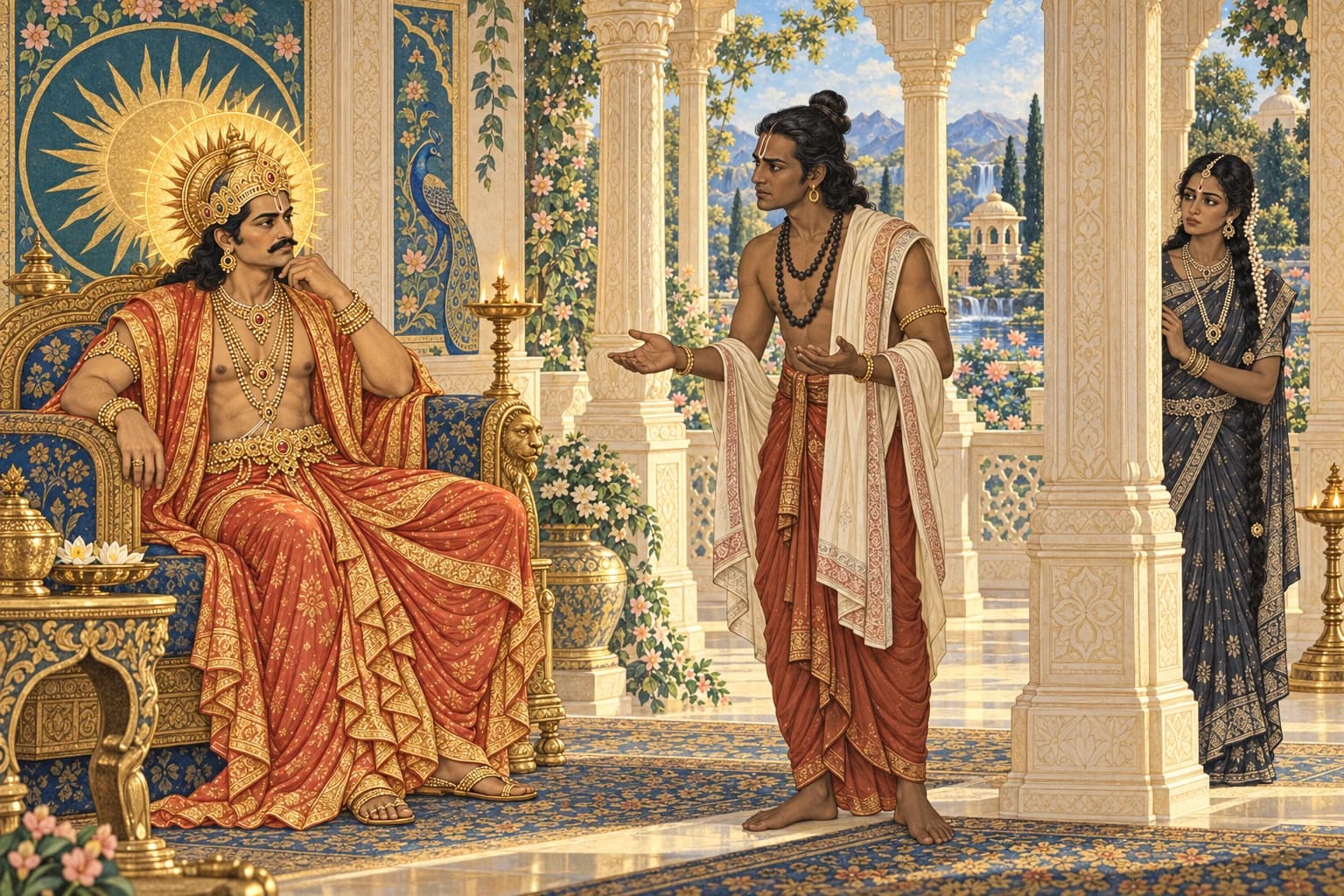
The truth emerges through Surya’s insight and Chhaya’s admission. He goes to Vishvakarman, angry, and learns why Sanjna left. The family conflict in Markandeya Purana 106.
One detail matters here: the child at the centre of this confrontation is Yama, not Shani. Retellings can easily blur the two and turn every family conflict into a Saturn episode. Shani belongs to this household, but the passage does not make him the speaker in Yama’s place.
The story’s assumptions about mothers and affection also belong to its ancient setting. They should not become a claim that adoptive parents or stepparents are less capable of love. The observable problem in this narrative is unequal treatment, not a universal verdict about how a family was formed.
The Sun had to change too#
Vishvakarman explains that Surya’s form is too intense for Sanjna to endure. With Surya’s permission, he places the luminary on his wheel and reduces his radiance.
The Purana gives the operation a cosmic scale: the worlds are shaken, divine beings gather and hymns accompany the work. The point is not that a human artisan physically repairs an astronomical star. The sacred narrative imagines an overwhelming power being made bearable.
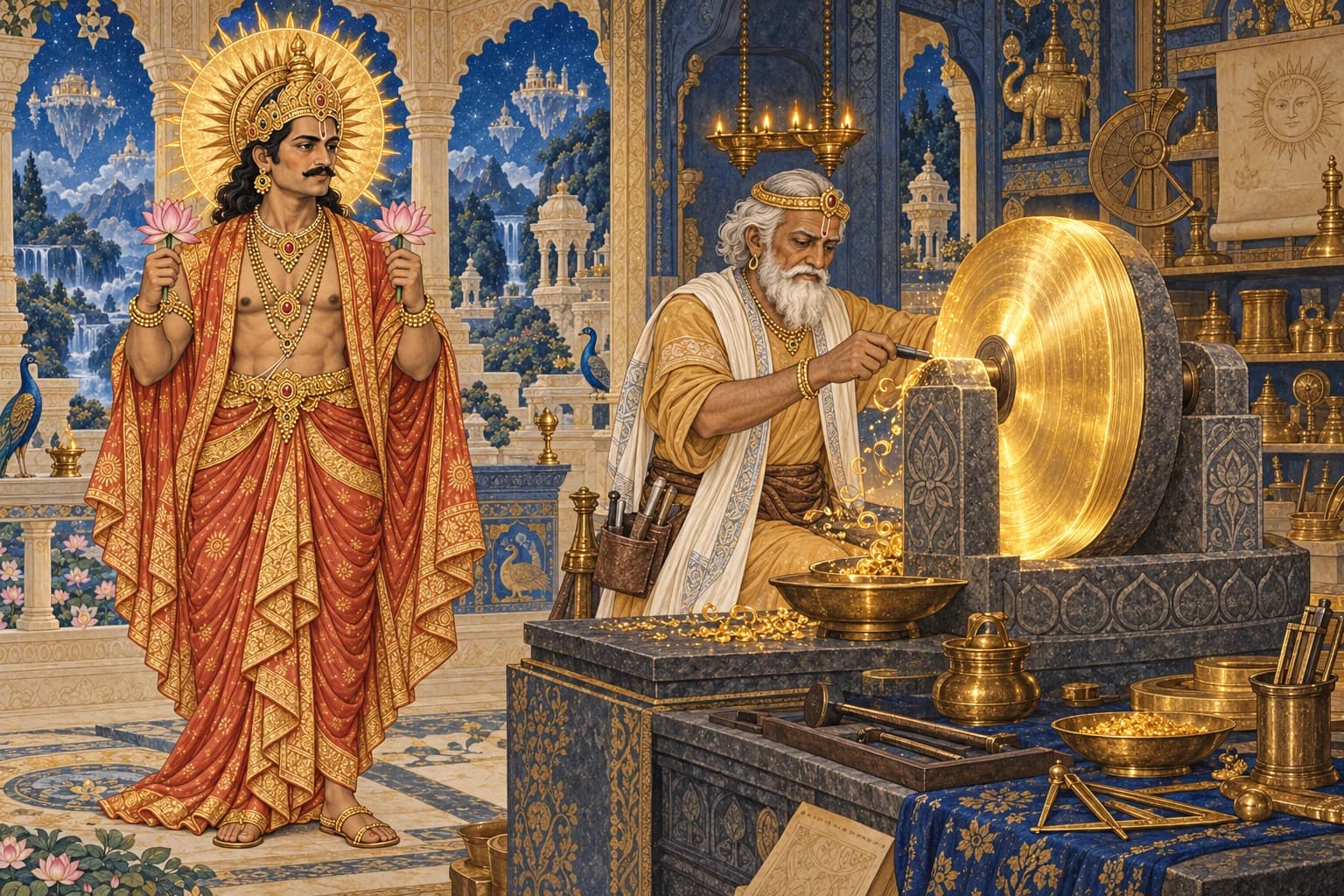
The radiance removed is fashioned into divine weapons. Surya then finds Sanjna in her mare form and approaches her as a horse. The account connects their reunion with the birth of the Ashvins and Revanta. Afterwards, he reveals his gentler form; Sanjna recognises the change and returns with him. Markandeya Purana, canto 108.
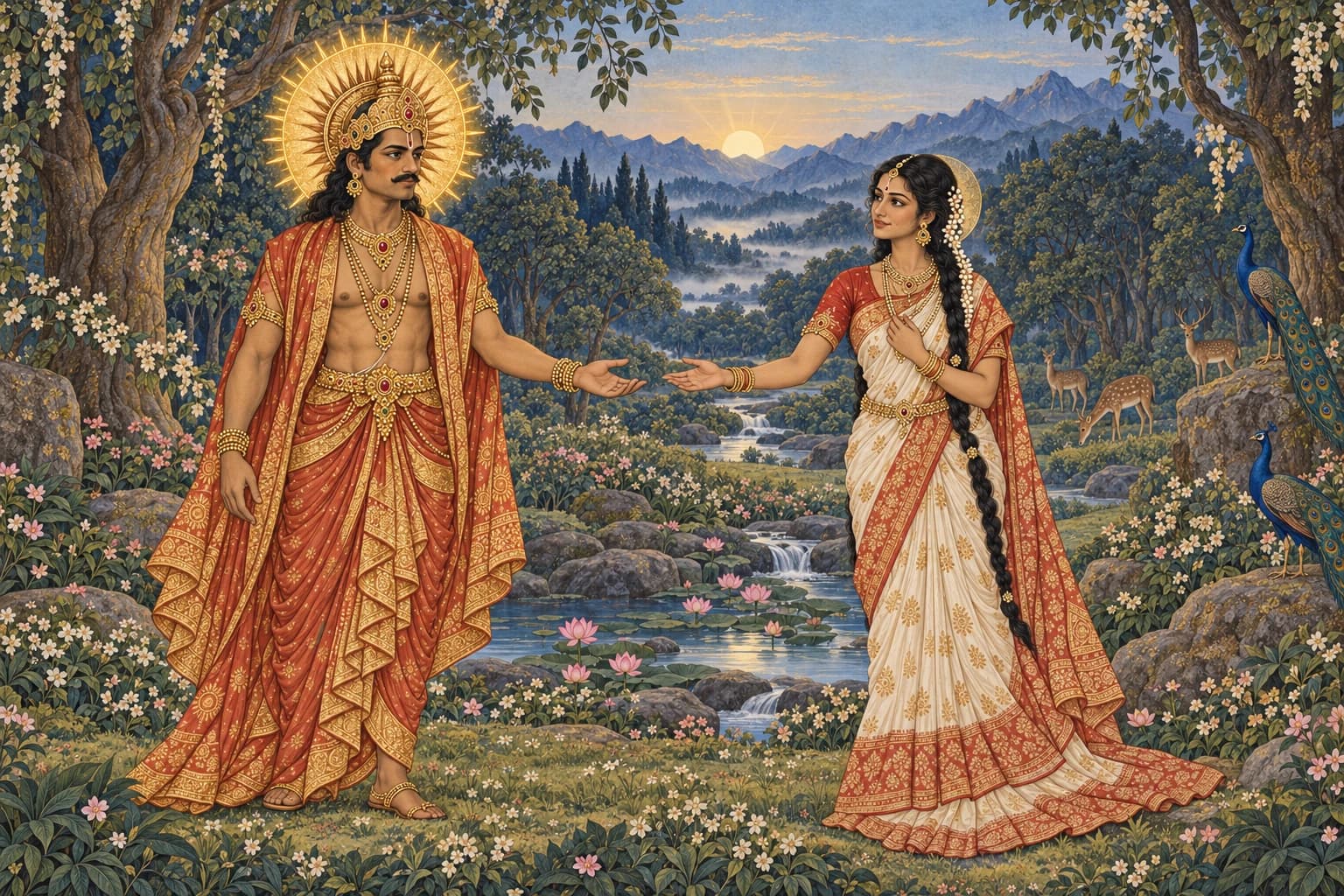
There is something unusually demanding about this resolution. The household cannot be repaired merely by telling the person who left to tolerate more. The powerful figure must alter the way his power is experienced.
Did Surya reject Shani?#
These chapters should not be cited as proof that Surya permanently rejected Shani. Canto 108 explicitly assigns Saturn’s planetary role by the Sun’s command.
Other traditions and popular retellings develop different conflicts between father and son. Those need their own sources. The family account we are following establishes Shani’s parentage and place among Surya’s offspring; it does not narrate every familiar tale about his gaze, complexion or estrangement.
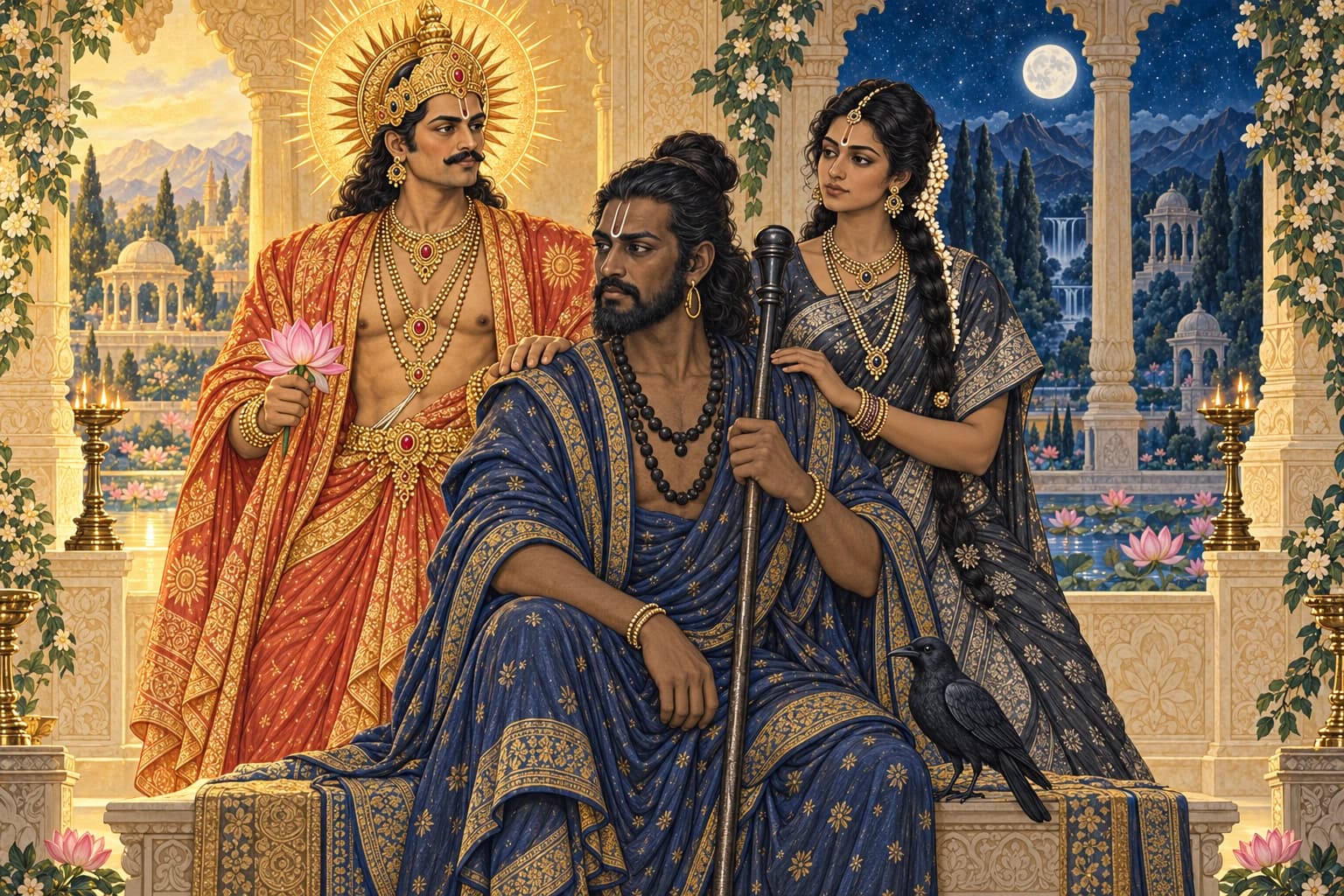
Our cover image places adult Shani between Surya and Chhaya as a symbolic family portrait. It is not a claim that this exact meeting occurs in the text.
This distinction matters in astrology too. A traditional planetary relationship between Sun and Saturn is not evidence that every person with both strongly placed will have a hostile father.
Why this story resonates with Saturn’s symbolism#
Jyotisha commonly reads the Sun through authority, visibility and sovereignty, and Saturn through endurance, labour, limitation and the passage of time. Those are interpretive associations, not a complete list of qualities either graha can signify.
The contrast becomes vivid in this family: one presence fills the world with light; another is born through shadow. Yet both belong to the same lineage. Saturn’s symbolism need not be treated as the opposite of human worth.
Recognition is not the same as constant visibility#
A great deal of necessary work happens outside the spotlight: maintaining routines, looking after others, practising a skill before anyone notices. Saturn provides astrologers with a language for that sustained effort.
The useful reflection is whether we recognise those contributions, including our own, without requiring applause every time. It is not that people must suffer invisibly to “earn” relief from Saturn.
Limits can improve how power is used#
Surya’s radiance becomes more bearable through restraint. Applied as a human metaphor, a capable leader, parent or partner may need to make room for other people rather than merely demonstrate more capability.
Can the people around me disagree, rest or ask for help without being overwhelmed? That is a more useful question than deciding who in a relationship is “the Sun” and who must submit to being “Saturn”.
Responsibility belongs to everyone involved#
Sanjna’s secrecy, Chhaya’s unequal affection, Yama’s threatening gesture and Surya’s excessive intensity all contribute to the crisis. The story does not become clearer by assigning every difficulty to one villain.
Likewise, a chart should not be used to excuse mistreatment as a karmic lesson. Patience and boundaries can coexist. Endurance does not require accepting harm.
What this means when you read Saturn#
Begin with Saturn’s sign and house, then consider its sign lord, planetary connections and the timing context within your chosen Jyotisha method. A placement, a dasha and a transit are different pieces of information.
Sade Sati, for example, is a transit convention based on Saturn moving through the sign before the natal Moon, the Moon’s sign and the sign after it. It is not simply another name for Saturn mahadasha. Our Sade Sati guide explains the distinction further.
The family story cannot calculate when either period begins. It also cannot establish that a difficult event is destined to happen. Astrological readings are traditional interpretations, not scientifically established forecasts of a person’s life.
Use the story as a way to ask better questions about responsibility and recognition, then use your birth chart for the actual placements. You can also explore Saturn’s transits through the houses.
Shani’s lineage offers a richer starting point than fear. Light can overwhelm. Shadow can belong. And even the Sun may need to learn how to make room.
Sources: Markandeya Purana, cantos 106–108, F. E. Pargiter’s 1904 translation. Illustrations are original artistic interpretations; the cover is symbolic. The story and the astrological reflections have been distinguished throughout.
Previous: Rahu’s Stolen Immortality · Next: Shukracharya’s Impossible Choice · All illustrated stories
Related Posts
Chandra, Rohini and Daksha’s Curse: Why the Moon Waxes and Wanes
Why did Daksha curse the Moon? Explore Chandra and Rohini’s story, the renewal at Prabhasa, the Somnath tradition, and its meaning in astrology.
Chandra, Tara and the Birth of Budha: The Conflict Behind Mercury
The story of Chandra, Tara and Budha: a celestial conflict, the birth of Mercury, and what its symbolism says about emotion, wisdom and clear thinking.
Rahu’s Stolen Immortality: The Story Behind Eclipses
Rahu stole a taste of immortality. Discover the ocean-churning story, why he pursues the Sun and Moon, and what the Rahu–Ketu symbolism means.
A little more perspective.
Keep discussions respectful. No harassment, hate, sexual content or spam. Comments are reviewed before publication. Report concerns from a comment menu, or contact [email protected].
Checking your session…