
Shukracharya’s Impossible Choice: Save His Student or Save Himself?
The story of Kacha, Devayani and Shukracharya’s Sanjivani: a rescue with a painful ending, and what it brings to the symbolism of Venus.
Stories Behind the Grahas · Chapter 5
The student · The impossible rescue · Devayani’s proposal · Venus in your chart
Shukracharya can bring the dead back to life. That is why the gods send a student to him, why the asuras keep killing that student, and why his daughter keeps begging him to try again.
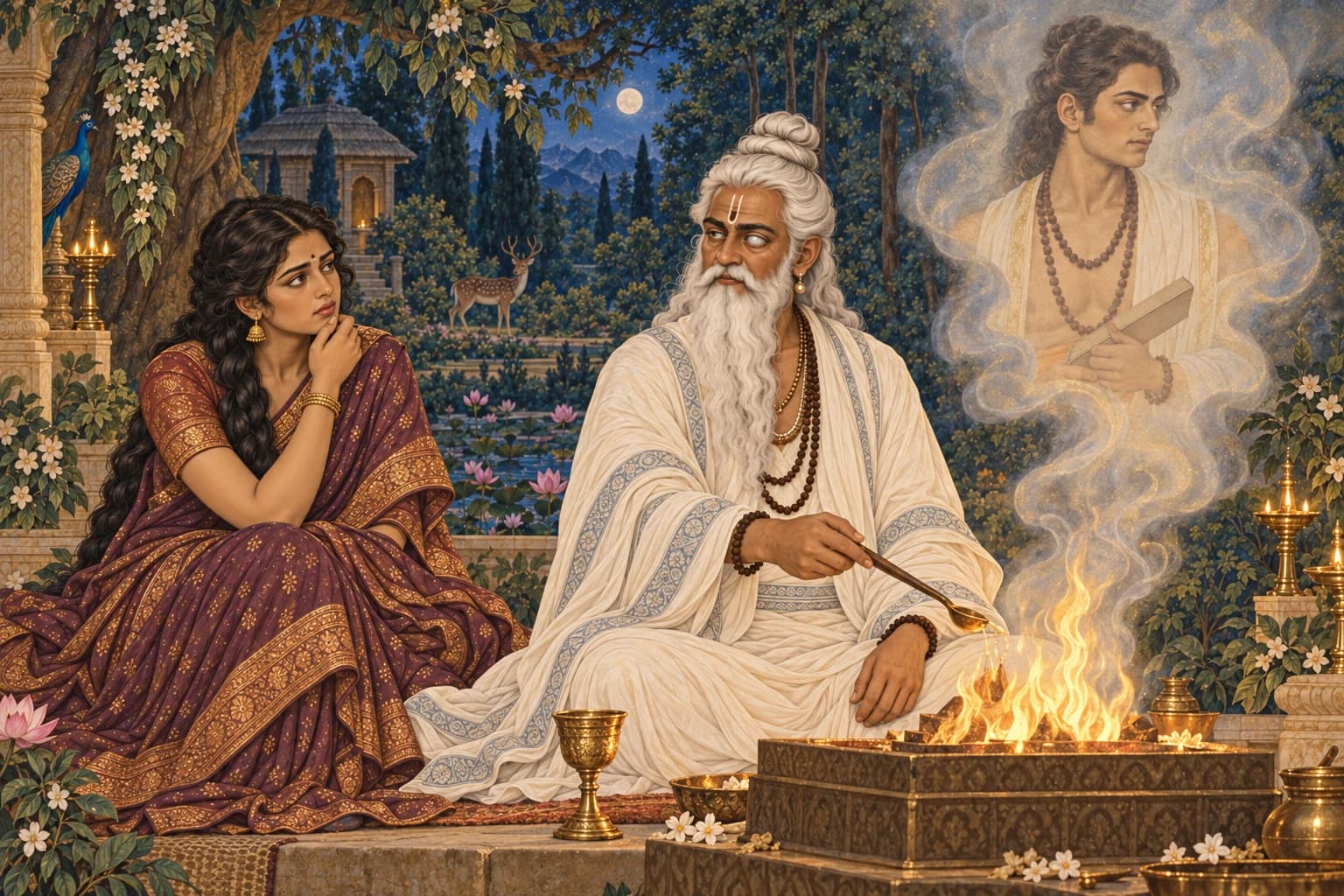
Then the voice of the missing young man answers from inside Shukracharya’s own body.
If Kacha comes out, his teacher will die. If he stays, the student cannot return to the world. Devayani, who loves Kacha and cannot bear to lose her father, refuses to pretend that either loss is acceptable.
This is a story about extraordinary knowledge. It is also about what teachers owe their students, what affection can and cannot ask in return, and why saving someone does not settle every relationship.
The cover is a symbolic composition of the dilemma, not a literal meeting of all three characters while Kacha is missing.
A student from the other side#
This retelling follows the Mahabharata, Adi Parva, sections 76–77, in Kisari Mohan Ganguli’s translation. Section numbers can differ between editions.
The devas and asuras are at war. Their teachers are Brihaspati and Shukracharya, also called Ushanas or Kavya. Shukra possesses Sanjivani, the knowledge through which he restores the slain asuras to life. Brihaspati does not possess that same knowledge, leaving the devas at a disadvantage.
They send Kacha, Brihaspati’s eldest son, to become Shukra’s student and learn it. Their instructions include winning the favour of both the teacher and his daughter, Devayani.
Kacha does not hide who his father is. He introduces himself and asks to live under Shukra’s discipline as a student. Shukra accepts him with respect for Brihaspati, even though the two serve opposing sides.
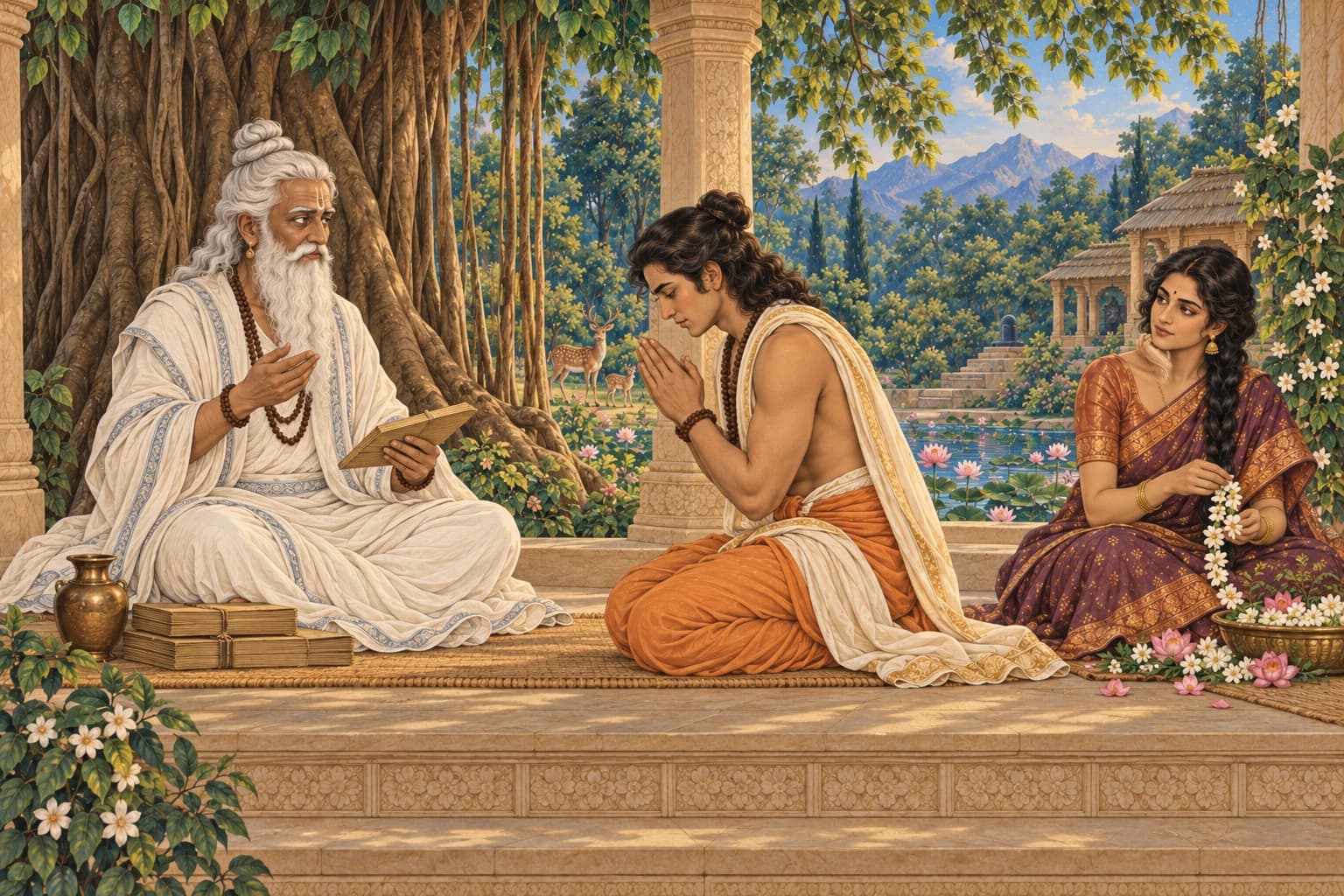
Life at the hermitage includes ordinary acts of service. Kacha tends cattle, gathers flowers and fruit, and attends to his teacher. He also sings, dances and plays music. Devayani becomes attached to him.
There is warmth here, but also a tension the reader should not forget: Kacha arrived on a mission. His friendship grows within a plan devised by the devas. The story gives us reason to admire his commitment as a student without treating the emotional situation as uncomplicated. Mahabharata, Adi Parva 76.
The cows came home without him#
The asuras discover whose son Kacha is and why he has come. They fear that their advantage will disappear if he learns Sanjivani.
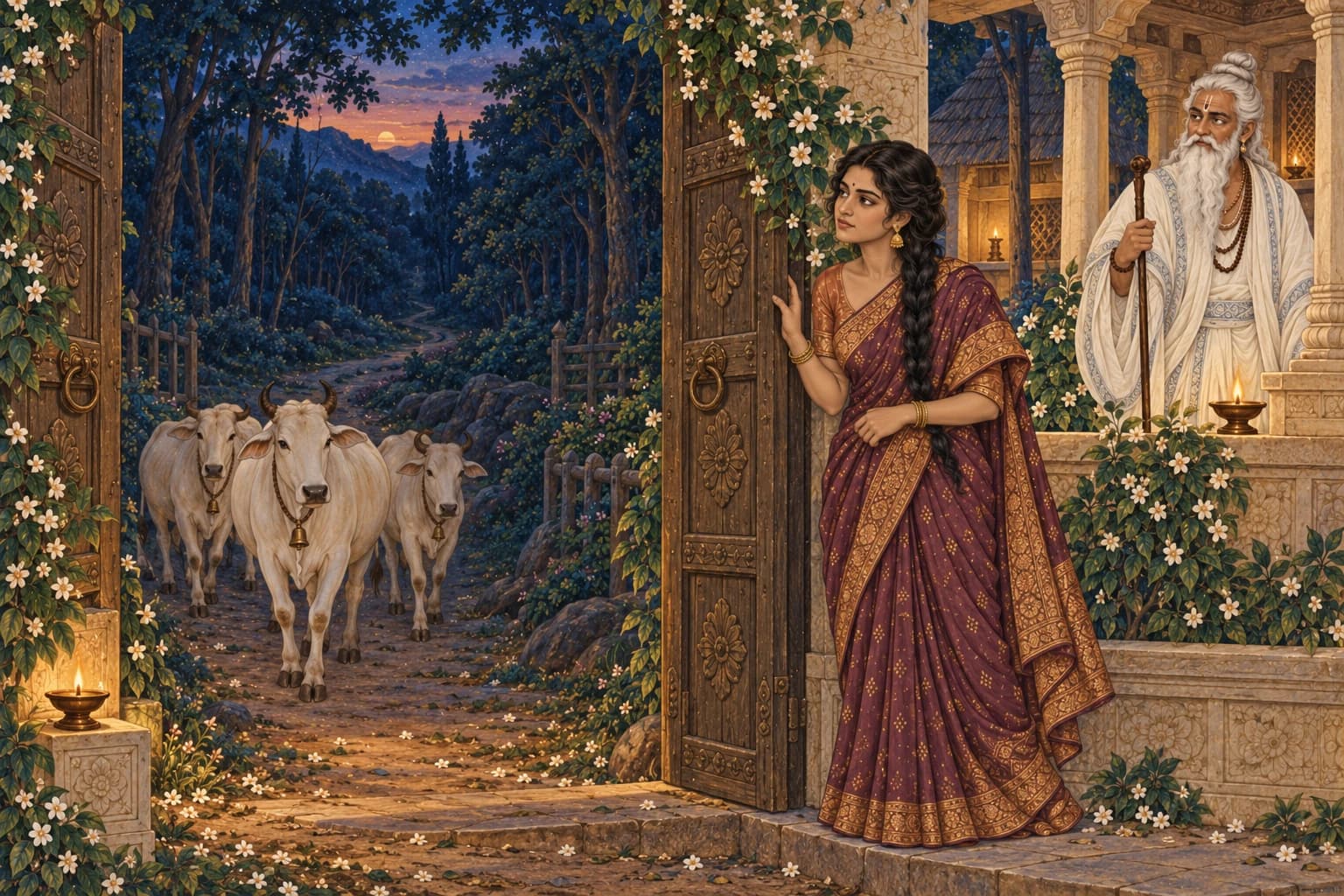
While he is tending the cattle, they kill him and dispose of his body. Evening comes. The animals return, but the young man who should be bringing them home does not.
Devayani notices his absence. She goes to her father and insists that something has happened. Shukra uses his knowledge, and Kacha returns. He tells them what the asuras did.
The asuras try again. This time, after killing him, they disperse his remains in the ocean. Again, Devayani asks for him. Again, Shukra brings him back.
The repeated rescues are not a minor prelude. They establish the three relationships that drive everything afterwards: the asuras see a dangerous enemy; Shukra sees a student under his care; Devayani sees someone she cannot bear to lose.
Shukra is protecting a young man whose eventual success could hurt the faction he serves. His obligations are already in conflict before the final trap is laid.
The student inside his teacher#
On the third attempt, the asuras burn Kacha’s body, mix his ashes into wine and give it to Shukra. He drinks without knowing what it contains.
When Kacha disappears again, Shukra is weary of the danger that keeps returning. Devayani still pleads for him. The sage calls the student back—and hears Kacha answering from within his own stomach.
Kacha explains what happened. Now the problem cannot be solved by another ordinary repetition of the rescue: restoring him and letting him emerge will kill Shukra.
Devayani says that she cannot live with the loss of either her father or Kacha. The story does not have her calmly select one life over the other. Her distress forces the dilemma into the open.
Shukra finds a way that depends on trust. He teaches Sanjivani to Kacha while the student is still inside him. Kacha will emerge, and Shukra will die; then Kacha must use the knowledge he has just received to restore his teacher.
The plan works. Kacha returns to the world and brings Shukra back to life.
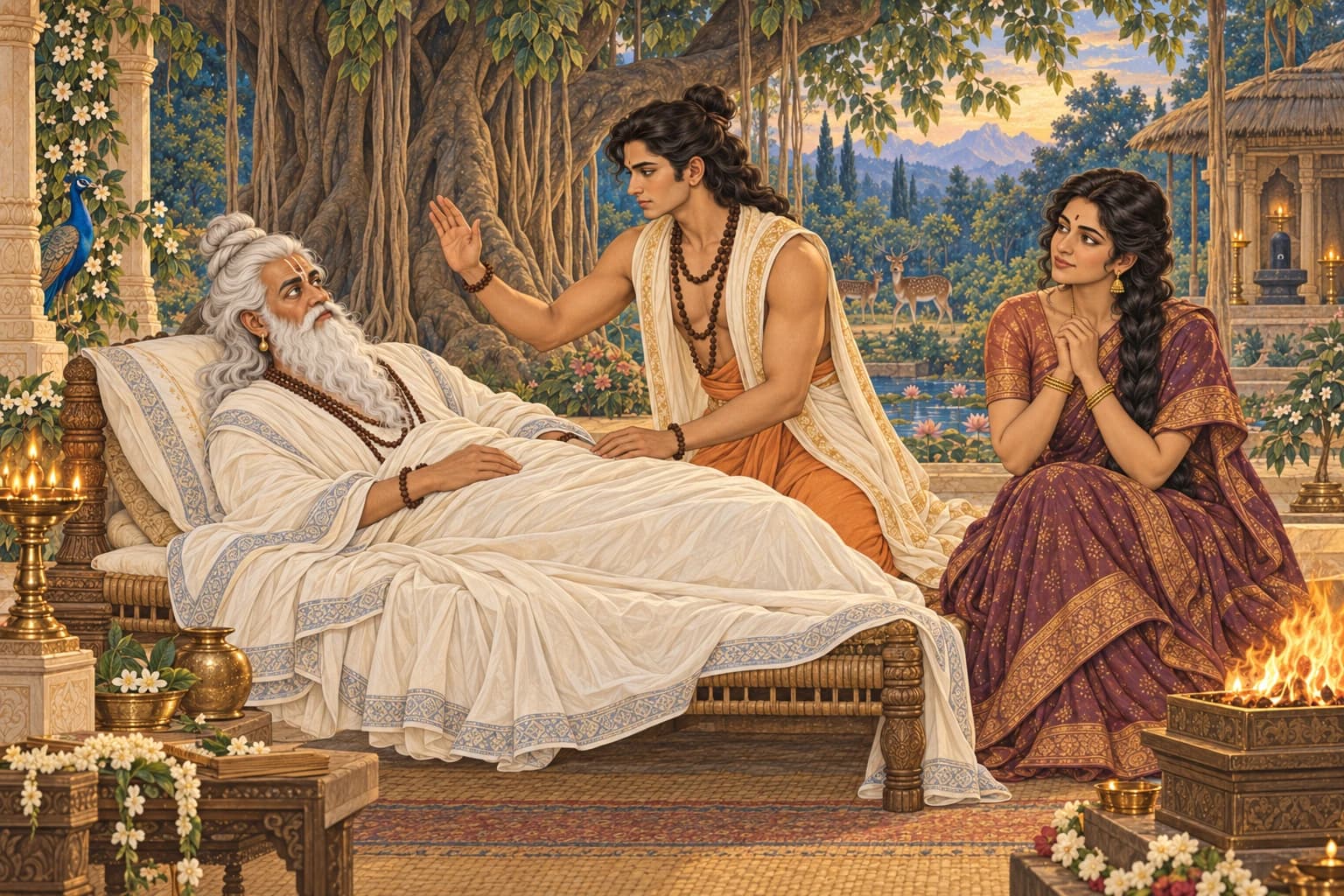
Kacha honours Shukra as the one who has given him both knowledge and a new birth. The teacher has risked his own life to save the student, and the student has fulfilled the responsibility that made the risk possible. The Sanjivani episode in Adi Parva 76.
Sanjivani belongs to the sacred narrative. This account is not a medical claim or a method for reviving a person.
The ending after the rescue#
Many short retellings stop with Shukra opening his eyes. The Mahabharata continues, and that continuation changes the emotional meaning of the story.
When Kacha completes his period of study and receives permission to leave, Devayani asks him to marry her. She speaks of her affection and of the part she played in saving him.
Kacha refuses. As his teacher’s daughter, she deserves his reverence. More than that, he has now lived inside the body of her father and emerged from it. He regards their relationship as that of siblings through this extraordinary birth.
Devayani does not accept the answer. Hurt and angry, she curses the knowledge he has gained so that it will not serve him personally. Kacha responds with a curse that she will not marry a rishi’s son. He also says that those he teaches will be able to use the knowledge, even if her curse prevents him from doing so himself.
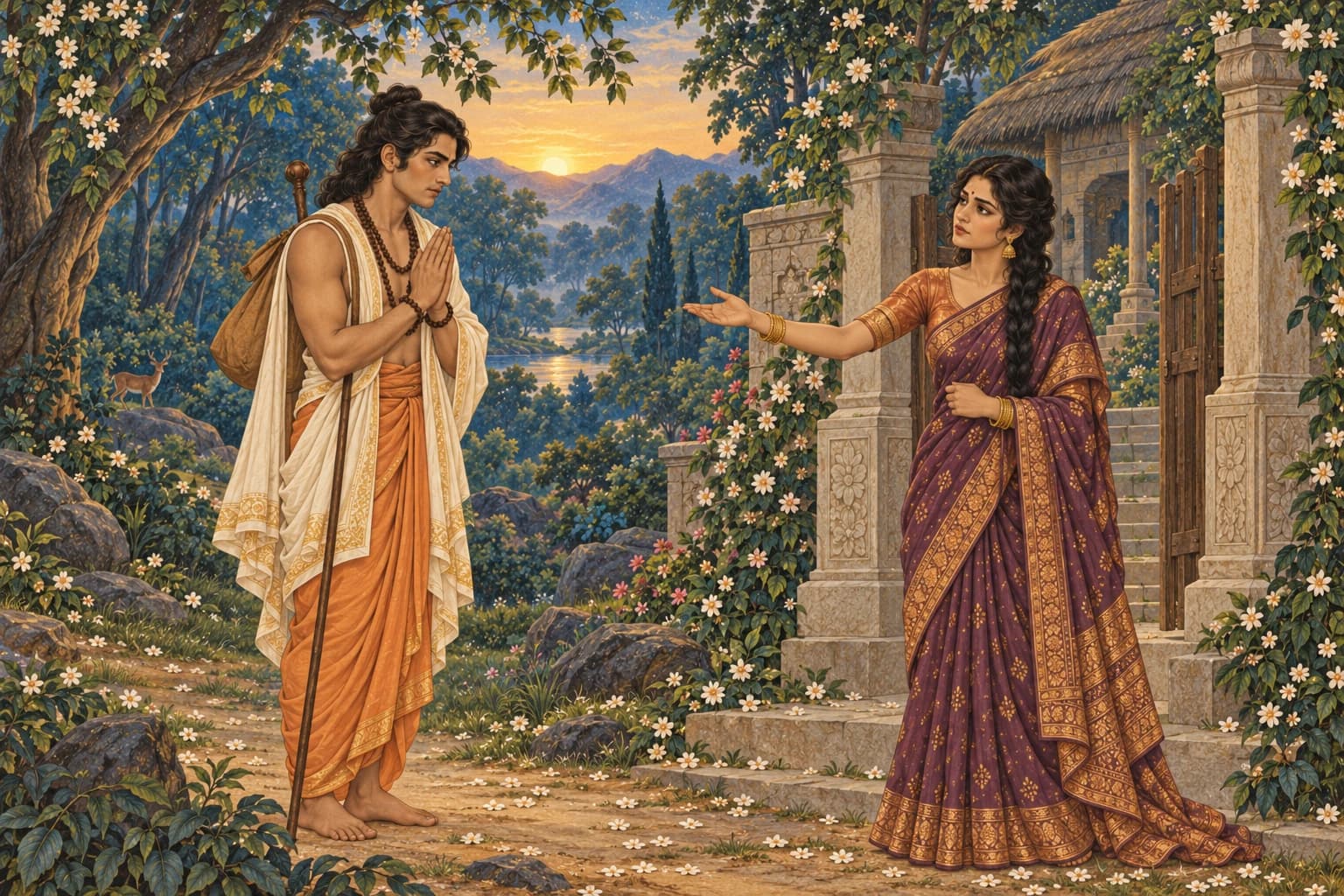
Kacha returns to the devas and is welcomed. He has achieved what he was sent to do. Devayani has helped preserve his life and loses the future she imagined with him. Mahabharata, Adi Parva 77.
Neither a triumphant love story nor a simple tale of an unreasonable woman does justice to that ending. Devayani’s intervention mattered. Her heartbreak is understandable. Kacha’s gratitude does not mean he must consent to marriage. Their exchanged curses show how quickly affection can turn into a demand to control the other person’s future.
The mission’s original instruction to win her favour makes this more uncomfortable, not less. Readers can hold both questions at once: was Kacha right to honour the kinship he perceived, and what responsibility came with cultivating an attachment while pursuing a different goal?
What does this have to do with Venus?#
Shukra is the planetary figure associated with Venus, but his role here is much larger than the familiar shorthand of romance, beauty and luxury. He is a teacher with rare knowledge, a father, and someone asked to care across the boundary between enemy and ally.
In Jyotisha, Venus is traditionally associated with relationships, pleasure, the arts and comforts. The connections below are a reflective reading of the story alongside those associations; they are not formulas given by these Mahabharata passages.
| Moment in the story | A question it can bring into ordinary life |
|---|---|
| Kacha’s music and companionship | How do shared pleasures create closeness—and are both people clear about their intentions? |
| Devayani’s repeated appeals | Do we recognise the people whose care makes our achievements possible? |
| Shukra teaching an opponent’s son | Can a responsibility to another person survive pressure from our own group? |
| Kacha reviving his teacher | What do we do with the knowledge and trust someone has placed in us? |
| The rejected proposal | Can we honour someone’s care while accepting that affection may not become the relationship they want? |
This gives Venus a richer vocabulary than attraction alone. The story makes room for generosity, skill, gratitude, disappointment and the limits of reciprocity. Receiving care can create a responsibility to respond honestly and kindly; it cannot create ownership of another person.
What it does not tell you about your chart#
A strong Venus does not guarantee a happy relationship. A difficult Venus placement does not prove that someone will betray you. Nor does this story make every teacher–student relationship a replay of Shukra and Kacha.
If you are exploring Venus in a chart, start with its actual sign and house, lordships, associations and relevant periods. For relationship questions, the seventh house, its lord and the wider chart also matter within the tradition. A single mythology cannot replace that work.
Our Venus Darakaraka guide explores one specific Jaimini role Venus may hold. Venus being in your chart and Venus being your Darakaraka are different statements: Darakaraka is a calculated role, not a title Venus automatically carries.
You can examine your own placements in the birth chart. Use the story to ask a better question about care, expectation or values—not to pronounce a verdict on a partner.
Sources and retelling notes#
- Mahabharata, Adi Parva, section 76, Kisari Mohan Ganguli’s public-domain translation: Kacha’s mission, his life with Shukra and Devayani, the repeated killings and the reciprocal rescue.
- Mahabharata, Adi Parva, section 77, the same translation: Devayani’s proposal, Kacha’s refusal, the exchanged curses and his return to the devas.
Dialogue is paraphrased rather than presented as invented scripture. The illustrations are original AI-assisted interpretations, with recurring characters based on the series’ saved references. They omit graphic violence. The astrological and everyday reflections are labelled interpretation, separate from the events narrated in the source.
Previous chapter: Shani, Son of the Sun and Shadow.
Read the complete series: Stories Behind the Grahas.
Related Posts
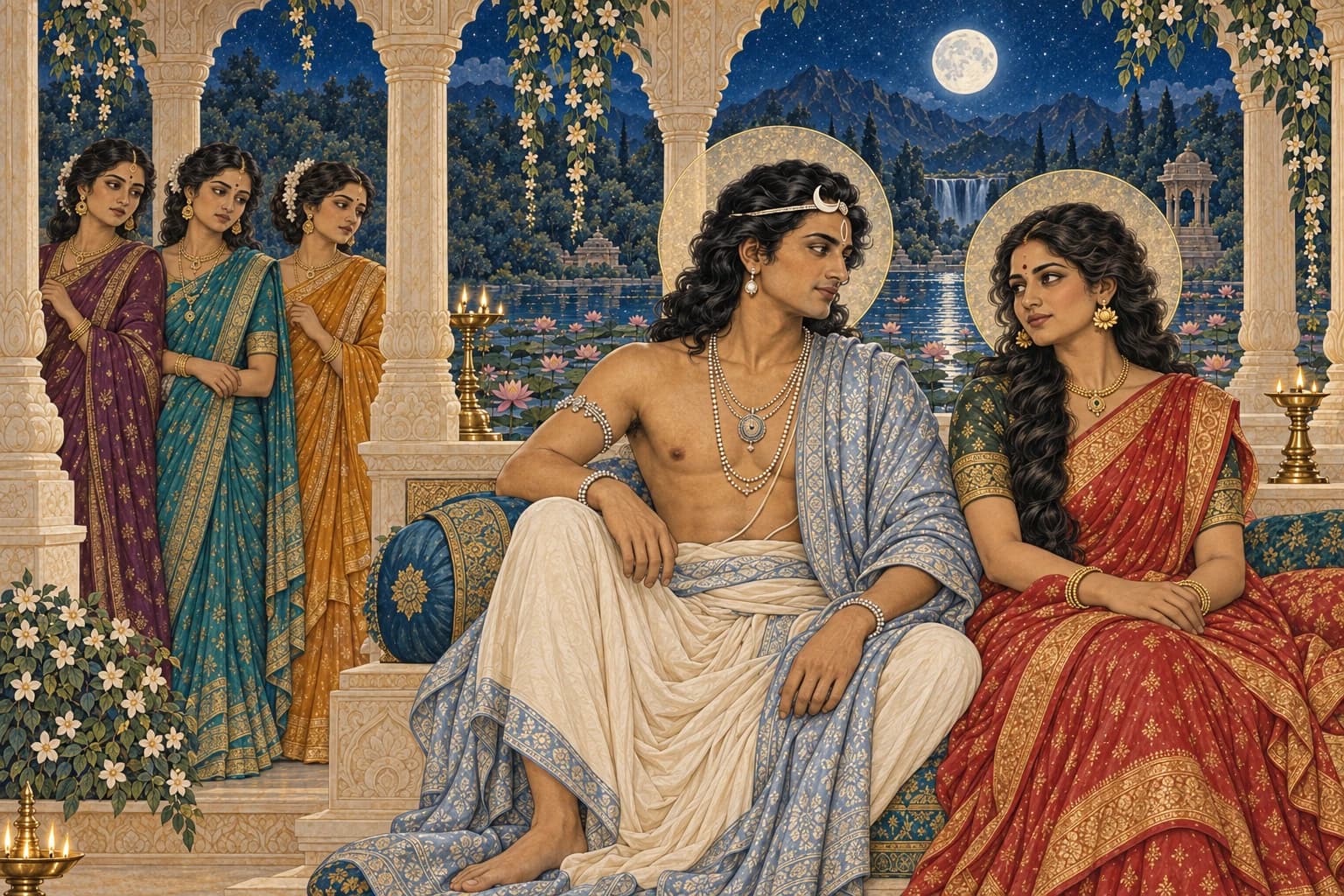
Chandra, Rohini and Daksha’s Curse: Why the Moon Waxes and Wanes
Why did Daksha curse the Moon? Explore Chandra and Rohini’s story, the renewal at Prabhasa, the Somnath tradition, and its meaning in astrology.
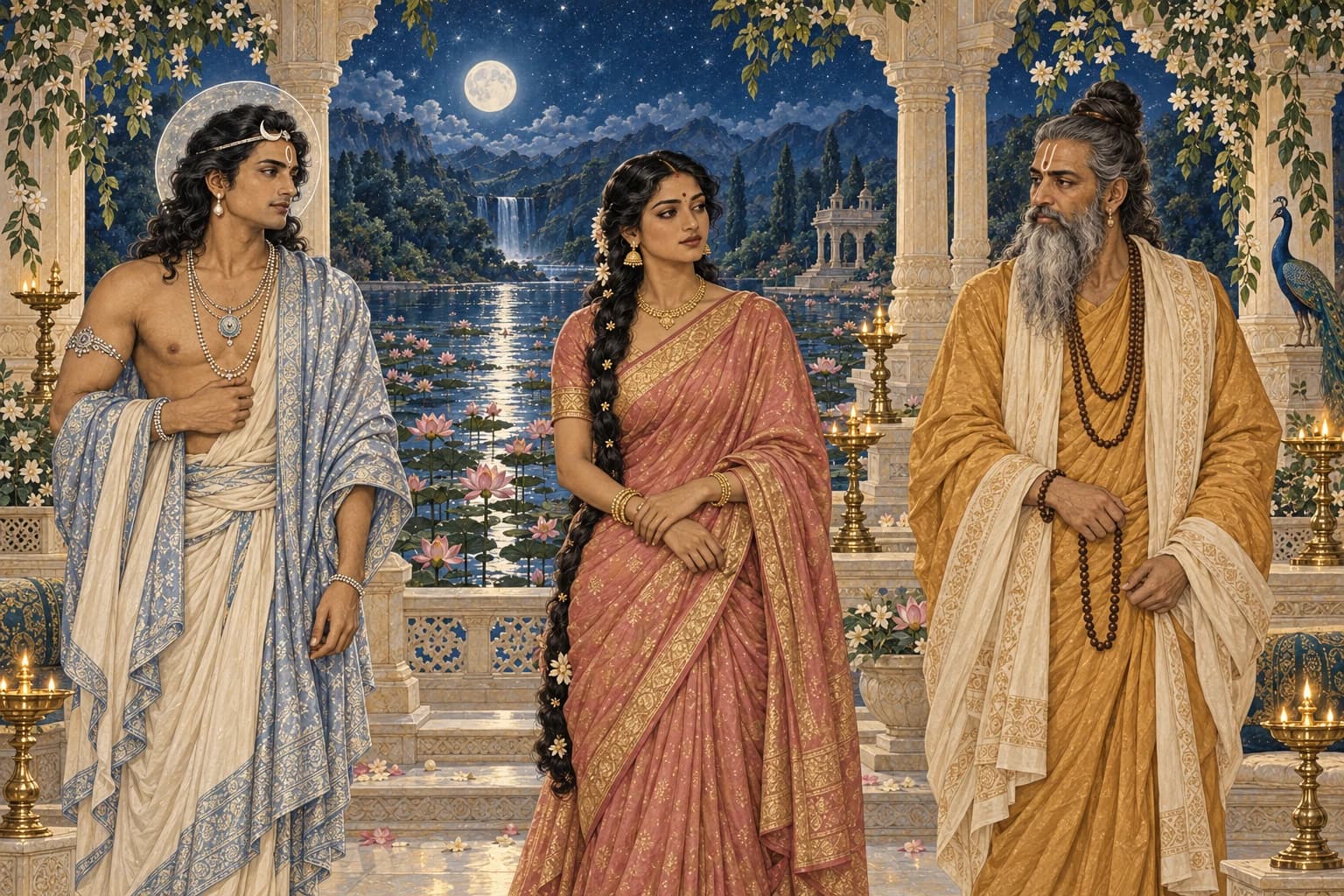
Chandra, Tara and the Birth of Budha: The Conflict Behind Mercury
The story of Chandra, Tara and Budha: a celestial conflict, the birth of Mercury, and what its symbolism says about emotion, wisdom and clear thinking.
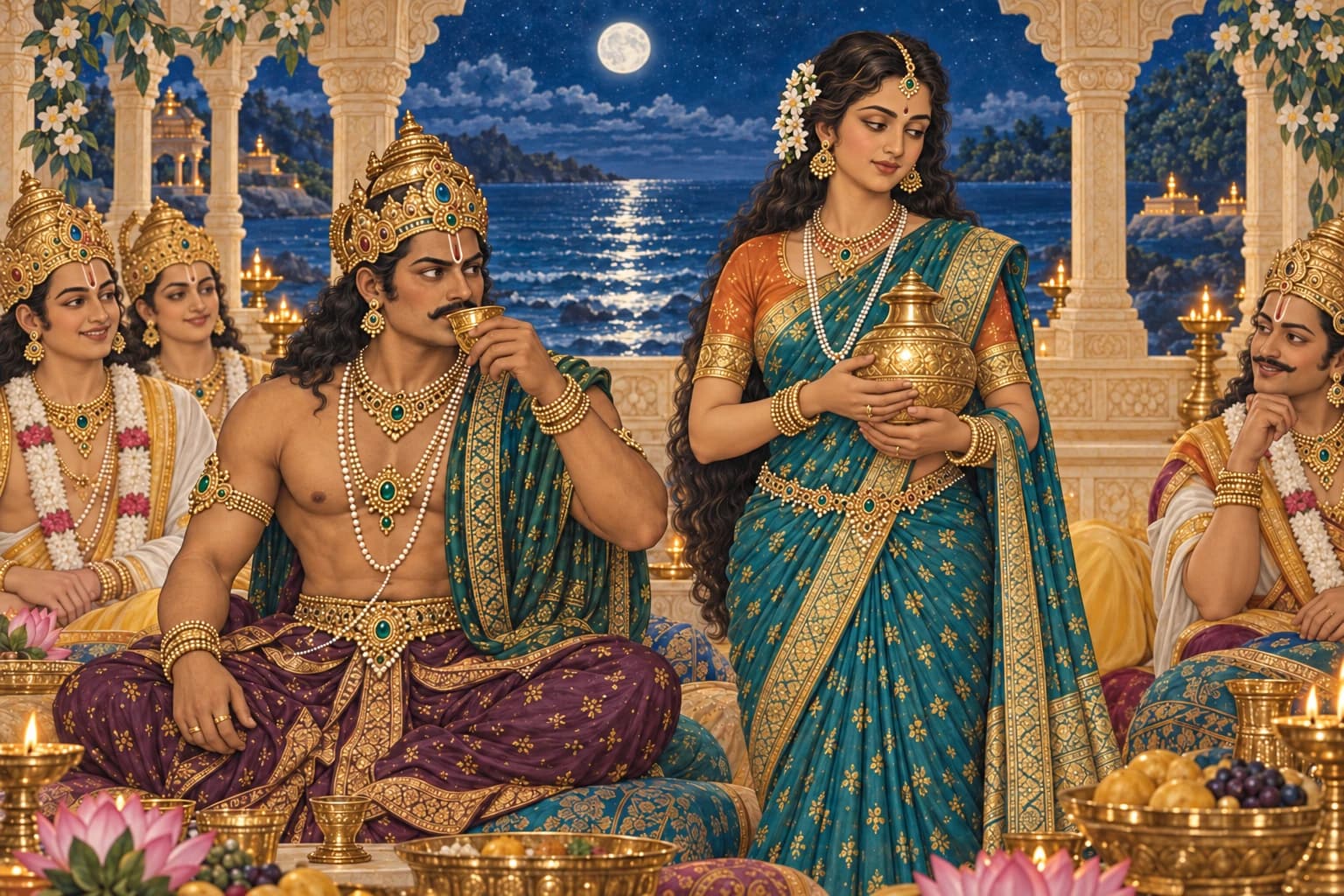
Rahu’s Stolen Immortality: The Story Behind Eclipses
Rahu stole a taste of immortality. Discover the ocean-churning story, why he pursues the Sun and Moon, and what the Rahu–Ketu symbolism means.
A little more perspective.
Keep discussions respectful. No harassment, hate, sexual content or spam. Comments are reviewed before publication. Report concerns from a comment menu, or contact [email protected].
Checking your session…