
Moolank 4 and Bhagyank 8: Making room for change and structure
Calculate a 4–8 number pair, then use a project example to distinguish useful experimentation from unnecessary disruption.
A Moolank 4 and Bhagyank 8 combination is commonly described through Rahu and Saturn. That can sound like a sentence of struggle. A more useful reading explores a practical tension: what needs changing, and what needs to remain dependable? Neither number proves that a person's life will be difficult.
Check the pair before interpreting it#
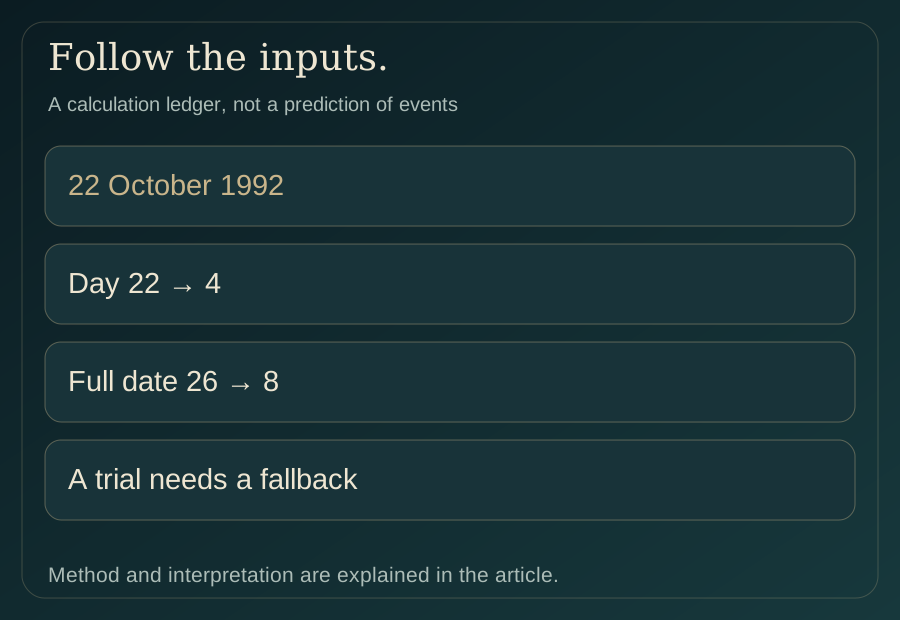
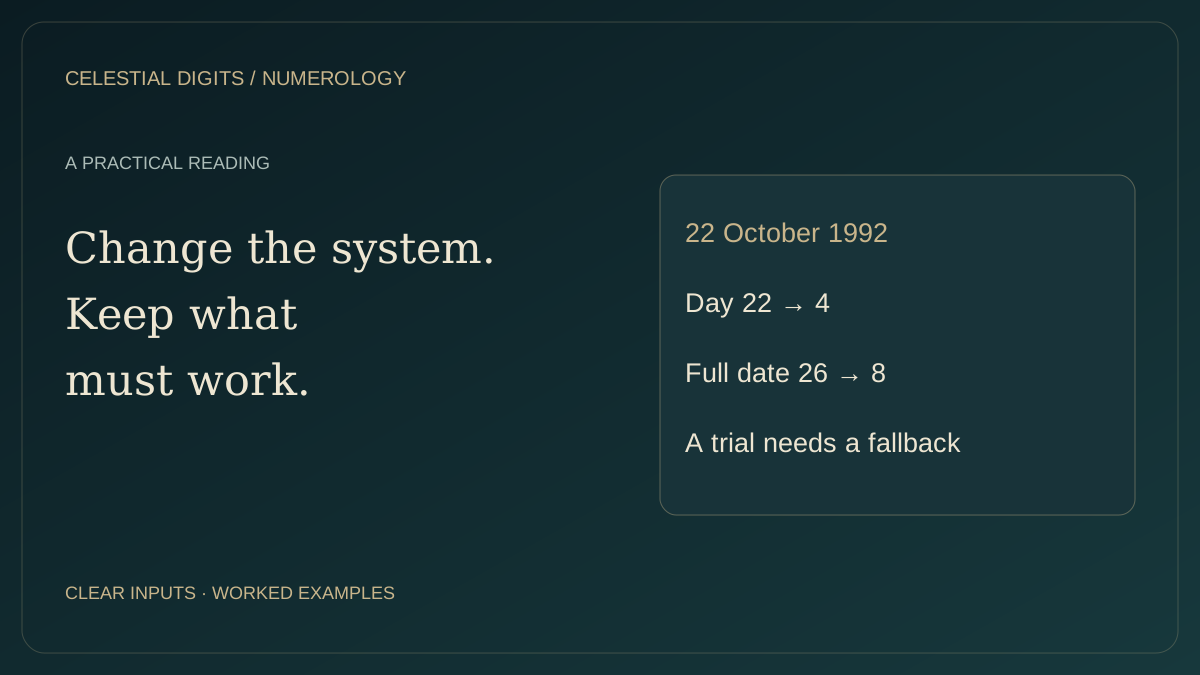
Use the fictional birthday 22 October 1992. The day gives 2 + 2 = 4. The complete date gives 2 + 2 + 1 + 0 + 1 + 9 + 9 + 2 = 26, then 2 + 6 = 8. Keep 22 and 26 in the calculation record; our single-digit convention does not stop at 22 as a master number.
These are two labels for one person. They are not a comparison between two partners. Nor do they mean Rahu and Saturn are conjunct in a horoscope. Birth time, location and planetary positions have not entered this calculation.
Worked situation: replacing a system that almost works#
Imagine a fictional small studio using a shared spreadsheet for bookings. It is familiar, but staff spend an hour every Friday correcting duplicate entries. One person wants to replace it with an elaborate new app; another wants no changes during a busy season.
The Rahu theme can represent questioning a familiar arrangement. Saturn can represent continuity, maintenance and responsibility. A productive reading gives both concerns a job. It does not call the first person chaotic or the second unimaginative.
| Decision | Question about change | Question about structure |
|---|---|---|
| Define the problem | Which failure are we trying to remove? | How often does it actually occur? |
| Run a trial | What is the smallest alternative worth testing? | Who supports it if it breaks? |
| Evaluate | Did the trial reduce duplicate bookings? | Did it create new work elsewhere? |
| Commit | What evidence justifies switching? | How will records and training transfer? |
A two-week trial with one type of booking offers more information than an argument about whether innovation is good. Write down the existing error rate first. Otherwise a new interface can feel successful simply because it is new.
When the symbols become an excuse#
“I am a 4, so I must rebel” can justify disruption without a purpose. “My Bhagyank is 8, so I must tolerate this” can justify staying with an arrangement that nobody has assessed. Both interpretations remove choice from a framework intended for reflection.
Try a different question: what must stay reliable while one part changes? In the studio example, customer records and confirmed appointments need continuity. The booking interface is negotiable. This distinction makes experimentation safer without turning caution into permanent delay.
Responsibility needs ownership#
A new process often creates invisible tasks: permissions, backups, training and answering questions. Before adopting it, assign those tasks explicitly. A promise that “everyone will help” is not the same as a maintenance plan.
For a personal project, this might mean choosing a weekly review time rather than collecting more productivity tools. For a shared project, it means asking the people who will use the system what they need. A number pair cannot substitute for their feedback.
A practical review sheet#
Record the problem, the proposed change, one measurable result and the conditions for returning to the old approach. Review the result on an agreed date, including evidence against your favourite option. If nothing improved, change the plan rather than inventing a planetary explanation.
Read the individual Moolank 4 and Moolank 8 guides for the two symbolic themes. For the arithmetic behind any combination, use our calculation guide. The useful outcome is a clearer decision, not a prediction of inevitable hardship.
Related Posts
Why Two Name Calculators Disagree: Chaldean and Pythagorean Tables
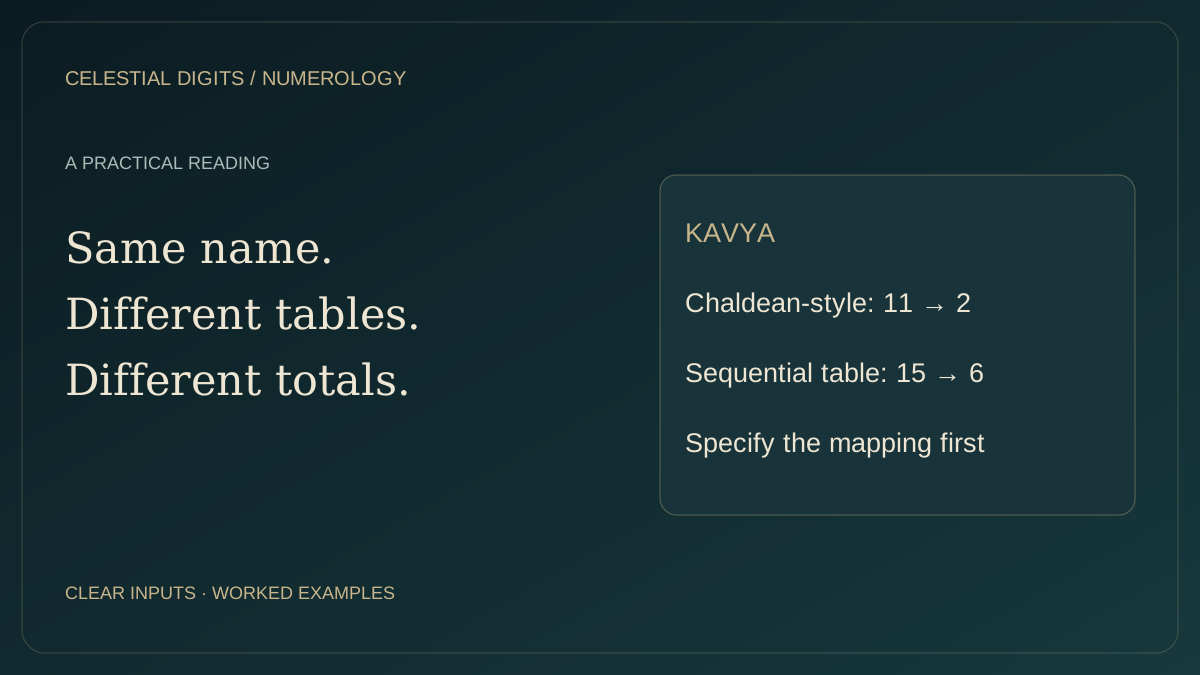
Compare KAVYA letter by letter under two common tables and see why equal labels can conceal different calculation methods.
Born on 29 February: Numerology in Leap and Non-Leap Years
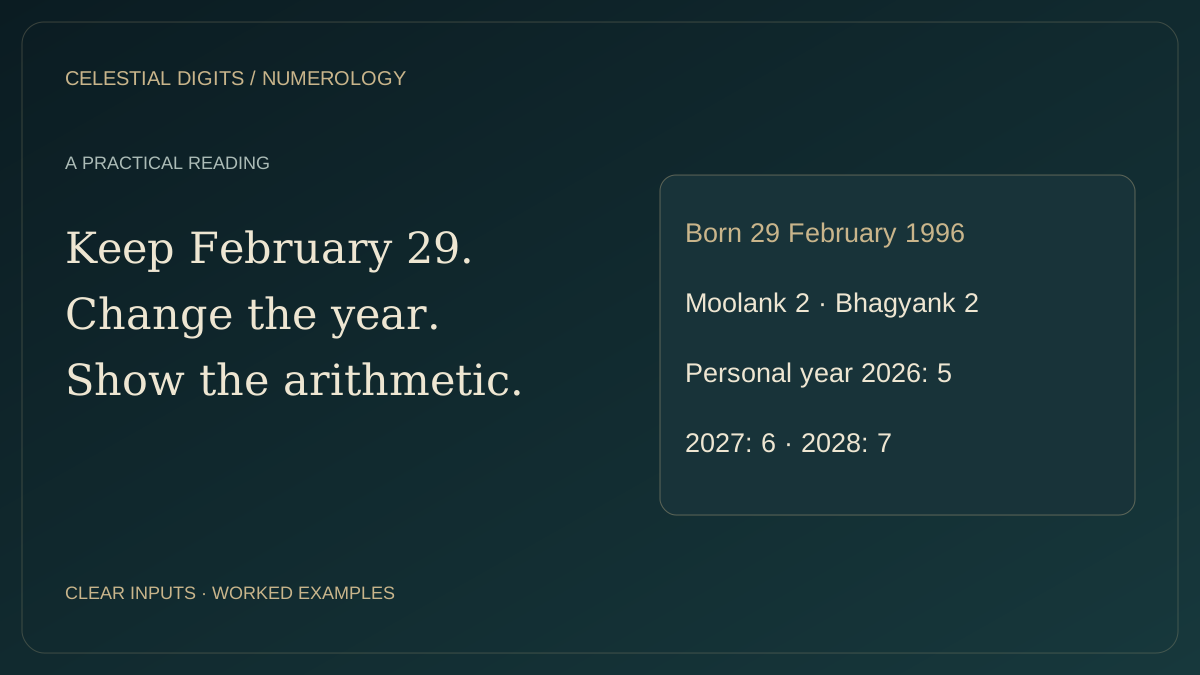
Calculate a leap-day Moolank, Bhagyank and personal year without inventing a 29 February date in a non-leap year.
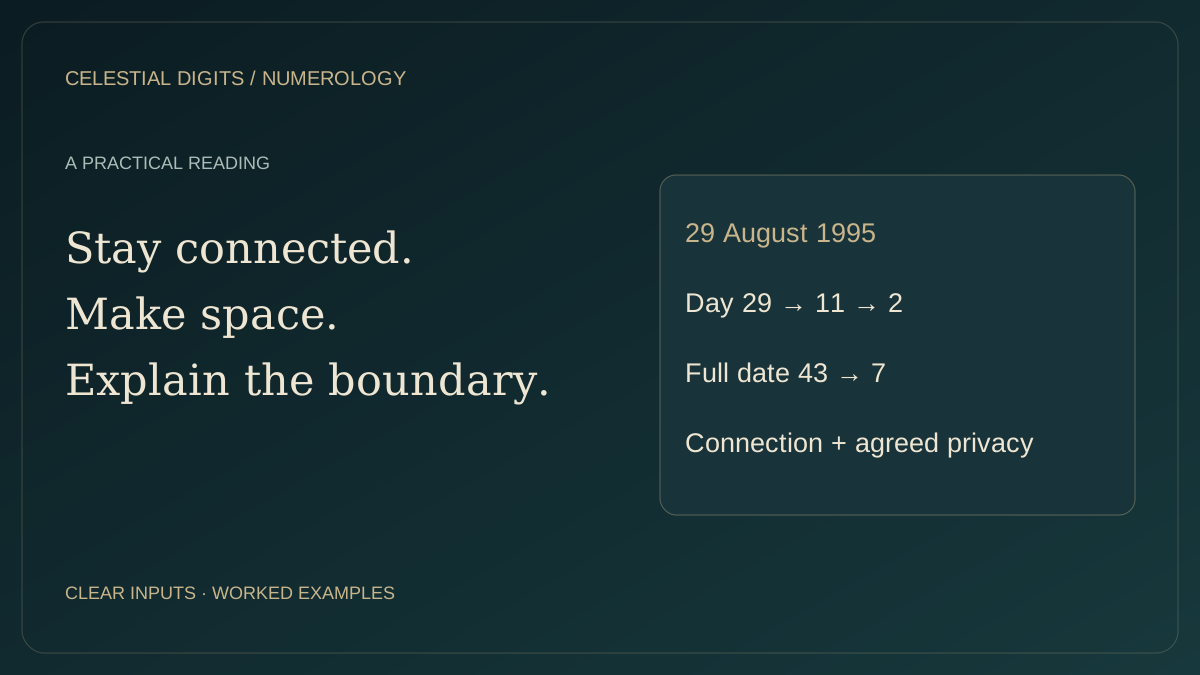
Moolank 2 and Bhagyank 7: Connection without losing privacy
A worked 2–7 calculation and a practical example of asking for space without turning a number pair into a relationship verdict.
A little more perspective.
Keep discussions respectful. No harassment, hate, sexual content or spam. Comments are reviewed before publication. Report concerns from a comment menu, or contact [email protected].
Checking your session…